
Monday, September 21, 2015

EFB Pellets Great Potential in Indonesia and Malaysia Has Not Been Taken

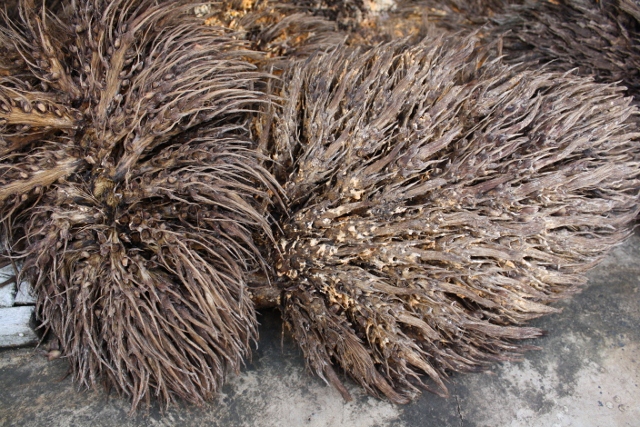
Wood pellets are still occupying the highest grade biomass fuel than biomass pellets fuel from other than wood. This is because its combustion properties are better than others. But as the magnitude of the biomass energy needs,  it is necessary to look for some other alternatives. Palm oil empty fruit bunch (EFB) is a potential raw material for pellets. Currently, Indonesia is the biggest palm oil producing country, especially crude palm oil (CPO) in the world with an area of palm oil plantations of more than 7 million hectares and hundreds of palm oil milss to process the palm oil fruits. Palm trees require warm temperatures, sunshine and high rainfall, so that only some parts of the world can do that, those are Asia, Africa and South America. Palm oil production is dominated by Indonesia and Malaysia with an amount between 85-90% of world palm oil production. Empty fruit bunches itself is a waste of CPO production which are numerous and today generally untapped.


Another factor driving this is when the supply of raw materials by planting some sort of energy plantation perceived longer and require more capital, or when the availability of raw materials such as woody biomass derived from wastes of the wood processing industries has been limited, the empty fruit bunches of palm oil can be a strong candidate. While the other factor come from the palm oil mill itself that many industries were overwhelmed to handle empty fruit bunch waste itself. Those things are more encouraging empty fruit bunch (EFB) processing into EFB pellets.


In terms of combustion properties as EFB pellet is lower quality from wood pellets, so it should also be used technologies that are more appropriate (suitable) in accordance with the character of the EFB pellets product. Type of fluidized bed combustion technology is the best choice because it is able to optimally handle EFB pellets at once able to reduce the content of a number of negative traits. Chlorine is the most avoidable component of mainly pellets made from agricultural wastes such as EFB. The fluidized bed combustion technology has also been developed from along ago so that is supposed to achieve optimum combustion conditions of EFB pellets become easy thing to do.

Wednesday, April 15, 2015

Wood Pellet For Green…Green World!

The growth of human consciousness as a result of environmental degradation in the form of climate change and global warming fostered efforts to reduce the magnitude of the environmental damage. Sources cause damage to the environment due to human greed through economic activity to exploit nature excessively. Humans should be the manager of this nature wisely instead of vice versa due to short-term interests and lust. The growing awareness of the need to be maintained and are arranged so that led to concrete efforts. Without clear rules and binding activity of all human beings on earth, the impossible nature of the improvement will be done well.


We are witnessing today a variety of companies that the state wants to be recognized as a company or a country most concerned in environmental issues and  no exception, Indonesia . That way they compete with its Go Green program such as CO2 Reduction and the like. With such recognition generally they wanted a special place among consumers or their partners so that the products or programs they will also readily accepted  these  circles. These activities also generate new economic activity that is the Green Economy. How big is the Green Economy or Green Business this? The answer of course depends on how big the mitigation of climate change and the environment in corporate entities or countries concerned to the global scope.

Wood pellets are a popular solution for mitigation of environmental and climate change issues. Wood pellets from wood biomass is carbon-neutral fuels and renewable energy sources with the requirements of wood biomass as a source of raw material of wood pellets to be undertaken on an ongoing basis and do not damage the environment. Continuous availability of raw materials is one of the key factors of business success of the production of wood pellets, so because of the current limitations of wood pellets is not only but also from agricultural wastes or biomass plantations could be called pellets or agri-wastepellet. Energy planatations with SRC (short rotation  species) is one way to produce wood biomass as a source of raw material of wood pellets faster and be sustainable. Indonesia is huge potential for energy planatation and will be better when integrated with other sectors.

Wood Pellet Production With Integration of Degraded Land Use For Energy Plantations, Cattle and Biogas Resources

There is a huge demand of wood pellet and on the other hand also the extent of uncultivated land in a number of places in Indonesia potentially be used for energy plantations with an output is wood for raw material of wood pellets. Currently estimated at more than 6 million hectares of unused land in Indonesia. While forage on plants short rotation species such as gliricidae and calliandra be useful as animal feed  of the cows. For every hectare is expected to be a source of cattle feed by approximately 6 tails. If there are 5000 ha of degraded/unused land it will produce around 100,000 tonnes of wet wood as a source of raw material of wood pellets and maintain 30,000 head of cattle. A large number of these cows potential as a source of biogas to meet the energy needs of the business itself.

The roots of the plants short rotation species is able to bind nitrogen that enrich the soil fertility. The root is able to perform a symbiotic relationship with bacteria in the soil, ie Rhizobium spp. Trees provide carbohydrates and energy for rhizobia bacteria, and rhizobia change of atmospheric nitrogen into nitrogen in the soil which can be exploited by tree roots. This process is known as nitrogen fixation, which took place on that form nodules on the roots of trees. Nodule should much, and when it opened in the red or red-pink. If the nodule is green, brown or black, is not binding nodule nitrogen. And plus organic fertilizer from biogas residue so that the land will be fertile and gardens where more can be expected to continue its sustainibility.

Good management supported by a team of professionals will support the future success of your business. Production of wood pellets can be used as first priority , then followed by dairy farms and biogas and organic fertilizer as a supporter. The concept of zero waste, green industry and sustainable implemented in the integration of this business.

Global Market Competition of Wood Pellet

Massive wood pellet demand mainly from South Korea as the primary market has encouraged the growth of wood pellets wood pellet industry in Southeast Asia. Indonesia, Malaysia, Thailand and Vietnam are the countries that responded positively to the demand of wood pellets from the South Korea. The growth of industrial wood pellets in each country is different speed depending on the readiness of the industry, the availability of raw materials and ease various other business support facilities. Although Indonesia is slow to respond to the demand of wood pellets, but in fact Indonesia has a tremendous opportunity to lead this industry due to the potential availability of abundant raw materials from waste-wood waste and cultivated by making a energy plantation.

The extraordinary potential in Indonesia is ogled by Korea to increase the volume of exports of wood pellet to Korea, which means that the growth of industrial wood pellets should be accelerated. The greater the demand and lack of supply pushed the price of wood pellets is expensive, so the more the industry grows to gain momentum at this time, when the demand is very large, while its minimal supply. Timber industry wastes which initially becomes a problem when it began to be seen as a potential raw material for industrial raw material in wood pellets.

Wood pellet market will be even better if the global awareness of the use of renewable energy, particularly biomass is getting better and sustainably cultivated globally or countries compete to lower the temperature of the earth. For the wood pellet market in Asia, besides Korea now Japan also have started to squirm. Availability of woody biomass for the production of wood pellets and when raw materials cultivated through energy plantation take a longer time, has made the pellets from biomass such as pellets from palm empty fruit bunches (EFB Pellet) have also been received, the insistence current needs. If awareness of the environment and climate change has been conceived and implemented in the environmental regulations or the global energy industry or business trends in particular wood pellets and biomass to energy in general will grow and survive long enough.

Cost to Benefit Ratio at the Wood / Biomass Pellet Plant


Wood or biomass pellets plant have a vital role in the production of wood or biomass pellets. Target production with standard quality and stable can only be achieved if the wood or biomass pellet plant working optimally. The use of high quality machines is one means that the production process is running optimally. Some criteria to assist the selection of machines for wood or biomass pellet mill, among others:

1. It has been proven and tested, in terms of quality and quantity.
2. Ease of operation and maintenance.
3. Ease of start-up until a stable production.
4. Durable and stubborn, so rare in problem and effective for production in the long term.
5. Meet the rule "3 x 3" that these machines have been used in 3 different places with operating time of more than 3 years.
6. Reliable after-sales services such as ease of obtaining spare parts and auxiliary materials other processes as well as a quick solution if at any time there is a problem in plant operations. Even had there was also a wood or biomass pellets plant were connected to the Internet and can report a variety of problems that occur in the plant so quickly that it can take action quickly as well.
7. Good in Safety Aspects  and minimum environmental pollution impacts

Indeed obtain provider machines of wood or biomass pellets plant that meet the above requirements is not easy especially in Indonesia, in particular, wood or biomass pellets industry is new thing. The prospective producers of wood or biomass pellets should be quite keen attention to this, especially just only lured cheap price, without further thought to the long-term orientation.

There is no guarantee also that something expensive certainly give better results, as well as for machines of wood or biomass pellet plant is. Without regard to the number of the above criteria may be your only losses due to incur huge costs for the purchase of the machines, but the results are not as expected.

Machineries for wood pellets plant that meet the above criteria are usually quite expensive, but the cost-to-benefit ratio is good so that in general will give a good profit as well. Optimization is how to get the machinery of wood or biomass pellets that meet the above criteria with affordable price. This could be one of them to import a vital machines only on wood or biomass pellet plant and the rest made domestically.

Thursday, February 5, 2015

Rise in pellet exports to Asia

Feb. 2, 2015 - Pellet exports from North America rose in the 3Q/14 after a stable first half of the year that could be characterized as a temporary plateau. While pellet exports to Europe were up just marginally, the increase to Asia was more noticeable. Up until 2014, more than 95% of wood pellets leaving US and Canadian ports were destined for Europe.

However, during 2014 there was a shift in Canadian exports from Europe to Asia, with pellet plants in British Columbia shipping record volumes to South Korea during the 3Q/14, as reported in the North American Wood Fiber Review. (Note. Due to irregularities with Customs data, NAWFR collects trade data from a number of sources including Canadian and US customs export data, European import data and from quarterly conversations with both pellet exporters and port contacts.)

Total Canadian overseas pellet exports rose slightly in the 3Q/14 from the previous quarter, but they were still 15 per cent below their high of over half a million tons in the last quarter of 2013. Shipments from both Western and Eastern Canada to Europe fell in the first three quarters of 2014; in the 3Q/14, shipments were at their lowest level since 2011. Export volumes for the Asian market have followed a more positive trend, with increased shipments for six consecutive quarters.

British Columbia's pellet shipments overseas will likely remain stable during most of 2015 until the first of five announced pellet mills starts commercial operation late in 2015 or early 2016. There are currently plans to add over 800,000 tons of pellet capacity in the province during 2015/16 with South Korea being the target market (read more about the expansion plans in the NAWFR, www.woodprices.com).

In the US, pellet exports continue to be dominated by bulk shipments out of the US South to Europe, with only minor container volumes primarily shipped from the US West Coast to Asia. The US overseas pellet exports rose to over one million tons in the 3Q/14, with the growth in shipments having continued without pause since late in 2011.

The North American Wood Fiber Review has tracked wood fiber markets in the US and Canada for over 20 years and it is the only publication that includes prices for sawlogs, pulpwood, wood chips and biomass in North America. The 36-page quarterly report includes wood market updates for 15 regions on the continent in addition to the latest export statistics for sawlogs, wood pellets and wood chips.
- See more at: http://www.canadianbiomassmagazine.ca/pellets/rise-in-pellet-exports-to-asia-5069#sthash.1UxGPLHv.dpuf

Source : http://www.canadianbiomassmagazine.ca/pellets/rise-in-pellet-exports-to-asia-5069

Saturday, October 4, 2014

Global wood pellet demand to reach 50 million metric tons by 2024

By RISI | September 04, 2014
Global wood pellet demand is rapidly expanding as consumers, businesses and regulators look for alternatives to fossil fuels. Globally, wood pellet demand is projected to grow from an estimated 23 million metric tons in 2014 to 50 million metric tons in 2024. These and other key findings were released in a new study by RISI, the leading information provider for the global forest products industry.

"It's a really exciting time to be looking at the wood pellet market. We're seeing strong demand in the European heating sector as high energy prices drive consumers to look for fuel alternatives. Also, policies that promote the generation of renewable energy are spurring the use of pellets as a substitution for coal in power plants," said Seth Walker, author and bioenergy economist at RISI.
"Additionally, Korea and Japan are beginning to enter the market, creating a greater impact on global trade flows. Right now we're getting a small taste of what the market is going to look like in 10 years," continued Walker.

Global Pellet Demand Outlook Study analyzes and forecasts growing wood pellet markets through 2024 by region. This study focuses on the European industrial market, European heating market, North American heating market, and Asian industrial market.
Global Pellet Demand Outlook Study provides forecasts for:
- European Industrial Markets—Including Belgium, Denmark, the Netherlands, Sweden and the United Kingdom
- European Heating Markets—Including Austria, Denmark, France, Germany, Italy and Sweden
- Asian Industrial Markets—Korea and Japan
- North American Markets—The United States and Canada
Industrial users analyzed in this study include: Dong Energy, Drax, E.ON, GDF Suez, KEPCO subsidiaries, Ontario Power Generation, RWE, and Showa Shell
For more information on this study is available here.

Source of article : http://www.biomassmagazine.com/articles/10883/global-wood-pellet-demand-to-reach-50-million-metric-tons-by-2024 

Production of Bark Briquettes from Wood Pellet Factory Waste

To reduce the ash content of wood pellets and thereby improve their quality, a process known as "debarking" (removing the tree bar...