Saturday, April 22, 2023

The Importance of SRF (Slow Release Fertilizer) With Biochar in Palm Oil Plantations

Biochar is not a fertilizer so even the nutrient content in biochar can be ignored. Even though there are a number of biochars that contain certain nutrients, this is a special matter and really depends on the raw materials used. Biochar is a soil amendment that functions to improve soil properties such as soil structure including increasing soil porosity/soil friability so that roots can penetrate deeper, soil aeration, water availability, shortening the age of harvest, inhibiting the development of plant pests and retaining nutrients and reducing soil acidity. Compared to other soil amendments which have weaknesses, including the need for large and continuous amounts because they decompose quickly, have the potential to negatively affect the climate, and introduce disease-causing microbes/pests, biochar has many advantages, including the volume required is not large enough, not continuous and able to survive in the soil (helps conserve carbon in the soil) is not decomposed for hundreds or even thousands of years. The above makes biochar can function to improve soil fertility and climate solutions (carbon sequestration / carbon sink) or an action to increase organic matter on agricultural land or plantations and mitigate the effects of climate change. 

Even so, biochar can be used to make fertilizer, namely slow release fertilizer (SRF). SRF is a fertilizer whose release is regulated to provide maximum growth effect or SRF is designed or modified fertilizer for controlled fertilization according to plant needs so as to provide increased use efficiency and at the same time increase yield or harvest. This is motivated by the low efficiency of fertilization so that even more is wasted than is utilized or low NUE (nutrient use efficiency). The function of biochar in SRF is as a slow release agent in the fertilizer because it has a porous structure. In making SRF, several methods can be used, including increasing the size (granulation, pellets, etc.), smoothing the surface of the fertilizer, mixing it with other materials that are difficult to dissolve (slow-release agent) and covering the fertilizer with certain materials so that the release of the fertilizer becomes slow (coating). The use of SRF is becoming popular to save fertilizer consumption, increase yields and minimize environmental pollution. 

Soil fertility is a complex trait or condition that must be kept optimal, especially regarding this fertilization. The component of soil fertility itself includes a number of things, namely the depth of the soil solum, soil structure, nutrient content, storage capacity, humus content, number and activity of soil microorganisms, and the content of toxic elements. Productive soils with high soil fertility, both naturally and/or due to human actions, are mainly due to the following characteristics: nutrients in the soil are mobile and easy to obtain, the ability of the soil to convert fertilizer into easily available forms, the ability of the soil to store nutrients dissolved in groundwater from the leaching process, the ability of the soil to provide a natural balance of nutrient supplies for plants, the ability of the soil to store and provide water for plants, the ability to maintain good soil aeration to ensure the availability of oxygen for roots, and the ability of the soil to bind (fix) nutrients and convert them into forms available to plants. Soil fertility must guarantee high, consistent and sustainable production.  

An understanding of the nutrient composition of fertilizer and its release mechanism will help make strategic plans to slow down the release of the fertilizer at a certain level. Compared to conventional fertilizers slow release fertilizer (SRF) has a very slow release speed which can be tens of times slower so that fertilization efficiency increases significantly. It is estimated that more than 50% of fertilizer is wasted due to various reasons including evaporation, immobilization in the soil and leaching due to water, for example due to rain or irrigation. This inefficiency of fertilization is not only detrimental from an economic aspect as well as the environment, namely making the soil acidic, killing soil microbes, and water-soluble fertilizers that can poison water that may be consumed by humans and animals.

Currently, developing countries use more than 60 million tons of fertilizer per year, while according to the Food Agriculture Organization (FAO) world fertilizer consumption reached 190.4 million tons in 2015. With this low level of efficiency, can be imagined how much fertilizer is wasted useless and only pollute the environment. Regarding SRF, the dose of biochar use must also be measured properly because the use of biochar that exceeds the dose will be useless. This is due to the hydrophobic nature of biochar, so that the excess dose does not or only a little can release the fertilizer slowly.

A number of parameters to be observed for administering biochar as SRF are the amount of FFB (fresh fruit bunch) production and its quality (yield of CPO, and its FFA content), continuity of fruiting throughout the year, and the level of uniformity of fruit maturity in one bunch. And it turns out that the use of biochar gave significant positive results, namely FFB production increased by more than 20%, fruit maturity uniformity was almost 100%, CPO yield was more than 25%, and FFA was only 2-5%. With the high production of FFB and the yield of CPO, the intensification of palm oil plantations should have been carried out rather than the extensification that was suspected of being an attempt to convert forest functions or deforestation which tends to receive negative attention from various parties. For more details, read here. There are still many things that can be optimized so that the palm oil industry is efficient, environmentally friendly and sustainable.

Tens of millions of tons of empty fruit bunches (EFB) at the palm oil mills are potential raw material for biochar production as well as tens of millions of hectares of oil palm plantations that can be used for biochar applications. In addition to overcoming the problem of biomass waste, biochar production also produces energy that can be used for the palm oil mill itself, in more detail, please read here. Compared to the production of fuel pellets from empty fruit bunches (EFB pellets) and the production of electricity from empty fruit bunches, the production of biochar has many advantages and advantages both economically and environmentally. In the end, modifying the fertilizer according to the use of the biochar will significantly increase the nutrient use efficiency (NUE) in the fertilizer, ensuring the effective circulation of nutrients and mitigating climate change with carbon sequestration.
 

Tuesday, April 18, 2023

Green Economy in the Cement Industry Part 3

Fly ash is a byproduct or waste of coal power plants. Like slag, fly ash is also an additive or supplement (SCM/supplementary cementious material) in cement production. The difference is that fly ash is very fine so it doesn't need to be refined anymore and can be mixed directly with clinker and gypsum. Every ton of fly ash used prevents about 1 ton of carbon dioxide (CO2) from escaping into the atmosphere. This is in line with the green economy or decarbonization as a climate solution effort for the industry.

Unloading fly ash
As the same with slag, the chemical content of fly ash also influences the quality of the cement produced, for example certain regions or countries have requirements for grade 120 alumina in the slag. Cement with a certain quality can be designed with the use of these additives. In the current era, apart from technical factors such as mechanical strength or cement adhesion, microstructure, durability and so on, and economic factors, environmental friendly product factors are also a concern or have their own positive image. Circular economy in the form of utilizing waste from other industries to become raw materials for this industry, also occurs in the cement industry. And basically the cement industry besides being able to process waste is also a waste destroyer.

Monday, April 17, 2023

Biochar to Improve Soil Fertility, Fuel, Industrial Raw Materials or Climate Solutions?

Currently there are still a lot of agricultural wastes (corn stalks, soybean plants, soybean shells and so on) that have not been utilized so that they pollute the environment. Utilizing these wastes so that they become useful products that provide added value is the best solution. What kind of utilization or processing is the best solution for utilizing these wastes? This of course depends on a number of influencing factors such as market readiness, availability and continuity of supply of biomass waste, especially agricultural wastes, technological readiness including technology investment, profits and business continuity, infrastructure and human resources (HR). Production of biochar or charcoal from biomass waste could be the best option. But indeed biochar or charcoal is multifunctional or can be used for a number of uses. Then the question is the use of biochar for what field gives the best results or benefits?

The biochar production is carried out using slow pyrolysis technology. With this technology biochar production can be optimal both in quality and quantity. It is different when using fast pyrolysis technology which produces biooil product or liquid product as the main product, with much less biochar product. Or if you use gasification technology where the main product is gas, so that the proportion of biochar is smaller or it can be considered as a side product, then this will also be less than optimal. These things make choosing the right technology an important thing to be able to give optimal results.

The production of biochar for agriculture has also not become a trend among farmers in Indonesia, so that much of their agricultural waste is not utilized and even pollutes the environment. Another influencing factor is the condition of the agricultural land itself. Dominant and excessive use of chemical fertilizers has damaged agricultural lands so that agricultural productivity continues to decline. And efforts to improve the soil require effort that is not easy and quick so that the fertility of the soil can be restored (recovery) and continues to be maintained for the long term. The combination of using organic materials with certain techniques needs to be done to achieve this. Biochar can also be used to make the use of organic matter more efficient, such as reducing leaching and increasing soil microbial activity. With the increased efficiency of this technique due to the use of biochar, it also minimizes input so that production costs can be further reduced. The integration of agriculture and animal husbandry is a must in order to obtain an adequate supply of organic matter, the quality is maintained and sustainable. Whereas in acid and dry soils, the use of biochar will have a more significant effect.

The use of biochar as an ingredient, especially for bbq and cooking as well as other uses, namely as a reducing agent in steel making. There are not too many uses for BBQ, this is processing or cooking food on a BBQ basis only as a hobby or only for special community segments. And there isn't much biochar for cooking either, or this is more common in Africa, while in Indonesia the option of using firewood or LPG is more common. Likewise, the need for biochar as a reducing agent in steel making is also not much. Meanwhile, the use of biochar for industrial fuels such as boiler fuel and electricity generation is almost non-existent. This is because the production process takes longer (requires a carbonization process), the conversion from biomass to biochar is small (~25%), and the price of biochar is more expensive. Wood pellets and palm kernel shells (PKS) are more of an option for these industrial fuels.

Biochar can also be used as a raw material for various industrial goods for human needs or for the substitution of materials derived from fossils (such as oil and gas) into more environmentally friendly and renewable materials. Materials such as plastic can be replaced with biochar. Particle board, which usually still uses wood waste, can also be replaced with biochar. This trend has not yet occurred, but it is predicted that soon it will become a concern and even a new trend in the industry.

Biochar for climate solutions is likely to become a trend soon. CO2 from the atmosphere is converted into biomass by plants, converted into biochar and stored (sequestration), especially in the soil. The carbon stored in the biochar will not be released into the atmosphere because biochar does not decompose for hundreds or even thousands of years or can be stored permanently. In principle, this is like storing carbon (CO2) with a conservation forest so that it becomes a carbon sink. Trees or plants will absorb CO2 from the atmosphere and be maintained in such a way as to achieve the desired CO2 uptake target then compensated with carbon credits, as well as biochar, how much carbon can be stored (sequestration) then also compensated with these carbon credits. In practice, the use of biochar will be optimal with efforts to enrich the soil on damaged or problematic soils such as post-mining soil, acid soil and diseased soil due to an overdose of chemical fertilizers. Carbon sinks with biochar are easier and cheaper than the carbon capture and storage (CCS) method with CO2 stored beneath in the earth's layers.

To reduce the temperature of the earth by reducing the concentration of greenhouse gases. To reduce 1 ppm of CO2 concentration in the atmosphere is equivalent to absorbing about 15 gigatonnes of CO2. Meanwhile, the costs needed to mitigate major climate change disasters are estimated at USD 1.6 trillion to USD 3.8 trillion each year. To reach the concentration of CO2 in the atmosphere to 350 ppm, around 70,000 biochar the size of the Giza pyramids is needed, assuming that fossil fuels are discontinued. With a volume of the Giza pyramids of 2.6 million m3 and an average biochar density of 200 kg/m3, biochar the size of the Giza pyramids weighs 520 million kg or 520 thousand tons. Huge job of course. Biochar production must grow 5000 times from its current production capacity. With biochar the size of a unit of the pyramids of Giza we need to build 4 pyramids per day (about 2 million tonnes of biochar per day) for the next 100 years and starting now.

Thursday, February 16, 2023

The Urgency of Biochar to Improve Soil Fertility in Palm Oil Plantations Amid High Crude Palm Oil (CPO) Prices

The high selling price of CPO, thus providing a large profit so that it can cover production costs, certainly does not last forever. The success of FFB production in palm oil plantations is one of the keys to the success of CPO production. The success of FFB production is related to the success of the plantation and the highest cost component in palm oil plantations is the cost of fertilizer. The high need for palm oil fertilizer for each palm tree reaches around 10 kg annually and this fertilizer is non-subsidized. Fertilizer as one of the components in the CPO production cost chain is easy to buy if the price of CPO is high or there is a big profit. But solely relying on the current high CPO price for the palm oil business operations is certainly a mistake.


And the fact is that in 2019 the price of CPO has fallen and the palm oil industry has suffered losses or almost no profit at all. The fact is that when there is a decline in CPO prices it also raises concerns for Indonesia because the palm oil industry has many strategic roles both economically, socially and environmentally. It was noted that CPO prices have continued to decline every month since 2018 compared to prices of CPO at 2017. This downward trend has touched world CPO prices since 2015. The CPO price was recorded at $448/ton in November 2018. Even though the world CPO price in 2018 2016 and 2017 averaged over $700/ton. On average, CPO prices decreased by 15-16 percent compared to 2017. Exports of CPO to Indonesian traditional markets, namely the European Union and India in 2018 also decreased compared to 2017.

And it's not impossible that this will happen again. Such as past experience in the form of accusations of an issue from the European Union Parliament which aims to prevent palm oil from Indonesia from dominating the European market, so that CPO exports decrease, a trade war that can occur at any time. While the excuses used are about deforestation, child labor practices and utilizing customary forests. This certainly should be a valuable lesson. The only way PTPN holding can work around this is by downstreaming CPO products (CPO derivatives), namely by creating an oleochemical industry. If the CPO price drops, the majority of CPO will be brought to downstream products. If the downstream product margins are not good, the majority is just CPO. Production flexibility is a strategy that makes the palm oil industry "immune" to crises. The majority of their products, both CPO and its derivatives, are for export. But downstreaming the palm oil industry is also not an easy and cheap thing that not all palm oil companies can do.
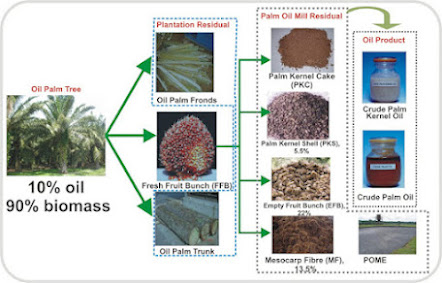
Biochar to improve soil fertility, increase fertilization efficiency so as to increase FFB productivity is the best solution. With the increase in FFB productivity, CPO production will automatically increase so that efforts to extensification through deforestation can be avoided. In fact, in addition to global CPO prices which can drop at any time, fertilizer prices can also increase at any time. This further encourages the biochar application efforts. The use of biochar in palm oil plantations is also a climate effort for carbon sequestration (carbon sink) or a negative carbon scenario to reduce CO2 concentrations in the atmosphere, so that this can generate additional income in the form of carbon credits, which have a higher value. Another factor is that in the palm oil industry or CPO production, only 10% of vegetable oil produced and 90% are biomass, while this amount of biomass has great potential as a raw material for biochar production.

And because organizationally the palm oil company is divided into a plantation division and a CPO mill division, so to facilitate operation the biochar production can be a separate business unit but still within the same company or it could be with another party. And for example empty fruit bunches (EFB) as raw material for biochar whose position is in the mill while the application of the biochar is in the plantation land. In addition to the benefits mentioned above, the production of biochar is also an effort to deal with biomass waste and produce energy that can be used for the production of CPO or in the mill. And when the CPO price drops but the production costs are low because the use of fertilizer in the plantations can be suppressed but the FFB productivity remains high, the losses experienced are also less. 

Wednesday, February 8, 2023

Selecting Sheep Species for Animal Husbandry

In general, there are two ideal types of sheep, namely the meat type and the wool type. The type of wool sheep is currently not in demand by breeders in Indonesia. This is probably because meat production is still a top priority and Indonesia's tropical climate is not suitable for wearing wool. Based on these conditions, the selection of meat sheep is more suitable for Indonesian conditions. Moreover, coupled with the demand for meat in Indonesia that has not been met. The demand for lamb meat for aqiqah and satay stalls/restaurants is still largely unfulfilled. In addition, the need for Eid al-Adha which is celebrated by Muslims every year can double. The need for exports is no less large, even reaching millions of head each year, such as during the Hajj season for the dam it is estimated that the need will reach 2 million heads.

Southdown sheep
Sheep of the meat or slaughter type have the following characteristics: dense body shape, wide and deep chest, short neck, and straight back and waist lines. In addition, it also has short legs and the whole body is densely muscled. Some of the sheep that belong to the meat type include Southdown, Hampshire and Oxford. Indonesian native sheep cannot be classified into one of the ideal types of the two types above. Even so, sheep in Indonesia generally tend to the type of slaughter or meat. Several sheep are considered native to Indonesia because they have long been cultivated in Indonesia, namely the thin-tailed sheep, fat-tailed sheep, Garut sheep, Wonosobo sheep (dombos) and Batur sheep. 

Dorper sheep
Improvement of genetic quality to increase livestock productivity is also carried out through crossbreeding, for example Suffmer sheep resulting from crossing Merino sheep and Suffolk sheep, then St Croix sheep resulting from crossing West African sheep with local sheep in the Virginia islands in the United States, then Katahdin sheep the result of crossing 3 types of sheep namely St. Croix with Suffolk and Shire sheep. And the popular sheep in Indonesia recently namely Dorper is a cross between the Black Head Persian sheep and the Dorset Horn sheep.

Sheep and goats, although they are quite similar, are actually (species) different. A number of regions in Indonesia have a favorite menu of sheep while other areas have goats. The Special Region of Yogyakarta is an area that has a favorite menu of lamb meat, and you can find lots of stalls or restaurants serving lamb dishes, especially satay. Uniquely in Yogyakarta, even though the name of the stall reads goat satay, the fact is that what is slaughtered or used is lamb. Meanwhile, in areas that are developing Bali cattle breeding, sheep cannot be kept or are prohibited from being raised for fear of Jembrana disease. Areas such as the provinces of South Kalimantan and East Kalimantan are examples of areas where sheep farming is prohibited because it breeds Bali cattle.

Large-scale sheep farming has been carried out in Europe and this should also be done in Indonesia. Integrating sheep farms with energy plantations is a surefire way to create these massive sheep farms. Wood from energy plantations will be a wood pellet product with an export orientation. According to Hawkins Wright's data, from 2020-'21, the demand for wood pellets for the global industry grew by 18.4%, with production only growing 8.4%, especially now with the disappearance of Russia whose volume reached nearly 3 million tons, more details can be read here. While the leaves are used for animal feed, especially sheep farming or it can also be processed into animal feed products such as feed pellets. With the global population predicted to reach 9 billion people in 2050, the need for food, especially protein such as meat, is also increasing as the population increases. Sheep farming and animal feed production are very important as part of fulfilling this food, especially protein, for more details can be read here.   

Friday, February 3, 2023

Green Economy in the Cement Industry Part 2

A number of cement plants can do production well by using only limestone and clay raw materials. This is because the material has fulfilled all the oxides needed in the manufacture of the clinker. The oxides needed are CaO (C), SiO2 (S), Al2O3 (A) and Fe2O3 (F). Limestone itself usually has a CaO (C) content of around 90% and 5% SiO2 (S). But the facts on the ground are that many cement  plants require additional materials to achieve the desired oxide composition or commonly called corrective materials. A number of these corrective materials are high grade limestone which has a CaO content of above 95% as C oxide correction, then silica sand for S oxide correction, then kaolin or bauxite for A oxide correction and iron ore or pyrite for F oxide correction.

So in general, currently the materials needed for the production of clinker are limestone, clay, silica sand and iron ore. In its development iron ore can be replaced with slag. The content of Fe2O3 (F) slag is lower than iron ore but the price is cheaper. The slag used mainly comes from the iron and steel industry, commonly known as GBFS or GGBFS. Slag is actually also an additive material that can be added with clinker and gypsum so that it becomes a product (slag) cement. In addition to other slag materials such as fly ash which are also commonly used as a additive, these two materials are commonly called cement supplement materials or SCM (supplementary cementious materials). Fly ash which is very fine does not need to be crushed anymore so it can be mixed directly with clinker and gypsum, while slag from iron or steel industry needs to be crushed again into GGBFS before being mixed with clinker and gypsum. For the need for these additives, in addition to physical aspects such as particle size, chemical aspects, namely slag chemistry and fly ash chemistry, are important parameters that need attention.

The use of SCM such as slag and fly ash above, will reduce the use, especially of fossil fuels. This is because SCM is added to clinker and gypsum so it does not require heat energy. Heat energy itself is needed in the manufacture of clinker, namely in the calciner and rotary kiln. For example, the manufacture of slag cement produces 38% less CO2 emissions than the process for the production of portland cement because less limestone is burned for the production of slag cement than is required for Portland cement. This heat energy currently still uses a lot of fossil fuels and is gradually starting to use renewable energy. Energy derived from biomass such as agricultural waste and animal manure is also starting to be used.

Thursday, January 19, 2023

Production of Cow Dung Briquettes / Pellets as Fuel and Bioeconomy

The use of renewable energy is increasing along with global awareness of environmental and climate issues. Materials that used to be considered waste and polluted the environment, now with the concept of zero waste and circular economy, many have been converted into alternative energy or renewable energy. Large industries such as power plants, cement industry and so on have started to use this renewable energy in the framework of CO2 emission reduction or decarbonization programs. This decarbonization program is increasingly popular and is applied to various lines of life. 

As a real example is the cement industry in the UAE, namely Gulf Cement Co., which uses renewable energy from camel dung. From the results of operational trials it was found that every 2 tons of camel dung can replace 1 ton of coal. The use of animal dung as fuel is actually not a new thing for them, from ancestral stories cow dung has been used as heating or fuel, but many have not thought of camel dung. Gulf Cement Co currently uses 50 tons/day of camel dung as fuel. The UAE has a population of around 9000 camels for milk production, racing and beauty contests. Each camel produces 8 kg of manure per day, more or more than the farmer needs. Through a government program, camel breeders collect the camel dung at collection points. 

Cow dung has also been used as an energy source from the United States, Zimbabwe to China. In Indonesia this should also be done. With each cow producing an average of 15 kg of dung per day (about 2 times that of a camel), this is the same as the conditions in the UAE above, the volume of dung is more or more than what farmers need. The excess of this waste becomes an environmental problem and even has to be thrown into rivers and so on. Hundreds of tons of cow dung every day are not utilized in a number of areas in Indonesia, even though the dung can be used as fuel, especially when processed into briquettes or pellets (dried first). Compaction of cow dung into briquettes or pellets aims to obtain uniform size and shape, compactness, ease of storage and use, as well as saving on transportation costs. And to meet the needs of cement factory materials, such as briquettes / cow dung pellets are needed in large quantities, so large capacity production equipment is needed that works continuously. It is estimated that the need for pellets or briquettes is thousands to tens of thousands of tons every month.

In a cement plant there are 2 places that need heat energy: 1. calciner (where the calcination process occurs), 2. Rotary kiln (the heart of the cement factory, where the clinker is made). Renewable energy, such as briquettes or cow dung pellets, will usually be used in calciners with separate feeding points. Meanwhile, in rotary kilns that require higher heat, cement plants generally still use fossil fuels. The gradual use of renewable energy will reduce environmental pollution and accelerate the global decarbonization program. The cement plant itself can be said to be an industry that processes and destroys waste. This is because the cement plant can process waste such as slag and fly ash as an additive to the cement it produces - more details can be read here and also destroys waste, such as using cow dung as the fuel.


Production of Bark Briquettes from Wood Pellet Factory Waste

To reduce the ash content of wood pellets and thereby improve their quality, a process known as "debarking" (removing the tree bar...