Showing posts with label land clearing. Show all posts

Monday, March 10, 2025

Optimizing Pyrolysis and Biochar in the Palm Oil Industry

Indonesia's CPO production currently reaches around 50 million tons per year with a land area of ​​around 17.3 million hectares. This means that the average CPO production per hectare is only 2.9 tons or per million hectares produces 2.9 million tons. If biochar is used and there is a 20% increase, it means there is an increase of 10 million tons of CPO per year and this is equivalent to saving around 3.5 million hectares of land, or the use of biochar will slow down forest clearing (deforestation) for palm oil plantations.

The average speed of Indonesian palm oil plantation area is 6.5% per year or equivalent to about 1 million hectares per year for the last 5 years, while the increase in palm oil fruit production or FFB (fresh fruit bunches) is only 11% on average. Even the largest expansion of palm oil land occurred in 2017, which increased by 2.8 million hectares. By opening 1 million hectares of forest, national CPO production only increased by 11%, while without the need to open forests, namely with the application of biochar, there could be a 20% increase in productivity. And the 20% increase in FFB yield (fresh fruit bunches) using biochar is a low estimate.

With the number of palm oil mills in Indonesia reaching more than 1000 units and tens of millions of tons of biomass waste, especially empty palm fruit bunches (EFB), the volume of biochar production produced is certainly very large. In addition, pyrolysis technology can replace combustion technology which is generally used in palm oil mills to produce steam for electricity production and sterilization of fresh fruit bunches (FFB) in CPO production. With pyrolysis raw materials using palm oil tankos and being able to replace palm kernel shells, 100% of palm kernel shells (PKS) can be sold or exported. The sale of palm kernel shells or PKS (palm kernel shells) will certainly provide additional attractive benefits for the palm oil company. Palm kernel shells or PKS are the main competitors of wood pellets in the global biomass market.

In addition, the use of biochar also saves fertilizer use and the highest operational cost on oil palm plantations is fertilizer so this is very relevant. Tens of billions of costs spent on fertilizer can be reduced by using biochar, especially since the biochar comes from its own waste so that it will automatically become a solution for biomass waste management. Including biopesticides and liquid organic fertilizers can also be produced from the pyrolysis process. Carbon credit is the next business potential. This is because the application of biochar to the soil for agriculture or plantations is an effort for carbon sequestration / carbon sink.

The benefits that can be obtained from this biochar carbon credit are also large, even globally biochar carbon credit ranks first or more than 90% in Carbon Dioxide Removal (CDR) recorded in cdr.fyi. However, there are indeed many large biochar producers who do not sell their carbon credits because of the methodological requirements of standard carbon companies such as Puro Earth and Verra, and these biochar producers are comfortable with their biochar sales business, especially since these producers have existed (established) since before carbon credits were available for biochar. 

Monday, October 26, 2020

Utilization of Land Clearing Wood Waste For Charcoal And Briquette Production

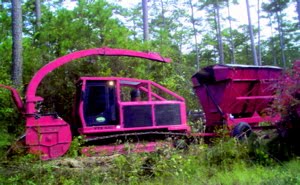
Land clearing is mostly done, especially for the establishment of new plantations, both plantations for food crops and plantations or forests for wood products. The establishment of palm oil plantations and acacia forests are examples. Prior to planting palm oil or acacia, the location which is usually natural forest was cleared of vegetation or trees beforehand. Natural forests, of course, have various types of trees, both in terms of their types and ages. Some trees have a large diameter while others are smaller. After clearing the old trees, then the land is conditioned for the allocation of the plantation.

Indeed, the establishment of the plantation or forest must be in accordance with the land designation. Of course, land that is protected forest or conservation forest cannot be used for production forest or industrial plantation forest. This of course concerns environmental factors in the form of environmental preservation, such as forests as a source of water, preventing the danger of landslides, as a carbon sink and so on. The economic activities of production forests must also pay attention to environmental aspects so that the business being carried out can also be sustainable. Wood, for example, as a source of biomass for various industrial raw materials, can be said to be a renewable source only if it is managed properly and sustainably.

During the land clearing, a lot of wood just becomes waste. Timber with large diameters can be sold to sawmills. However, small diameter woods such as branches and twigs are mostly not utilized, even though there are many. The solution to this problem can be processed into charcoal and briquettes. Non-salable logs for sale in sawmills can be used for charcoal production. With good technology, high quality charcoal production can be done, namely with a fixed carbon of more than 82%. Production quantity up to 3000 tonnes / year of charcoal are also possible. Meanwhile, waste wood in the form of smaller twigs or pieces of wood can be used for briquette production. The production of briquettes is easier and also cheaper than wood pellets. Another thing that distinguishes briquettes from pellets, especially the market segment, can be read here for more details.

Thursday, February 28, 2019

Utilization of Waste Wood of Land Clearing For Sawdust Charcoal Briquette

The area of ​​oil palm oil plantations in Indonesia continues to grow every year. CPO and PKO needs continue to increase throughout the year. This is in line with the increasing edible oil and also world energy, especially renewable energy. The expansion of palm oil plantations is mostly done by land clearing, which of course must be legal or obtain permission from the authorities. The opening of the forest produces a lot of waste wood which should not be wasted but can be profitable.

The prospective palm oil entrepreneurs are also thinking hard to use waste wood into a profitable product. In addition to the large amount of waste wood, there is also the entrepreneur's mindset to maximize profits if it can be obtained in a short time. For example, every 1 hectare produces 50 tons of wood waste, so 10,000 hectares will produce 500,000 tons of wood waste, a very large amount of course.
One of the uses of wood waste so as to provide economic benefits is the production of sawdust charcoal briquette. Sawdust charcoal briquette has a very open market for Turkey, the Middle East and Saudi Arabia, for more details to read here. To produce high quality sawdust charcoal briquette products, the factor of consistency of raw materials must be fulfilled. The wood waste from clearing the forest can be grouped into the types of softwood and hardwood. Furthermore, for the raw material of sawdust charcoal briquette the composition of softwood with hard wood must be maintained in such a way that it can be fixed or consistent.

The quality of sawdust charcoal briquette from forest waste wood should not be lower compared to sawdust charcoal briquette made from wood waste processing or from sawmills. With quality that competes with sawdust charcoal briquette products made from wood waste processing and sawmill waste, the selling price of sawdust charcoal briquette automatically from forest wood waste also competes. Well, the problem is how can the production of sawdust charcoal briquette from forest wood waste be done? Doesn't that need electricity? How to get electricity in the middle of the forest?
The electricity is vital for the production of the sawdust charcoal briquette. Electricity from PLN is impossible for this location, whereas if with diesel oil (diesel fuel) as a driving fuel the generator is expensive, which is around IDR 15,000 for each liter. The solution is to produce electricity with wood waste itself. This means that some wood waste is used for sawdust charcoal briquette production and partly for electricity production. Gasifier or gasification technology can be used for electricity production from processing forest wood waste. Forest wood waste is made chip and used to fuel the gasifier.

Then what about the long-term business for Sawdust Charcoal Briquette? Does it also mean that it is finished after the wood clearing the forest clears is used up? Of course there are a number of things that can be done to keep the sawdust charcoal business going. One of the things that can be done is by making energy plantations from fast-rotating plants as a source of sawdust charcoal briquette. Fast rotating plants that can be planted for example is calliandra, for more detailed explanation, please read here.

Tuesday, November 1, 2016

When the "Raw" Bioenergy Only "Removed" and Bring Annual Disaster: An Idea as a Solution to the Problem of Forest Fires in Indonesia

Forest fires do not only become an environmental disaster but it has been a humanitarian catastrophe resulted in a number of casualties. The parties deliberately uncontrolled forest fires have exacerbated the disaster. Hundreds thousands of hectares to millions of hectares of forest burned annually, that means the equivalent of millions to billions of tons of biomass simply vanished due to burning vain. Though millions of tons up to billions of tons of biomass has the potential raw material for a variety of renewable energy, or bioenergy. With the amount of biomass only Indonesia could become a world major player of renewable energy, especially wood pellets. Strangely the incident occurred routine or repeated every year and there is no perfect solution to overcome it. While the rainy season some burnt forest areas are also experiencing floods even landslides, so complete has been suffering every year and repeated from time to time. Of course it can not be tolerated, and immediately overcome by breaking the chain.

With densification technologies (biomass densification), the biomass from various plants or trees can be made into pellets or briquettes. Pellets and briquettes are two kinds of  densification product or compaction of biomass for energy are very popular and are used in addition to the domestic industry also for export. Sorting the raw materials are things you need to do to get a product of high quality pellets or briquettes, which is a standard and stable. Selection of raw materials, among others by woody biomass feedstock material separated by grass and so on. The consistent composition to the densification machine must continue to be pursued and maintained in order to achieve high quality is for example the composition of hardwood and softwood also need a certain percentage. Furthermore, the timber is destroyed or customized particle size for densification technology that is selected, it will usually size of sawdust, then mixed with a certain ratio and the mixture is compressed with a high compression into pellets or briquettes.
Then, how about the waste of grasses such as reeds and leaves? Biomass types of grasses and leaves can also be used as pellets or briquettes, but the quality will be lower than the sawdust raw material. If they can be used to feed livestock such as goats or cows then it will be better in utilizing the waste grass and leaves.
While with continous (slow) pyrolysis technology then all the biomass waste can also be processed for useful products and high economic value. Charcoal product is the main product (slow) pyrolysis technology that because it is most appropriate to maximize the solid product. The charcoal can be used in addition to energy, also to the agricultural sector to help improve the soil fertility. For transport efficiency reasons, simplify handling, use and storage of charcoal is also done densification (compressed) into pellets or briquettes. There is a slight difference of course between compacting sawdust with charcoal because of its characteristics (physical-chemical properties) both of which also is also different.


Agricultural charcoal (biochar) will also be in line with the purpose for agriculture after the open land. Biochar or charcoal is able to help fertilize the soil by retaining moisture, hold fertilizer nutrients from washing and the like as well as activate a number of soil microbes. Sorting pattern of raw materials also applied in this technology to produce high quality charcoal product (standard and stable). Raw materials of woody biomass in general is best for variety of biomass utilization for energy. For example, to produce high-quality charcoal using woody raw materials only with composition between certain types of wood as well.

In addition to the (slow) pyrolysis products will also be produced gas (syngas), biooil (Tarry liquid) and pyrolysis acid (wood vinegar). Syngas can be used to fuel a power plant or a heat source a variety of purposes. Almost all the areas hardest-hit by forest fires is also experiencing a shortage of electricity supply so that the power plant will be needed in the area. Biooil as a liquid fuel can also be used for a number of industries could even be further processed into fuel for vehicles. And the last, pyrolysis acid (wood vinegar) can be used as an agricultural bio-insecticide.

While most current scenario is the manufacture of torrefied biomass fuel. Torrefied biomass fuel is made also by pyrolysis technology but  with the process temperature lower than the pyrolysis process for the production of charcoal (biochar) or so-called torrefaction / mild-pyrolysis. Many current torrefaction processes that failed due to a lack of energy for torrefaction process itself. The combination of pyrolysis with torrefaction is a fitting blend that makes both processes run as expected. In the continous (slow) pyrolysis process that running in auto-thermal (self-sustaining) will also be generated excess-syngas that can be used for fuel or energy source for torrefaction process. Just like before sorting /selecting  the raw materials are also needed in this process. The torrefaction process configuration for one of them namely, raw materials such as grass and leaves are used for pyrolysis with charcoal results for agricultural and woody biomass raw materials for feed of torrefaction.


The final results of torrefied fuel is almost all done further densification (compressed) either into torrefied pellets and torrefied briquettes. Calorific value and a number of physical-chemical properties (characteristics) torrefied pellet / briquette is also better than wood pellet and wood briquette. A number of major countries in Europe, America and Asia are competing to be the pioneer and leader in this torrefaction technology. Japan is a country in Asia that has launched this torrefaction and today has become a hot topic there, more can be read here.
Various ideas and scenarios above can be used as a solution for treating waste biomass during land clearing, certainly by cut or felled not burned. Millions tons up to billions tons of biomass will be able to be saved and beneficial manner and clear the environmental disaster in the world spotlight will also be inevitable, but it is also a number of economic benefits is not small.When it has been able to provide further solutions in the next term improvement practices and agricultural or horticultural system should also be done so that other environmental disasters that floods in the rainy season that does not happen. Energy plantations has many advantages of maintaining the environment sustainability of these areas in the long term while also able to improve the economic aspects of the area with production of various bioenergy.
Production of Bark Briquettes from Wood Pellet Factory Waste

To reduce the ash content of wood pellets and thereby improve their quality, a process known as "debarking" (removing the tree bar...