Showing posts with label biomass waste. Show all posts

Thursday, May 14, 2026

Indonesia's 2026 Palm Oil Replanting Target and Solutions for Utilizing Palm Oil Trunk Waste

Indonesia's stagnant national palm oil productivity requires an immediate solution. If this situation is not addressed promptly, Indonesian palm oil productivity will decline in the future. This is undesirable given the increasing demand for palm oil as a vegetable oil, including its use in biofuel, namely biodiesel. The launch of the B50 biodiesel program demands increased palm oil productivity. However, the question remains: why palm oil? Aren't there other crops that can produce oil with a comparable yield for biodiesel production? Nyamplung is a strong candidate for this; read more details here.

In palm oil, productivity can be increased through the use of superior seeds, replanting, and land intensification. In terms of land area, replanting palm oil plantations, with an ideal target of 5% per year, is very significant. With Indonesia's current 16.8 million hectares of oil palm plantations, that translates to 0.84 million hectares per year. Besides the high costs, the resulting biomass waste, or palm oil trunks, is also substantial. This clearly holds potential for an environmentally friendly bioeconomy-based industry, or circular economy.

With an area of Indonesia's palm oil plantations of around 16.8 million hectares, 9 million hectares are managed by private companies, 550 thousand hectares are owned by state-owned companies (PTPN), 6.1 million hectares belong to people's plantations or small farmers and the rest have not been verified. And based on data from the Central Statistics Agency (2024), recorded 10 provinces in Indonesia with the largest oil palm plantations in sequence, namely Riau province with 3.49 million ha, Central Kalimantan province with 2.03 million ha, North Sumatra province with 2.01 million ha, West Kalimantan province with 1.82 million ha, South Sumatra province with 1.40 million ha, East Kalimantan province with 1.32 million ha, Jambi province with 1.19 million ha, South Kalimantan province with 497.2 thousand ha, Aceh province with 487.5 thousand ha, and West Sumatra province with 379.6 thousand ha. And a total of 26 provinces in Indonesia as centers of palm oil plantations.

The palm oil industry, as one of the national strategic industries, receives significant government support, including the People's Palm Oil Replanting (PSR), which remains a national strategic program, although its realization has not yet reached the target. South Sumatra, as one of the national palm oil plantation centers, also recorded the highest PSR realization. PSR realization in 2025 is approximately 40,000 hectares, or 33% (one-third) of the target of 120,000 ha. This represents a slight increase compared to 2024, which was only 31% of that year's target. Specifically, South Sumatra has replanted approximately 75,000 ha of smallholder palm oil plantations from 2017 to 2025.

The government is targeting a national PSR of 50,000 ha for 2026, a much more realistic figure than in previous years, with South Sumatra province targeting 5,750 ha. However, given Indonesia's oil palm plantation area, the 2024 and 2025 targets of 120,000 ha are very low, especially for 2026, which is only 50,000 ha. Under these conditions, efforts that can be accelerated to increase national palm oil productivity are through the use of superior seeds and land intensification.

Furthermore, ganoderma can lead to the death of palm oil trees. Ganoderma, caused by the fungus Ganoderma boninense, attacks the palm oil's root system, disrupting nutrient and water transport. The process is very slow and is only detected when the infection is severe, resulting in yellowing leaves, drooping crowns, and even plant death. Waste from ganoderma-infected trunks must be removed or destroyed from the plantation to prevent further spread. Like waste from palm oil trunks from replanting, this waste must also be properly managed.

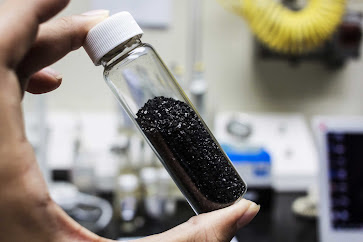
The issue of biomass waste from palm oil trees, which covers thousands of hectares, also presents a challenge. With such a large volume of old palm oil trees, utilizing them to create value-added products is crucial. With such a large volume, biomass processing plants or industries can be established and operate optimally, without worrying about raw material shortages. Products such as pellets, briquettes, and biochar are made from this waste biomass from old palm oil trunks. Old, dead palm oil trunks, often left unattended on land, should be utilized to create these useful, value-added products.

As shown in the diagram above, the potential for utilizing biomass waste, particularly oil palm trunks, is enormous. In the future, industrializing bioeconomics into various products is highly feasible. Palm oil trunk waste should not only pollute the environment and increase costs for palm oil farmers, but instead, it should become a profitable industrial raw material.

Friday, January 2, 2026

EFB Pellets: Indonesia and Malaysia's Huge Potential Ready to be Monetized

Empty oil palm fruit bunches (EFB) are the most abundant solid waste from palm oil mills. Efforts to utilize them have also attracted considerable attention. With hundreds of tons of waste produced daily, it certainly presents a challenge, but also an attractive opportunity. Considerations of investment size and potential profits are key. EFB pellet production is an attractive option given the need for biomass fuel for decarbonization, renewable fuels, and carbon-neutral fuels to achieve Indonesia's Net Zero Emissions (NZE) by 2060.

The global population of palm oil plantations, with Indonesia and Malaysia leading the way, makes processing this material highly attractive. Many machinery companies have focused on empty fruit bunch processing, particularly through size reduction and pressing, but few have focused on producing EFB pellets. This is because empty fruit bunches, with their high fiber content, are more difficult to process than wood materials like sawdust or other agricultural waste biomass. 

Selecting the right, reliable, and experienced production machinery supplier is key to success. Performance guarantees, such as agreed quality and quantity targets, as well as timely machine manufacturing, installation, commissioning, and production, are indicators of the supplier's reliability. A track record is also an important consideration. Furthermore, the high potassium content of empty fruit bunches (EFB) poses a challenge in producing boiler-friendly fuel, particularly for pulverized combustion, commonly used in power plants.

And with the increasing number of companies producing EFB pellets, there will be competition for the supply of empty fruit bunches raw materials, such as PLN EPI (Energi Primer Indonesia) which signed a Memorandum of Understanding (MoU) with PT Biomassa Energi Group (BEG) and G7 Group SP.Z.O.O from Poland which was developed jointly will start operating in February 2026, with an initial production target of 120 thousand tons per year, and will be followed by five additional factories with similar or larger capacities, more details read here

Tuesday, September 2, 2025

Replanting Palm Oil Plantations and Utilizing Old Palm Oil Trunks Waste (Presentation Version)

Aging plants are one factor in declining palm oil productivity. Palm oil trees begin to decline in productivity after 20 years and need to be replaced after 25 years. Therefore, rejuvenation or replanting must be carried out periodically according to the age of the trees.

Furthermore, the demand for palm oil continues to grow in line with global population growth. For the domestic market, biofuel use takes the form of a mandatory 40% palm oil blend in biodiesel (B40) this year, which is being reviewed to increase to 50% (B50) by 2026, and a 3% blend for jet fuel by 2026. Demand for the international market also continues to grow. The main destinations for Indonesian palm oil are India, China, Pakistan, Bangladesh, the United States, the Netherlands, Spain, Italy, Egypt, and South Africa.

Replanting palm oil plantations is crucial because it maintains sustainable palm oil productivity and prevents or reduces deforestation for new lands. The potential volume of old palm oil trunk waste generated is enormous, and there are numerous utilization options, including bioenergy, biocarbon, biomaterials, biofuels, and biochemicals.

To read and access the presentation, please download here

Sunday, June 15, 2025

Wood Pellet Production, Solution to Urban Wood Biomass Waste Problems

Sorting is 50% of the solution to the problem of urban waste. The best sorting is at the location where the waste is generated, such as in households in housing or residential areas. With sorting, further waste processing will be much easier. The better the sorting is done, the easier the waste processing can be done. The reluctance of the community to sort waste makes the waste problem more complicated, prone to social conflict and protracted. Although difficult and complicated, cultivating waste sorting must continue to be done because if not handled it will become a serious environmental problem. The paradigm of waste processing also continues to change according to conditions, namely related to environmental impacts, availability of landfills, types and volumes of waste, as below.

If urban waste or MSW (municipal solid waste) can be sorted and processed properly, the environment will be clean and healthy. For example, such sorting is leaf waste made into compost, organic waste from the kitchen and leftover food for maggot feed or farming, wood waste in the form of twigs, pieces of wood and so on for wood pellet production, and plastic waste to be pyrolyzed into fuel or naphtha. And to be processed adequately, the volume of waste must also be sufficient and continuous. This is because the procurement of units for waste processing is also quite expensive. Waste processing should also be decentralized, so that it does not pile up in one place. The production capacity of the village or sub-district scale seems quite good and suitable for the manufacture of such waste processing units.

Among the urban waste is wood waste in the form of twigs, pieces of wood and so on that can be used for the production of wood pellets or wood pellets. The wood waste can come from pruning and felling trees, wood processing industry waste or wood that clogs waters such as rivers. The use of wood pellets or wood pellets can be for household cooking or SME industries. The use of wood pellets in addition to being a fuel or renewable energy that is environmentally friendly, easy to store and use and a solution to overcome biomass waste and reduce LPG imports which are worth around IDR 63.5 trillion each year.

Along with the innovation that continues to be done, wood pellet cooking stoves are becoming easier to use, efficient, clean and safe. For local governments, the production of wood pellets from wood waste also provides many benefits, namely as a solution to handling the waste, creating jobs and socializing the use of environmentally friendly renewable energy for the community. If this is successfully done, in the future the utilization of wood waste can continue to be developed.

Sunday, June 1, 2025

Empty Fruit Bunch of Palm Oil Processing: for Pellets, Briquettes or Biochar ?

Empty fruit bunches (EFB) are solid waste from palm oil mills or CPO production which is the largest in number. This is what makes many machine manufacturers make these EFB processing machines. Most of the machines made are equipments for cutting and pressing the EFB so that the water content decreases and the size becomes smaller. However, both the water content and the size of the EFB as the output of the machine or equipment still do not meet the requirements to be further processed into pellets, briquettes or even biochar. The typical output is more than 4 inches and the water content is more than 45%. EFB must have a low water content of 10% and a size of 5-6 mm to be able to make pellets or briquettes, and less than 1 inch for biochar production.

To obtain suitable raw materials for pellet, briquette and biochar production, the EFB that has been cut and pressed still needs to be reduced in size (size reduction) and its water content reduced to about 1/3 so that it is dry enough. Equipments such as a hammer mill or crusher is needed to reduce the size and a drying tool such as a rotary dryer is needed to reduce the water content. The smaller the size of the material (particle size) and the lower the water content or the drier it is, the more energy is needed. Equipment such as hammer mills and rotary dryers have not become an integral part of EFB processing at this time. However, usually EFB palm oil processing producers also produce press equipments for kernels for the production of kernel oil or PKO in kernel processing plants or KCP (kernel crushing plants) with by-products in the form of palm kernel meal or PKE (palm kernel expeller). 

Considerations for selecting pellet, briquette or biochar production from EFB palm oil depend heavily on the readiness of the business. It is estimated that there are 30 million tons per year of dry EFB palm oil in Indonesia and 10 million tons per year of dry EFB palm oil in Malaysia for raw materials for these products. The use of EFB palm oil waste, in addition to being a solution to waste problems in palm oil mills, will also provide additional benefits for the palm oil mill or company. How much profit is usually also proportional to the investment and production capacity made. With the abundance of potential raw materials and the driving force of sustainability and zero waste, EFB palm oil waste will become an attractive new business. 

Important Parameters of Biochar Quality and Biochar Standards

The physical chemical properties (characteristics) of biochar are parameters of its effectiveness in its various different applications. Factors that affect the physical chemical properties of biochar are raw materials (feedstock), production operating conditions (production process), and treatment before and after processing (pre- or post-processing). And because biochar has different physical chemical properties, laboratory analysis is needed to predict the effectiveness of the biochar. Specifically, certain applications will require certain physical chemical properties so that the selection of the appropriate biochar product is very important. For example, biochar with a high surface area has great potential to absorb environmental toxins, metals and nutrients. This is so that biochar with these characteristics is suitable for environmental remediation applications. And because biochar works on various different contaminants, the biochar needs to be modified for a specific application.

The chemical properties of biochar that are usually used as references are organic carbon (Corg) and carbonates (as CaCO3), H/C ratio and fixed carbon (FC), ash content, and volatile matter (VM). While the physical properties that are usually used as references are bulk density, surface area and particle size distribution. And because the main application of biochar is for agriculture including plantations and forestry, namely to increase the productivity of agricultural, plantation and forestry products by increasing soil fertility, the parameters related to soil fertility are also important references. These parameters are nitrogen, pH & liming, liming equivalent, electrical conductivity, total potassium (K), total phosphorus (P) and metal.

Although biochar has multiple benefits both for improving soil fertility and also climate solutions in the form of carbon sequestration / carbon sink, so biochar products can be selected according to usage priorities. Optimizing the benefits between the two important things is certainly the best choice. The perspective or point of view for optimizing benefits is very dependent on a person's profession or expertise, for more details read here. Parameters in the form of organic carbon (Corg), H / C ratio and fixed carbon (FC) are mainly related to climate solutions, namely carbon sequestration / carbon sink or also commonly called BCR (biochar carbon removal) which can get compensation in the form of carbon credit. To be able to get carbon credit, biochar producers must follow the methodology created by the carbon standard institution (Puro Earth, Verra, European Biochar Certificate), so that BCR can be quantified and sold on the carbon market (currently in VCM = voluntary carbon market).

Meanwhile, regarding the priority in soil fertility, the biochar product made must come from a source rich in nutrients or plant nutrients such as from livestock manure. Biochar from livestock manure tends to have lower organic carbon (Corg) than biochar made from wood. Biochar with high ash content such as that from livestock manure usually also has a higher liming equivalent than biochar from wood. High volatile matter (VM) is also beneficial for soil fertility. VM containing gases such as carbon monoxide and methane, organic hydrocarbons, acids and tar and a number of inorganic compounds can be an important food source for soil microbes. A number of studies also show that biochar from livestock manure has a high portion of phosphorus (P) so that it can meet the P needs of plants, as well as its potassium / potassium (K) content.

Transactions or buying and selling of biochar (physical) or BCR credit require certain quality standards. Without an agreed standard, it will certainly be very difficult to determine a meeting point between the seller and the buyer. There are a number of institutions that develop standards for biochar, including the European Biochar Certificate (EBC), Organic Material Review Institute (OMRI), USDA Certified Bio-based Product and World Biochar Certificate (WBC). To obtain quality parameters or specifications of biochar that are in accordance with its use, a certain type of laboratory is needed. Not many laboratories can conduct this biochar test. Some laboratories that can do it include compost, soil, coal and activated carbon analysis laboratories. With a number of these technical supports, of course, the development of biochar for the future will be easier, especially with the various real benefits of biochar and the increasing public awareness of environmental sustainability issues, especially climate issues. 

Sunday, April 27, 2025

Fastest Entry Point for Biochar Industry

When in the West, especially in Europe, biochar is seen primarily for climate mitigation, namely as carbon sequestration / carbon sink and compared with various similar efforts in carbon negative / negative emission technologies with compensation in the form of carbon credits or BCR (biochar carbon removal) credits, it is very different, especially in Asia and Africa. Biochar in both continents is mainly to increase soil fertility or repair damaged / degraded soils so that they can be more productive to produce agricultural food products. The different approaches are mainly motivated by the factors that influence it, namely especially in Europe when the problems of climate change, the environment, sustainability and global warming are more of their concern, then various efforts in line with that become important and relevant so that biochar is one of the solutions. While in Asia and Africa, the factor of meeting food needs is a more important concern.

Currently there are 6 NET (negative emission technologies) or carbon negative actions that can absorb CO2 from the atmosphere as in the diagram above. Basically, adequate scale or capacity is needed so that climate change mitigation efforts can run effectively and efficiently. The convenience, cost and additional benefits of the above technology applications will affect their implementation. Of the six NETs, ​​biochar has the fastest development, this is because biochar can meet the above factors. Scientific and public interest in Biochar began to grow in the early 2010s and has grown rapidly since then. The initial focus of biochar research was on terra preta (black earth) and soil improvement. And now it has expanded into various fields, including in the context of industry and construction.

The vast area of ​​degraded land reaching tens or even hundreds of millions of hectares in Indonesia can be improved by using biochar. Moreover, the potential for biomass waste that can be utilized is also very large, tens of millions of tons or even more and the need for food (even bioenergy) also continues to increase. Gradual and sustainable efforts to improve the land need to be started immediately. Soil improvement, as well as efforts to manage biomass waste, energy production and become a climate solution with NET are effective simultaneous efforts. This is the appeal of biochar so that it should be a leading program for various industries that are concerned with food and energy security, the environment, decarbonization, climate and sustainability. This is also so that forest clearing for food estates can be avoided if biochar is chosen as a solution. 

The question is how can this biochar immediately become a solution and be implemented massively? Increasing awareness of the benefits of biochar is the entry point. Furthermore, soil improvement as a real action is followed by carbon credit or can be done simultaneously to become the fastest entry point for the biochar industry in Indonesia. This is in addition to carbon credits with biochar or biochar carbon removal (BCR) credits that have been applied globally, carbon credits are also one of the main drivers of the growth of the biochar industry globally. Even globally, BCR credits are ranked first or more than 90% in Carbon Dioxide Removal (CDR) recorded in cdr.fyi.

Monday, March 10, 2025

Optimizing Pyrolysis and Biochar in the Palm Oil Industry

Indonesia's CPO production currently reaches around 50 million tons per year with a land area of ​​around 17.3 million hectares. This means that the average CPO production per hectare is only 2.9 tons or per million hectares produces 2.9 million tons. If biochar is used and there is a 20% increase, it means there is an increase of 10 million tons of CPO per year and this is equivalent to saving around 3.5 million hectares of land, or the use of biochar will slow down forest clearing (deforestation) for palm oil plantations.

The average speed of Indonesian palm oil plantation area is 6.5% per year or equivalent to about 1 million hectares per year for the last 5 years, while the increase in palm oil fruit production or FFB (fresh fruit bunches) is only 11% on average. Even the largest expansion of palm oil land occurred in 2017, which increased by 2.8 million hectares. By opening 1 million hectares of forest, national CPO production only increased by 11%, while without the need to open forests, namely with the application of biochar, there could be a 20% increase in productivity. And the 20% increase in FFB yield (fresh fruit bunches) using biochar is a low estimate.

With the number of palm oil mills in Indonesia reaching more than 1000 units and tens of millions of tons of biomass waste, especially empty palm fruit bunches (EFB), the volume of biochar production produced is certainly very large. In addition, pyrolysis technology can replace combustion technology which is generally used in palm oil mills to produce steam for electricity production and sterilization of fresh fruit bunches (FFB) in CPO production. With pyrolysis raw materials using palm oil tankos and being able to replace palm kernel shells, 100% of palm kernel shells (PKS) can be sold or exported. The sale of palm kernel shells or PKS (palm kernel shells) will certainly provide additional attractive benefits for the palm oil company. Palm kernel shells or PKS are the main competitors of wood pellets in the global biomass market.

In addition, the use of biochar also saves fertilizer use and the highest operational cost on oil palm plantations is fertilizer so this is very relevant. Tens of billions of costs spent on fertilizer can be reduced by using biochar, especially since the biochar comes from its own waste so that it will automatically become a solution for biomass waste management. Including biopesticides and liquid organic fertilizers can also be produced from the pyrolysis process. Carbon credit is the next business potential. This is because the application of biochar to the soil for agriculture or plantations is an effort for carbon sequestration / carbon sink.

The benefits that can be obtained from this biochar carbon credit are also large, even globally biochar carbon credit ranks first or more than 90% in Carbon Dioxide Removal (CDR) recorded in cdr.fyi. However, there are indeed many large biochar producers who do not sell their carbon credits because of the methodological requirements of standard carbon companies such as Puro Earth and Verra, and these biochar producers are comfortable with their biochar sales business, especially since these producers have existed (established) since before carbon credits were available for biochar. 

Sunday, October 27, 2024

Increasing Food Agriculture Productivity: Biochar Application or Forest Clearing for Food Estate?

Indonesia currently ranks 69th out of 113 countries in 2022 in food security and this is lower than Malaysia and Vietnam with indicator points below the global average. This condition is concerning considering that Indonesia was once self-sufficient in food before and even the price of rice in Indonesia is the most expensive in ASEAN. Efforts to maintain food productivity are indeed a challenge, let alone increasing it. Along with increasing population growth, the need for food automatically increases. The condition of declining food production and productivity is related to a number of factors including land conversion to non-agricultural land, and soil / land damage. A number of regulations have been made to stem the rate of decline in food productivity due to these two things.

Regarding land damage, repair efforts need to be made so that agricultural productivity increases. It is estimated that the area of ​​land damage that occurs is very large with a high level of severity. This requires gradual and sustainable repair efforts with various strategies including improving farming patterns and even a number of incentives. Only with these efforts can the agricultural sector as a source of food be repaired or if not, the damage to agricultural land will get worse so that repair efforts will be more difficult.

Biochar application or forest clearing for food estate ?
Biochar application will be able to repair damaged lands. In addition to being a slow-release fertilizer agent so that fertilizer use becomes efficient and does not pollute the environment, increasing soil pH, increasing soil organic carbon and increasing agricultural productivity, biochar will also help overcome the management of agricultural waste that has so far polluted the environment. The increase in agricultural productivity from the use of biochar is on average around 20%. If Indonesia's current rice production is around 31 million tons per year, then the application of biochar will increase total rice production to 37.2 million tons (an increase of 6.2 million tons). With an average rice production per hectare of 6 tons, the increase of 6.2 million tons is equivalent to increasing the area of ​​agricultural land by 1.03 million hectares. Even damaged land from post-mining can be reclaimed and rehabilitated with the application of biochar, with the land area also reaching millions of hectares. This is certainly better than clearing new forest land for food estates because of its environmental impact. 

As the human population grows, the need for food and energy will continue to increase. Indonesia's population in 2045 is estimated to reach 319 million people and the world's population in 2050 is approaching 10 billion people. The need and urgency of biochar to improve soil quality is increasing. Tens of millions of hectares of all Indonesian acidic soils, which are classified as dry land acidic soils, need to be improved with biochar. This means that the business potential reaches billions of dollars or trillions of rupiah. Meanwhile, rice imports in 2024 are targeted to reach 3.6 million tons (as a buffer), a large amount. With an annual rice requirement of around 31 million tons, the contribution of imported rice reaches more than 10%.

Biochar in addition to repairing soil damage so that it increases its fertility which ultimately increases agricultural productivity is also part of the climate solution, namely by means of carbon sequestration. Biochar applied to the soil will last hundreds or even thousands years, and does not decompose. This is another advantageous factor for biochar producers, namely getting carbon credits. The quality of biochar will determine the acquisition or price of the carbon credit, so that the raw materials of biochar and its production process are affected. The price of carbon credits is increasing so that it is increasingly attractive and also the carbon credit market continues to grow.

Damage to land or agricultural land that occurs is mostly caused by excessive use of chemical fertilizers. If the use of chemical fertilizers can be reduced in dosage or with sufficient use, there will be improvements in land quality. Even if chemical fertilizers are gradually reduced in dosage and organic fertilizers / compost are increasingly added so that in the end chemical fertilizers are not used at all, soil fertility will be optimal as well as agricultural productivity.

The photo from here

Of course, this requires time and continuous effort. Livestock must also be encouraged so that compost / organic fertilizer can also be produced sufficiently from the processing of livestock manure. Integrated farming with livestock is the best solution for improving agricultural land with biochar, especially increasing the efficiency of fertilization. If the above can be implemented properly, then forest clearing for food estate land can also be slowed down / held back by considering all aspects comprehensively so that it is not a short-term solution that tends to be forced, and rushed because of the regime's image efforts even at a cost of hundreds of trillions.

Friday, February 9, 2024

Green Economy in the Cement Industry Part 7: Use of Biomass Fuel Apart from Clinker Substitution in Cement Plants

Cement plants are unique or different compared to processing plants or other industries, namely that the majority of carbon emissions (CO2) are produced not from fuel use but from clinker production. CO2 emissions from clinker production reach 60%, while from fuel use it is only 40%. This indicates that decarbonization efforts in cement plants must prioritize these two things. 

The use of cement additives or SCM (supplementary cementious material) as a substitute for clinker has played a major role in decarbonization in cement plants. The greater the use of SCM or the smaller the clinker to cement ratio, the smaller the carbon emissions in cement production. The use of SCM is generally used in cement production in plants, but there is use of SCM in concrete production, even in a larger portion than in cement production, which is common in the United States.


Cement plants in general are major users of coal with large volumes so they must be gradually reduced as part of decarbonization efforts. Regarding carbon emissions from the use of this fuel, many cement plants use alternative energy such as used tires or RDF from municipal solid waste (MSW). Ideally, the use of renewable fuels will reduce carbon emissions significantly. This is why a number of cement plants have started using biomass fuel such as agricultural waste or wood waste from wood working industries. The greater the portion of renewable fuel used, such as agricultural waste biomass and such wood industry, the lower the carbon emissions produced.

The use of technology to increase fuel efficiency also reduces carbon emissions, such as the use of preheaters and precalciners, because there is savings in fuel use in clinker production. But there are also certain specific conditions, for example the production of type II/V or type V cement (high sulfate resistance) will require more fuel because cement requires clinker with a low C3A (tricalcium aluminate) content, the process of which requires more heat energy.

The analogy to a coal-fired power plant in decarbonization efforts is more or less the same as a cement plant. Coal power plants are industries that produce large carbon emissions, like cement plants. At coal-fired power plants, decarbonization efforts begin by cofiring coal with biomass. The biomass ratio in the cofiring continues to be increased over time. The greater the cofiring ratio or biomass portion, the lower the carbon emissions. At a certain level, the coal power plants will be 100% replaced with biomass (fulfiring).

If efforts to become zero carbon emissions (net zero emissions) in coal power plants can be done by converting the fuel into 100% biomass, then in cement plants it cannot be done simply by replacing the fuel with biomass because the main source of carbon emissions in cement plants is in the clinker production. That is why in cement plants the use of SCM to substitute clinker, the ratio or portion must also be increased. Maximizing biomass fuel use and using SCM also cannot reduce carbon emissions to zero (net zero emissions), because of the calcination process. This is why to achieve net zero emissions in cement plants it is necessary to add CCS (carbon capture and storage) unit.

Ideally, when a coal-fired power plant converts 100% of its fuel to biomass, the carbon emissions are zero (net zero emissions) and if CCS equipment is added, it becomes carbon negative emissions. Meanwhile, in cement plants, the use of optimum SCM and 100% biomass fuel still cannot achieve zero carbon emissions, so CCS equipment needs to be added to capture CO2 from the calcination process to achieve zero carbon and if want to achieve carbon negative emission conditions, CCS is also needed to be used to capture CO2 from burning or using biomass fuel.

Tuesday, May 30, 2023

Green Economy in the Cement Industry Part 4


The cement plants apart from being an industry that utilizes or processes waste such as slag and fly ash so that a circular economy pattern is formed, is also an industry that destroys waste by using it as fuel. RDF (Refuse Derived Fuel) from municipal solid waste (MSW) is an alternative energy source that is widely used by the cement industry, especially in the manufacture of clinker. In addition to helping overcome environmental problems in the form of environmental pollution from city waste, the use of RDF  also helps reduce carbon emissions or is part of the effort to decarbonize. Related to addressing environmental problems, alternative fuels such as used tires which are chopped into tire chips and plastic are also often used. In addition to these alternative fuels, biomass waste such as agricultural waste and livestock waste are also being used. The biomass waste is 100% renewable fuel, so it is more compatible and environmentally friendly. The use of agricultural waste such as rice husk and camel manure is an example of the use of this biomass waste, for more details, read here.

By operating at high temperatures, the cement plant can function as an effective waste destroyer. In this regard, a DRE (Destruction Removal Efficiency) test is required which must meet a very high score or nearly 100% (99.9999%) to be able to carry out the waste destruction activity. The failure to reach this value is due to the insufficiently high temperature, so the consequence is that not all facilities in the cement plant are able to destroy or burn the waste, only burners in kilns that operate above 1200 degrees Celsius can do it, which technically is waste or alternative fuel also has its own feeding point.

Apart from the power failure, cement plant operations can stop due to blocking. The blocking clogs the cyclone on the preheater and calciner. The main cause of blocking occurs is due to the sulfur content, especially from coal and petcoke or alternative fuels that have a high sulfur content such as tires (tyre chips, the sulfur then reacts with the alkali to form compounds that easily stick to the walls of the cyclone or even the kiln. This means that the percentage of sulfur needs to be limited. And the second cause of blocking is chlorine, which also reacts with alkali so it easily sticks to the walls of the equipment, but the difference is blocking because chlorine occurs at a lower temperature, so it sticks to the top of the cyclone. This means that the percentage of chlorine also needs to be limited.

Based on the conditions mentioned above, the use of alternative fuels, especially from renewable materials, is important, moreover, renewable fuels such as biomass have very low sulfur content, as well as chlorine, but certain alternative fuels must be calculated carefully, especially sulfur and chlorine content. , so no blocking occurs. Meanwhile, fossil fuels such as coal and petcoke apart from being cons of decarbonization efforts also turn out to be the main cause of blocking. This means that the use of fossil fuels must be further reduced.

Monday, April 24, 2023

Developing Wood Pellet Production Centers in Indonesia

Vast land with a tropical climate with year-round sunshine and high rainfall is a gift from Allah SWT that makes Indonesia a world center of biomass. Biomass-based products such as energy and animal feed are very relevant in the bioeconomy era which is predicted to become a world trend in the near future. Potential optimization must be carried out especially since it is very much in line and relevant to world trends (decarbonization & sustainability) in general and Indonesia's specific national conditions in particular. On the other hand, we can see a number of countries whose majority of their economies depend on fossil energy, especially oil and gas, such as Saudi Arabia and Qatar or the Gulf countries in general, have to change their course to fight to reduce dependence on these natural resources. Efforts for realization/implementation and acceleration should be carried out immediately, even though it is actually a little late compared to other countries in Southeast Asia, especially Vietnam, for more details please read here, but given the potential and future direction of the world economy, of course, besides being urgent, it is also important to do this.  

As a reference for the development of the wood pellet industry in Indonesia, we can take the example of a country in North America, namely Canada, especially in the province of British Columbia. The province has the highest concentration or the most wood pellet factories, which are estimated to reach around 70% of the country's production. From the research conducted, it was found that 85% of the wood pellet raw material used was sawmill waste and the remaining 15% was forest waste. And the forest waste can be further broken down into 11% low quality logs and 4% bush plants. So all the raw materials used in the province use wood wastes produced from sawmills and remnants from the forest. The production of wood pellets basically has to use raw materials from wood wastes or wood which are worth the wood waste.

By utilizing these wastes, in addition to overcoming environmental pollution, even  sawmill operations become zero waste, it also provides additional income or economic benefits which are quite large in value. Forest wastes in Indonesia such as from acacia plantations have the potential to be used for the production of wood pellets. For example, with an acacia plantation, if every hectare produces 20 tons of acacia wood waste, then with an area of 20,000 hectares, 400,000 tons of acacia wood waste will already be produced. The area of 20,000 hectares of acacia plantations is not too big, this is because there are a number of HTI (industrial plantation forest) concession holders covering hundreds of thousands of hectares, so the volume of wood waste produced is also very large. Acacia forests or plantations in Indonesia are estimated to reach 2 million hectares and almost all of these acacia forests are used to supply pulp and paper mills. Every pulp and paper mill always has acacia forests with an area of thousands of hectares to fill the pulp and paper mill. Acacia wood with a minimum diameter of 8 cm is used as the raw material, while those with a diameter smaller than that are only used as waste. After the tree is felled, a new planting is carried out (replanting).

Wood products come from different parts of the tree, each tree has a unique potential, depending on a number of factors including the diameter and straightness of the trunk. In acacia trees trunk diameter is the main parameter.
Likewise in the sawmill industry, apart from waste in the form of sawdust, wood waste such as wood chips can also be used as raw material for the production of wood pellets. Each stage of the sawmill industrial process will produce wood waste, with varying shapes, sizes, quantities and uses. It is estimated that around 40% of wood waste produced from sawmills is around 40%. Factors such as worker skills, operator experience, equipment conditions and the shape of the wood affect the wood waste produced. Based on the above waste percentages, a sawmill that processes 1000 m3/month of logs will produce a total of around 400 m3/month of wood waste. More detail as in the table below:


Energy plantations are another option and are even an ideal option for wood pellet production. This is because the volume is large and its availability can be guaranteed, rather than collecting the wood wastes. With this energy plantation, raw materials in the form of wood will be obtained which costs as much as wood waste. Thousands to tens of thousands of hectares of energy plantations can be made for this purpose. In addition to wood, which is the main product of the energy plantation, by-products with significant value are leaves for animal feed and honey from beekeeping. Optimizing the utilization of all these trees will provide maximum added value from the use of the land. The regions of Kalimantan, Sumatra, Sulawesi, Maluku and Papua can become centers of wood pellet production such as the province of British Columbia in Canada.

Biomass Boiler Testing and Selection of Suitable Biomass Fuel

In line with the trends toward decarbonization and sustainability across various sectors of life, particularly in the processing industries ...