
Showing posts with label coal. Show all posts

Saturday, August 23, 2025

Biochar-Based DRI / Sponge Iron Production

In the steel industry, carbon neutral production will be achieved when iron and steel production use 100% renewable energy. Electric arc furnaces (EAFs) can be used as long as the electricity is generated from renewable energy sources. However, EAFs, which still use electricity from fossil fuels, can be a transitional medium before 100% carbon neutral production due to their lower CO2 emissions compared to blast furnaces (BF) using coke from coal. The raw materials processed with EAFs are steel scrap and direct reduced iron (DRI/sponge iron). Steel scrap or DRI (sponge iron) is directly fed into the electric arc furnace (EAF) for steelmaking, resulting in lower carbon emissions compared to the blast furnace (BF) method. CO2 emissions from the blast furnace (BF) are approximately 2.33 tons for each ton of crude iron/pig iron, while with the EAF, they are only approximately 0.66 tons for each ton of crude steel.

Currently, approximately 80% of steel scrap is recycled using EAFs. Globally, EAFs account for approximately 22% of steel production (based on scrap and sponge iron). India is the largest producer of sponge iron, or DRI. Other major producers include Iran, Russia, Mexico, and Saudi Arabia. In 2023, India produced 49.3 million tons, while Iran produced 33.4 million tons. Global sponge iron, or DRI, production reached 135.5 million tons in 2023, while pig iron reached nearly 1.5 billion tons.

And the fact is that currently, to achieve the goal of producing carbon neutral steel is still far away because the construction of blast furnaces - basic oxygen furnaces (BF -BOF) is still being carried out a lot, which should be EAF (Electric Arc Furnace) or currently only about 30% globally the iron and steel industry uses this EAF. The construction of new blast furnaces does tend to increase, in fact, by mid-2024, around 207 million tons per year of new production has been announced and around 100 million tons per year is under construction.

Sponge iron, or DRI, is produced from iron ore that has been processed to remove oxygen, resulting in a porous, sponge-like material. The process for producing DRI is called direct reduction. Direct reduction processes can be roughly divided into two categories: gas-based and coal-based. Just as coal can be used, so charcoal (biochar) can be used as the carbon source. The difference is that charcoal (biochar) is derived from wood or biomass, which are renewable resources. The process typically involves a rotary kiln where iron ore and coal or charcoal (biochar) are fed together, and the reduction reaction occurs in the solid state. India is a major producer of coal-based DRI, with production increasing substantially in recent years, as shown in the map below. Other major producers of DRI, or sponge iron, generally use natural gas-based processes.

The availability of biochar that meets specifications and sufficient volume, as well as its sustainable supply, is needed to substitute coal in DRI production. Therefore, on the upstream side, the availability of biomass raw materials from forestry waste, wood processing, agricultural waste, and agro-industrial waste is crucial for the sustainability of biochar production, including the establishment of energy plantations for this purpose. In addition to replacing the reductant or fuel from coal to charcoal (biochar) in DRI or sponge iron production, efforts to reduce carbon emissions in steel production on the DRI-EAF route also include replacing the EAF electrode from fossil-based synthetic graphite to biochar-based biographite. For more details, read here

Friday, June 21, 2024

Decarbonization of the Iron and Steel Industry Part 3: from Low Carbon Production to Carbon Neutral Production

When the decarbonization target must be achieved according to the specified deadline, various efforts will also be made, including through a transition phase. The transition phase in the iron and steel industry is from low carbon production to neutral carbon production. There are a number of factors that influence towards this goal, especially the readiness of the market to buy iron and steel products produced from the production process and also the readiness of fuel and reducing agents for blast furnaces in the iron and steel industry. Charcoal is a fuel and reducing agent derived from biomass which has great potential for use in this transition phase. Charcoal as a carbonization or biomass pyrolysis product has a high calorific value, high fixed carbon and is stable.

Meanwhile, carbon neutral production conditions will be achieved when iron and steel production in the industry uses 100% renewable energy. The use of an electric furnace (EAF/Electric Arc Furnace) can be done as long as the electricity is produced from renewable energy sources. Likewise, the use of hydrogen fuel in blast furnaces (with electrical energy for plant operations also from renewable energy) is also able to achieve carbon neutral production conditions, and even the use of hydrogen fuel in blast furnaces is considered to be the ultimate goal in decarbonization of the iron and steel industry. With the target of achieving net zero emissions by 2050 and the average service life of blast furnaces being 20 years, the iron and steel industry's efforts to achieve the target must be well formulated and programmed. Even if efforts to replace blast furnaces do not follow this target time, it will put the achievement of net zero emissions by 2050 in jeopardy.

In fact, currently it is still far from achieving this goal because the construction of blast furnaces - basic oxygen furnaces (BF -BOF) is still being carried out, which should be EAF (Electric Arc Furnace) or currently only around 30% of the global iron and steel industry uses this EAF. Even the International Energy Association (IEA) highlighted this critical issue to achieve the Paris Agreement's net-zero target by 2050. CO2 intensity in this industry has only slightly decreased so that the use of renewable energy becomes increasingly important and accelerated.

A case example is the Japanese iron and steel industry. As a steel producer of more than 85 million tons per year with main use in domestic construction projects and automotive manufacturing and with more than 25% (more than 21 million tons) being exported, the Japanese steel industry has a significant influence on the global market. The dominant dependence on coal is the main problem of decarbonization and moreover, Japan is also the third largest coal importer in the world. Furthermore, decarbonization in Japan is considered inadequate because the Japanese steel industry lags behind other major world steel producers. Japan is a G7 country that does not implement a coal phaseout period.

Nippon Steel has even been labeled a climate laggard or slow to respond to the climate crisis in the Asian region. This is because the decarbonization strategy is inadequate or not in accordance with the IPCC's 1.5°C warming pathway or the IEA's net-zero pathways. This condition threatens national and global decarbonization targets and puts Japan's steel industry at risk. Meanwhile demand for low-carbon steel is increasing rapidly because steel industries and governments around the world are committed to reducing carbon emissions from fossil fuels. The Japanese steel industry needs to immediately decarbonize to remain competitive in the global market. Decarbonizing by investing in low-carbon steel production will address these risks and can position the Japanese steel industry as a leader in the green transition of the global steel industry.


Regarding the issue of fuel or renewable energy sources, biomass has a strategic position and role, namely in blast furnace operations, charcoal, which is a product of biomass carbonization, is used as a fuel and reducing agent, while in electricity production for iron and steel plant operations, biomass can be used as a renewable energy sources or biomass power plants. This is why the availability of biomass is very important so that the creation of energy plantations as a source of biomass is very necessary. Not only is the plantation a source of energy, it can also play a role in the production of food and feed, both of which are very beneficial for human life. And of course optimizing the use of the plantation by utilizing all parts of the tree (whole tree utilization) also provides maximum financial / economic benefits and with good management it will also provide benefits or improve the environment. And ideally by 2050 the steel industries will use electric arc furnaces / EAF, 100% hydrogen in blast furnaces and even a combination of carbon capture, to achieve net zero emissions in 2050 or even negative emissions so it is very good for the climate.

Monday, March 18, 2024

Coal Companies and New Business Development in Renewable Energy (Wood Pellets and PKS)

Coal is a fossil fuel which is one of the main causes of greenhouse gases, especially CO2, which causes global warming and climate change. Even though this fuel is cheap and available in abundance in Indonesia, its use will be increasingly reduced over time to achieve safe conditions for the earth. Indonesia is the 5th largest coal producer in the world with production of around 570 million tons per year with reserves reaching 38 billion tons, the main production of which is on the islands of Sumatra and Kalimantan. A large coal company in Indonesia can produce 50 million tons of coal every year.

Policies to reduce consumption of fossil fuels, especially coal, also continue to be implemented globally. For Asia, for example, Japan and Korea with their Feed in Tariff and Renewable Portfolio Standard (RPS) are leading the way in the use of renewable energy, especially wood pellets. Meanwhile in Europe, with the Renewable Energy Directive II (RED II), renewable energy is targeted to reach 32% by 2030, biomass fuel is predicted to reach around 75% of the share of renewable energy and the target is that coal will not be used completely by 2050. Germany has announced that it will not use coal. By 2038, the UK is even targeting no longer using coal for its electricity production starting October 2024. North America, namely the United States and Canada as members of the G7, are also committed to reducing coal consumption, in 2018 Canada even announced regulations to no longer use coal for electricity generation by 2030. On the other hand, coal power plant construction projects funded by China in various countries have collapsed. Plus, the G7 countries (Canada, France, Germany, Italy, Japan, England and the United States) are aggressively blocking the use of coal. Countries that still support coal use, such as China and Indonesia, are increasingly isolated and could face more pressure to stop such activities.

Seeing the world energy trend which is starting to decarbonize, many coal companies are then developing new businesses in the renewable energy sector. A number of coal companies are known to have planned to produce large capacity wood pellets and also become palm kernel shell (PKS) exporters. And seeing the global trend in the use of renewable energy which continues to increase, especially biomass fuel, it is possible that in the near future they will immediately execute this plan. With the large profits from the coal business, developing new businesses should also be easier.

For these coal producers whose business sector is in the energy sector, marketing these biomass fuel products should not be difficult. Wood pellets and palm kernel shells / pks can be used as fuel in power plants just like coal. In fact, a number of coal-fired steam power plants also use certain amounts of biomass fuel which is mixed with coal, namely by cofiring. In fact, biomass fuel can be used 100% in certain types of technological power plants such as stokers and fluidized beds. As both products for energy, more specifically solid fuels with the same users, it is indeed easier for coal companies to develop into the wood pellet industry and export palm kernel shells / pks.

In contrast to palm kernel shells / pks which is waste or by-product from palm oil mills or CPO mills which are obtained by collecting from palm oil mills, wood pellet production for large capacities requires a stable and sustainable supply of raw materials with one of the best options being wood from energy plantation. Energy plantations with a certain area need to be created according to the wood pellet production targets to be achieved. Post-mining land can be reclaimed for energy plantations. And for coal companies developing renewable energy also gives a positive image because it contributes to the decarbonization program and if in time the coal business has to be reduced or even stopped, they will be ready with a new business in the form of renewable energy.

Friday, February 9, 2024

Green Economy in the Cement Industry Part 7: Use of Biomass Fuel Apart from Clinker Substitution in Cement Plants

Cement plants are unique or different compared to processing plants or other industries, namely that the majority of carbon emissions (CO2) are produced not from fuel use but from clinker production. CO2 emissions from clinker production reach 60%, while from fuel use it is only 40%. This indicates that decarbonization efforts in cement plants must prioritize these two things. 

The use of cement additives or SCM (supplementary cementious material) as a substitute for clinker has played a major role in decarbonization in cement plants. The greater the use of SCM or the smaller the clinker to cement ratio, the smaller the carbon emissions in cement production. The use of SCM is generally used in cement production in plants, but there is use of SCM in concrete production, even in a larger portion than in cement production, which is common in the United States.


Cement plants in general are major users of coal with large volumes so they must be gradually reduced as part of decarbonization efforts. Regarding carbon emissions from the use of this fuel, many cement plants use alternative energy such as used tires or RDF from municipal solid waste (MSW). Ideally, the use of renewable fuels will reduce carbon emissions significantly. This is why a number of cement plants have started using biomass fuel such as agricultural waste or wood waste from wood working industries. The greater the portion of renewable fuel used, such as agricultural waste biomass and such wood industry, the lower the carbon emissions produced.

The use of technology to increase fuel efficiency also reduces carbon emissions, such as the use of preheaters and precalciners, because there is savings in fuel use in clinker production. But there are also certain specific conditions, for example the production of type II/V or type V cement (high sulfate resistance) will require more fuel because cement requires clinker with a low C3A (tricalcium aluminate) content, the process of which requires more heat energy.

The analogy to a coal-fired power plant in decarbonization efforts is more or less the same as a cement plant. Coal power plants are industries that produce large carbon emissions, like cement plants. At coal-fired power plants, decarbonization efforts begin by cofiring coal with biomass. The biomass ratio in the cofiring continues to be increased over time. The greater the cofiring ratio or biomass portion, the lower the carbon emissions. At a certain level, the coal power plants will be 100% replaced with biomass (fulfiring).

If efforts to become zero carbon emissions (net zero emissions) in coal power plants can be done by converting the fuel into 100% biomass, then in cement plants it cannot be done simply by replacing the fuel with biomass because the main source of carbon emissions in cement plants is in the clinker production. That is why in cement plants the use of SCM to substitute clinker, the ratio or portion must also be increased. Maximizing biomass fuel use and using SCM also cannot reduce carbon emissions to zero (net zero emissions), because of the calcination process. This is why to achieve net zero emissions in cement plants it is necessary to add CCS (carbon capture and storage) unit.

Ideally, when a coal-fired power plant converts 100% of its fuel to biomass, the carbon emissions are zero (net zero emissions) and if CCS equipment is added, it becomes carbon negative emissions. Meanwhile, in cement plants, the use of optimum SCM and 100% biomass fuel still cannot achieve zero carbon emissions, so CCS equipment needs to be added to capture CO2 from the calcination process to achieve zero carbon and if want to achieve carbon negative emission conditions, CCS is also needed to be used to capture CO2 from burning or using biomass fuel.

Thursday, November 16, 2023

Another Form of Reclamation - Energy Plantation for Wood Pellet Production and Integrated Farming


Post-mining reclamation is the obligation of mining companies / IUP (Mining Business License) holders so they must prepare funds for this. Apart from reforesting mining areas in forest areas, other forms of reclamation are more flexible because there are many types, but the aim can provide economic, social and environmental benefits. If the mining company does not carry out reclamation, it will receive heavy sanctions, namely a fine of up to 100 billion rupiah. Post-reclamation business or activity management is also flexible according to the agreement as long as it does not conflict with the above objectives.

Wednesday, November 8, 2023

Decarbonization of Coal Mining with Reclamation for Energy Plantations for Wood Pellet Production


Wood pellets are carbon neutral fuel so they do not add CO2 to the atmosphere, which is different from fossil fuels such as coal which are carbon positive, namely adding CO2 to the atmosphere, which is part of the climate solution. Net zero emissions and decarbonization efforts are also accelerated by the use of carbon neutral fuel such as wood pellets. This is an important and main reason for the production of wood pellets in mining companies, especially coal, so that they can reduce CO2 emissions from burning coal. Post-mining land at coal companies can be reclaimed in another form, namely by creating energy plantations as raw material for wood pellet production. There are millions of hectares of ex-mining land that have potential as energy plantations, for more details read here.


Cofiring coal with biomass is an easy and cheap entry point for coal power plants to gradually use renewable fuels. Over time the biomass to coal cofiring ratio can continue to be increased so that CO2 emissions from carbon positive coal are reduced. Technically, a cofiring ratio of up to 5% does not require equipment modifications at the coal power plants. The amount of CO2 that can be replaced (carbon offset) with carbon neutral fuel such as wood pellets also has the opportunity to get carbon credits or other compensation. The implementation of a carbon tax also increasingly encourages a reduction in the use of coal in power plants and vice versa, namely encouraging an increase in the use of renewable fuels, especially wood pellets in these coal power plants or an increase in the cofiring ratio, even ideally fulfiring can be done, namely 100% using renewable fuel.

The implementation of a carbon tax in Indonesia is planned for 2025, after several postponements. The lowest carbon tax rate is IDR 30 per kilogram of carbon dioxide equivalent (IDR 30,000 or around US$ 2 per ton of CO2 equivalent). This tariff is actually much smaller than the initial proposal of IDR 75. With a tariff of IDR 30, Indonesia is one of the countries with the lowest tariff in the world for carbon tax. By burning 1 ton of coal, it will produce around 3 tons of CO2 emissions, so the carbon tax imposed will reach IDR 90,000 per ton of coal. Meanwhile, the use of renewable or carbon neutral fuels such as wood pellets is not subject to the carbon tax. Apart from that, mining companies are also obliged to reclaim their post-mining land, which if not done will be subject to heavy sanctions.


Energy plantation plants are a type of pioneer plant, easy to grow, efficient at using water, fertilize the soil and have strong roots to resist erosion. Legume types such as calliandra and gliricidia are commonly used as energy plantation plants. Integration of energy plantation product processing must be carried out so that optimal benefits are obtained, namely the main product is wood for wood pellet production, leaves as ruminant animal feed and honey as high quality food. The energy plantation must also be created to be able to produce sustainably, namely by maintaining a balance between wood productivity for wood pellet production, environmental functions in the form of maintaining erosion and groundwater, and the volume of wood harvested must not exceed the growth rate or be at least the same (carbon balance) and using by-products for additional revenue, such as using leaves for animal feed and honey from honey bee farms.

Tuesday, May 30, 2023

Green Economy in the Cement Industry Part 4


The cement plants apart from being an industry that utilizes or processes waste such as slag and fly ash so that a circular economy pattern is formed, is also an industry that destroys waste by using it as fuel. RDF (Refuse Derived Fuel) from municipal solid waste (MSW) is an alternative energy source that is widely used by the cement industry, especially in the manufacture of clinker. In addition to helping overcome environmental problems in the form of environmental pollution from city waste, the use of RDF  also helps reduce carbon emissions or is part of the effort to decarbonize. Related to addressing environmental problems, alternative fuels such as used tires which are chopped into tire chips and plastic are also often used. In addition to these alternative fuels, biomass waste such as agricultural waste and livestock waste are also being used. The biomass waste is 100% renewable fuel, so it is more compatible and environmentally friendly. The use of agricultural waste such as rice husk and camel manure is an example of the use of this biomass waste, for more details, read here.

By operating at high temperatures, the cement plant can function as an effective waste destroyer. In this regard, a DRE (Destruction Removal Efficiency) test is required which must meet a very high score or nearly 100% (99.9999%) to be able to carry out the waste destruction activity. The failure to reach this value is due to the insufficiently high temperature, so the consequence is that not all facilities in the cement plant are able to destroy or burn the waste, only burners in kilns that operate above 1200 degrees Celsius can do it, which technically is waste or alternative fuel also has its own feeding point.

Apart from the power failure, cement plant operations can stop due to blocking. The blocking clogs the cyclone on the preheater and calciner. The main cause of blocking occurs is due to the sulfur content, especially from coal and petcoke or alternative fuels that have a high sulfur content such as tires (tyre chips, the sulfur then reacts with the alkali to form compounds that easily stick to the walls of the cyclone or even the kiln. This means that the percentage of sulfur needs to be limited. And the second cause of blocking is chlorine, which also reacts with alkali so it easily sticks to the walls of the equipment, but the difference is blocking because chlorine occurs at a lower temperature, so it sticks to the top of the cyclone. This means that the percentage of chlorine also needs to be limited.

Based on the conditions mentioned above, the use of alternative fuels, especially from renewable materials, is important, moreover, renewable fuels such as biomass have very low sulfur content, as well as chlorine, but certain alternative fuels must be calculated carefully, especially sulfur and chlorine content. , so no blocking occurs. Meanwhile, fossil fuels such as coal and petcoke apart from being cons of decarbonization efforts also turn out to be the main cause of blocking. This means that the use of fossil fuels must be further reduced.

Sunday, April 17, 2022

Mining Sector and Post-Mining Reclamation

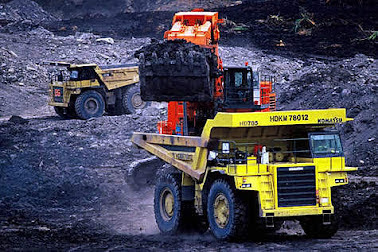
The photo is taken from here
Among the mining sector, coal is the largest mining product in Indonesia and even ranks third at the world level. In 2021 coal production was recorded at 576 million tons and it is projected that there will be only a slight decline in 2024, which is to 570 million tons. This coal is also the largest source of state income after Indonesia's oil can no longer be exported because production runs out for domestic consumption and even less so that it has to become an oil importer. But in the long term the future of coal is bleak as its use is increasingly restricted due to climate concerns. Countries that have ratified the Paris agreement have committed to reducing fossil fuels, especially coal with concrete steps, namely not building new coal power plants, cofiring with renewable energy at coal power plants, converting coal power plants into 100% biomass power plants (fulfiring) and closing a number of coal power plants and replace it with other renewable energy sources.

On the other hand, the post-mining activity also caused a lot of environmental damage, especially the land. Land damage will trigger natural disasters that endanger human life. Do not let the mining activities exploit its natural resources to the fullest but also leave natural damage that is no less severe. Of course this condition is very bad. The obligation of reclamation has also not been carried out properly, many even do not do it or just do it symbolically, imaging and mere formality while the purpose of reclamation itself is not achieved. The threat of a fine of 100 billion rupiah is also imposed for companies that ignore the reclamation to further encourage the reclamation activities.

According to Rizal Kasli, the general chairman of Perhapi (Indonesian Mining Experts Association), currently there are infrastructure and resource constraints (costs) in the implementation of the reclamation, namely for medium and small mining companies, for more details read here. This means that for large companies with large volumes of mining production there should be no obstacles, but stricter law enforcement is needed, according to Rizal Kasli. If large mining companies carry out reclamation properly, of course this is good and becomes an example for small and medium mining companies, but if the opposite happens, it will exacerbate environmental damage. Compensation or profit from the mining business should be in line and proportional to the improvement of the land or post-mining land (reclamation and rehabilitation).
The photo is taken from here
Why do a lot of mining companies generally ignore or neglect reclamation and post-mining land rehabilitation? In addition to the rules that are not strictly enforced, of course the problem is the cost. Mining companies have to spend a lot of money for the reclamation and rehabilitation of post-mining land, the costs depend on the conditions and the area of ​​the land. This of course burdens and reduces the profits of the mining company itself, causing reluctance. So even if reclamation and land rehabilitation are carried out, they are only symbolic, imaging and formality. This can be said to have no impact or achieve the goals of post-mining land reclamation and rehabilitation itself. 

Whereas the purpose of land reclamation and rehabilitation is one of the efforts to prepare fertile land for the future. So what if the reclamation turns out to be a profitable activity? This is certainly very interesting and motivating the mining companies. Bio-economy based reclamation and rehabilitation projects will be able to provide benefits for mining companies that do so. With these benefits, the land reclamation and rehabilitation program will be able to run well and sustainably, so that the entire post-mining area can be touched. We are currently developing a bioeconomic program for the post-mining land reclamation and rehabilitation, for more detailed information please contact us at cakbentra@gmail.com

Friday, December 3, 2021

The Urgency of Ex-Coal Mine Reclamation With Biochar

The large number of ex-coal mines that are not reclaimed causes various environmental problems and even life safety. There have been many casualties from the former coal mine pit. The simple logic should be that after the coal deposit is taken or extracted during the mining activity, the land is returned and repaired so that the quality is better than before the mining activity or at least the same, but not worse so that various environmental problems arise. The era of decarbonization is accelerating because of the driving force of climate change and global warming. Fossil fuels, especially coal, are starting to be abandoned, of course, including the coal mining activity itself. Meanwhile, the area of former coal mines which reaches millions of hectares is a lot of environmental problems today.

When the quality of the soil is improved so that it has high fertility then this becomes a very extraordinary potential so that a number of important activities can be carried out, such as agriculture, animal husbandry and forestry. With such conditions, the effort to self-sufficiency or food sovereignty is not impossible. Technically, it can be analyzed which of the agricultural, livestock and forestry sectors can reach the goal faster, namely food independence or sovereignty. But before going far and doing business on the ex-mining land, to be more specific what products will be made, the basic question is how to improve the condition of the damaged soil and the scale is also massive?

The application of biochar to the soil is a surefire solution in an effort to repair damaged soils. Depending on how severe the damage is, the characteristics of the soil type and the final quality level being targeted will determine the application or dosage of the biochar. In addition to improving the soil, the biochar application also absorbs CO2 from the atmosphere, thereby reducing the concentration of CO2 from the atmosphere or is a carbon negative scenario. Biochar buried in the soil becomes a carbon sink, similar to creating a conservation forest to absorb CO2 from the atmosphere. How much biochar is buried so that it can be calculated that the CO2 absorbed into the carbon sink can be sold on the carbon market and get carbon credit. Biochar itself is able to last in the soil for hundreds of years and is not decomposed for a long time. Even when the land has been repaired with biochar and then a conservation forest is made on it, the carbon credit obtained are double, namely from the application of biochar itself and from the conservation forest. But once again, of course, economic factors are another important consideration, so as above, after soil fertility is improved with biochar, there are a number of options for using the land. Of course which one provides the best economic benefits will be the choice.

Millions of hectares of land can be recovered so that its benefits will be maximized. Say, for example, that one million hectares of land can be recovered and then used for activities that support food security or self-sufficiency such as agriculture and animal husbandry, then how much output can be calculated. Even better if there can be a surplus of food production so that it can export. Or even in the longer term, the land is reforested into conservation forest, so how much CO2 can be absorbed by the forest plus the application of biochar. Of course very much. Then why have to build a food estate but have to clear forest land, while there are other better ways? Namely not only restoring but improving the condition of the land even better before the coal mining activity was carried out.

Thursday, November 25, 2021

Biochar and Land Reclamation of Ex-Coal Mines

Reclamation of ex-coal mining land is the obligation of the mining company, but often this is not done properly for various reasons. These are mainly due to weak rule enforcement and light sanctions. With the area of ex-coal mines that has reached millions of hectares and the reclamation efforts are needed, but the realization in the field is still very minimal, making environmental damage even greater. The thing that can encourage efforts to improve the ex-coal mining land is the profit or economic factor that can be obtained. This means that if the reclamation effort also bring economic benefits - in addition to environmental benefits, of course - then the coal companies will also be happy to do so. So what activity is it?

The photo is taken from here
After the coal deposit is taken, the top soil should be returned to the land. The basic thing that needs to be done is to improve the quality of the soil so that it can be used for planting various crops. By improving soil quality, besides soil fertility can be restored and even increased, it also includes isolating (immobilizing) a number of harmful elements from the ex-coal mining land. Creating a profitable and sustainable business activity is the next step. The improved soil can then be planted and legumes are the best choice, this is because legumes are other than pioneer plant types with high survivability, strong and deep roots that prevent erosion, root nodules from azetobacter symbiosis by binding nitrogen from the atmosphere which fertilizes the soil also provides many other benefits. Ruminant husbandry is a profitable and sustainable business activity, because it mainly utilizes the leaves of the legume plant as a source of feed. The livestock manure can also be used to further improve the health and quality of the soil so that soil fertility continues to increase and is maintained. The wood from the legume plantation can also be used for productions namely briquettes, charcoal briquettes and even wood pellets.

As a basic thing and the entry point for the above business is improving the quality of the land or soil of the ex-coal mines. There are a number of ways to do this, but the use of biochar is one of the best options. With biochar not only increases the pH or acidity of the soil so that many nutrients will be absorbed by plants better and soil microbial activity to decompose organic matter is more active, but it is also able to absorb a number of harmful chemical elements in the soil, increasing soil organic carbon that can last hundreds of years and also absorbs the greenhouse gase from atmosphere. The biochar can be made from a number of agricultural, forestry and agro-industrial wastes, such as wood chips from logging or from palm oil mill waste such as empty fruit bunches and fiber. A number of areas in Kalimantan are not only rich in coal deposits and also currently many of these ex-coal mining lands are abandoned, as well as a lot of biomass materials such as forest waste and palm oil mill waste for the production of biochar.

In order to reduce CO2 emissions in the atmosphere, biochar is also able to absorb CO2 from the atmosphere (carbon sequestration) and is a carbon negative scenario. The biochar applied to the soil is a carbon sink, as an option for carbon credit other than carbon offset. In the current era of decarbonization, efforts to reduce CO2 level in the atmosphere are important. In Indonesia, where there is still a lot of forest land, carbon credit can be obtained from the absorption of CO2 by the trees in the forest, so that the forest acts as a carbon sink as well. But in other countries where the use of fossil energy is very large or massive, they must reduce the adverse climate impacts caused by burning fossil energy materials, especially coal. They can buy carbon credits on this biochar application.

 
Coal is the most widely used fossil energy for power generation in the world today and Indonesia is one of the producers of such coal. Although in the near future the use of coal will be reduced and in some countries it will be stopped altogether, but the negative impacts of coal mining are still many, damaging and even endangering the environment. This is an urgency to improve the land or ex-coal mining land which is estimated to reach 8 million hectares in Indonesia. On the one hand, coal power plants can buy carbon credits for biochar applications like the scheme above. Palm oil mills on the other hand also produce a lot of solid waste, especially empty fruit bunches (EFB) that can be used for the production of biochar. These big companies could collaborate to solve climate problems due to the increasing concentration of CO2 in the atmosphere. To this day, it is reported from the Mauna loa observatory, in Hawaii, United States that the concentration of CO2 in the atmosphere has exceeded 400 ppm or there is still an increase of about 2 ppm every year, even though the global target is to decrease the concentration to only 350 ppm.

Biochar, Soil Health, and the Sustainability of Palm Oil Productivity

Healthy soil is invariably fertile, but fertile soil is not necessarily healthy. Healthy soil teems with life—such as earthworms and other o...