Showing posts with label EFB Briquette. Show all posts

Wednesday, April 15, 2026

OPT Briquette and EFB Briquette for Medium Capacity Industrial Biomass Boiler Consumption

The growing utility business, specifically the provision of steam and electricity for renewable energy-based industries, particularly biomass, has led to a growing need for biomass fuel. This also applies to industries using their utility units to produce steam and electricity using biomass fuel. In addition to biomass fuel, water quality, the raw material for steam and electricity production (using steam turbines), is also crucial and must be considered. Good water quality will ensure optimum steam and electricity production performance, and the longevity of equipment (boilers, heat exchangers, steam turbines, and cooling towers), and vice versa. Good water quality is like healthy blood for our bodies, enabling all organs to function optimally.

Palm oil industry solid waste is a potential raw material for biomass fuel. This solid waste is empty fruit bunches (EFB) and oil palm trunks (OPT). EFB is produced from palm oil mill operations with a percentage of approximately 22% of fresh fruit bunches (FFB), while oil palm trunk waste is produced from replanting programs of oil palm plantations, which are also very abundant. For more details, read here. Utilizing both of these biomass wastes for the production of biomass fuel, especially biomass briquettes, would be very good. But why are they processed into briquettes?

The advantage of briquettes over pellets, aside from technical advantages, lies in their scale. Briquette production requires a looser particle size and lower moisture content. Energy consumption per ton of briquette production is also lower than that of pellet production. This makes EFB briquette and OPT briquette production more suitable for a palm oil mill serving medium-sized industries. A palm oil mill with a capacity of 45 tons/hour of FFB will produce approximately 10 tons/hour of EFB. With a 20-hour daily operation, approximately 200 tons will be produced per day. With a moisture content of approximately 60%, this means that after drying, approximately 100 tons/day (10% moisture content) will be produced, or 2,500 tons/month.

Likewise, when using oil palm trunk (OPT) waste as raw material, it depends on the ratio or percentage of land replanted each year. Replanting itself is an effort to continuously maintain the productivity of the oil palm plantation itself, in addition to the use of superior seeds and intensification. For more details, read here. For example, with a land area of ​​10,000 hectares and each year replanting 5% of the land, or 500 hectares. With an average of 125 trees per hectare of oil palm plantation and each tree having an average dry weight of 0.4 tons, then per hectare obtained 50 tons of dry weight of biomass. With an area of ​​500 hectares, this means 25,000 dry palm trunk biomass (10% moisture content) each year or can be processed into OPT briquettes with a capacity of around 2,000 tons/month.

Biomass boilers, used for producing biomass briquettes (EFB briquettes/OPT briquettes), can utilize various combustion technologies, such as moving grates, stokers, reciprocating grates, and so on. The choice depends on the cost or price of the boiler and its efficiency. In addition to biomass fuel, to align with decarbonization and sustainability programs, water for boiler operation, including boiler feedwater and cooling water for heat exchangers (heat exchangers/condensers), is crucial. This is likened to blood for the human body; healthy blood ensures optimal function. If impure blood circulates throughout the body, for example due to kidney failure, organs will automatically be damaged, and a person will soon die.

To maintain water quality for steam production through a boiler, boiler feedwater/demin water must strictly comply with the boiler's operational specifications. The higher the boiler pressure, the higher the water quality or purer the water required. If the steam is used for electricity production, after the steam drives the turbine, it needs to be condensed in a heat exchanger (condenser) so that it changes phase back to liquid and enters the boiler again. This heat exchanger requires cooling water that is continuously used repeatedly, thus requiring a cooling tower. Not only does the boiler feedwater/demin water need to meet the required technical specifications, but so does the cooling water for this condenser. With water volumes circulating up to thousands of tons per hour and operating 24 hours a day (the same as boiler operations) in the cooling tower, a number of water problems in the cooling tower need to be addressed effectively and efficiently. A number of water problems that occur in cooling towers can be read here.

In addition to electricity production, steam is also used for processes within a specific plant. If the steam is then condensed, then liquid, and returned to the boiler, this requires a cooling tower, just as in electricity production. Efficient and environmentally friendly water treatment technology, which eliminates secondary pollution and is easy to operate and maintain, aligns with the vision of decarbonization and sustainability. This vision of decarbonization and sustainability will be even more optimal or ideal for utility units, namely the use of biomass-based renewable energy and environmentally friendly water treatment technology. 

Friday, October 9, 2020

Production of Briquettes from EFB and MF of Palm Oil for Industrial Boiler Fuels

The need for biomass fuel is increasing all the time, palm kernel shells (PKS) are increasingly expensive and scarce, even though this palm kernel shell (PKS) is the main competitor for wood pellets. When the supply of PKS is limited due to high demand, the price is high, even closer to wood pellets. When this condition is achieved, wood pellets become more desirable than PKS because the quality of wood pellets is better than PKS. In addition to a more uniform shape and size, wood pellets are also drier with a moisture content of around 10%.


In this condition, actually it also opens up opportunities for briquette production. Briquettes and pellets actually use the same type of technology, namely biomass compaction or biomass densification. But briquette production is easier and cheaper than pellets. The level of flexibility of the raw material as a briquette material is also higher than that of pellets. Even some materials that are difficult to make pellets are easy to do with briquette. The size and shape of the briquettes are also more diverse as is the production technology. Briquettes for industrial boiler fuel are briquettes that can be an alternative between PKS and wood pellets.

Besides producing PKS waste, palm oil mills also produce solid waste in the form of empty fruit bunches (EFB) and mesocarp fibre (MF). A number of palm oil mills that use high efficiency boilers will produce a lot of MF. These wastes in the form of EFB and MF can be used as raw material for the production of briquettes. Industrial briquettes with puck shapes that are produced with mechanical press are not only easy to produce but also have a large capacity. The location of the briquette users, which is not too far from the palm oil mill, makes transportation costs cheap, and can compete with PKS and wood pellets.

 Industrial areas and also surrounded by a lot of palm oil mills and plantations such as in Medan, North Sumatra, Indonesia are very potential for the production of industrial briquettes. The briquettes produced are expected to have quality between the PKS and wood pellets as well as the price. The production of industrial briquettes from MF is easier than from EFB. Besides being wet, EFB also needs more effort to reach desired particle size so that it is suitable for the briquetting. Utilization of these wastes in addition to reducing environmental impact will also provide economic benefits.

Wednesday, June 14, 2017

Popularizing Wood Briquette For Renewable Fuel and Environmentally Friendly Part 2


One of the obstacles of lack using for wood briquette that because still no wood briquette stove available in market. Wood briquette stove that special designed for burning the wood briquette so it can be used for cooking is the main factor for wood briquette will be accepted of households and small-medium industries. Food and pharmaceutical industries especially need 'clean' fuel from biomass like wood briquette. Smell and taste of food will no change or contaminant of pharmaceutical industries can be minimized.

Supply of the wood briquette also easier to be done because the production process and technology already mastered. All equipments can be fabricated in the local fabricator in Indonesia even extruder or screw press that the main equipment in briquetting. That is different with wood pellet in which pelleting equipment (pelletiser) still have to be imported from foreign countries. The investment for production equipment (machineries) of wood briquette also cheaper compare with wood pellet, even almost a half.

For feeding the wood briquette into the stove can be done manually, that because the size of wood briquette much bigger than wood pellet. At wood briquette stove usually installed door in upper part for feeding or inserting the wood briquette. While in the wood pellets feeding can be done with screw conveyor because the size of wood pellet is small enough and pourable. In addition wood briquette also available in many shapes for example cylinder, hexagon, cube etc. The shapes of the wood briquette come from many briquetting technologies, that can be read here. All of the briquette can use the wood briquette stove as long as the size and length fit with it. Generally briquetting also easier compare with pelleting. Raw material that success in briquetting not always success in pelleting but not respectively.

Photos of the wood briquette stove, taken from here
The high stove efficiency can be achieved if heat loss from burning can be minimized. Wood briquette has low moisture content so smoke generated from the combustion also minimum. With wood briquette price cheaper per-heat calory compare with LPG, so using wood briquette also more economical. Operational of the stove that easier and practical will drive the usage of the wood briquette. The stove also can be equipped with TEG (Thermo-Electric Generator) for getting small electricity.

Plam Oil EFB Briquette

Beside the wood wastes for wood briquette production, agricultural wastes also can be made into biomass briquette for example rice husk, coffee husk, coconut husk, baggase, palm oil empty fruit bunch, etc. Some of the wastes mentioned before abundant in some Indonesia regions. Empty fruit bunch (EFB) of palm oil for example abundant in palm oil mills and more than 600 palm oil mills available in Indonesia. The EFB can be briquetted then can be used as biomass fuel.

Friday, April 14, 2017

EFB Densification To CPO Downstream Industries


Energy is generally the highest cost component in the production process.  Energy savings would give a significant impact on production costs and product prices. So that the energy must be obtained at a low cost for production efficiency. Utilization of wastes available is a surefire way to get the production efficiency, especially these wastes generated daily is available or even with a large number or capacity.

EFB (empty fruit bunch) is waste that is generated every day in the palm oil mill or CPO factory. The EFB volume or capacity pretty much every day, for example: the CPO mill with a capacity of 30 ton FFB (fresh fruit bunch) / hour will be generated tankos 8.1 tonnes / hour (5.7 tons of water, 2.4 tons of dry weight) or 162 tonnes each day (114 tons of water, 48 tons of dry weight). EFB utilization for energy source in refining or downstream of CPO, is the perfect solution for waste management and the source of energy.


EFB is wet waste of palm oil and large size from the CPO mill can not be directly used but must be processed in advance so that a fuel or energy source ready. Densification or compaction of EFB into pellets or briquettes is the solution to fuel or energy source that is ready to use it.

Since the Government implemented customs exit (BK = Bea Keluar in Indonesian) CPO, downstream palm oil industry in Indonesia is growing. Finance Minister Regulation (PMK) No. 67/2010 on Stipulation of Export Goods Subject BK and BK Rates mentioned, CPO exports imposed BK from 0-25% depending on price developments in Rotterdam, Netherlands. But the government ultimately lowering the amount of BK to 22.5% after the oil palm planters protest. Magnitude BK was arranged through the PMK No. 128/2011 regarding the Stipulation of Export Goods subject to export duty on August 15, 2011.  Analogy in the fields of petroleum, sell export crude oil should be restricted or even banned, but the industrial products which have undergone treatment so as to give a great added value supported and encouraged as much as possible. Indonesian palm oil product exports 60-70% is in the form of CPO, while the downstream products is only 30-40%. Refinery or refining of CPO was built and some have already been produced. In general, oil products are divided into crude palm oil (CPO), refined products of CPO, palm kernel oil (PKO) and refined products of PKO, biodiesel and oleo-chemical.

Purification or CPO refinery is now generally only owned by CPO large factories, while the small and medium-sized CPO factories in general do not have the CPO purification unit. Indonesian Palm Oil Association (GAPKI) noted that currently there are 1,911 oil palm industries in Indonesia which produce 23.5 million tonnes of crude palm oil (CPO) from an area of 8.2 million hectares of land. Utilization of wastes optimally so that the production process of CPO into zero waste and energy cost savings (energy efficiency), the target of all production processes. Briquetting and peletting of EFB as a source of cheap energy, environmentally friendly (carbon neutral) and sustainable for CPO refining industries means will drive the downstream palm oil products, and can be more affordable for the small and medium sized factories.

Simply put the small and medium palm oil mills are going process or producing EFB briquette thereby increasing revenue, making it more profitable than throw away or sold cheaply, while large factories which have CPO purification unit can buy it as fuel for the CPO refining. EFB briquettes price could be cheaper than other energy but still profitable for the EFB briquette producer. In addition to getting energy from burning EFB briquettes, the briquettes buyers will also get an additional benefit from the use of ash.

EFB Ash, photo is taken from here

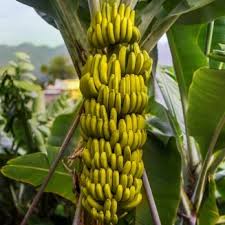
Nutrient in Banana fruit and K have large portion on it
Effect of  K in banana yield
After EFB densification or compaction product in the form of briquettes or pellets then burned it will leave ash as combustion residue or waste. Ash has many benefits for the life of plants. Ash from EFB palm oil are also rich in various compounds, especially potassium (K) which is necessary for the plant with the percentage ranges from 30-40%.  Potassium has many functions for plant namely transporting sugar, to control stomata on the leaves by maintaining electro-neutrality in a plant cell, a co-factor of more than 40 enzime and reduce the occurrence of various diseases. The ash of EFB can then be used as organic fertilizer in the palm oil plantation itself and other plantations, like banana. The high content of potassium in bananas and leaves, indicating potassium is the most important nutrients in banana production. Some of potassium from the soil is taken or removed from the plantation in the form of a banana crop very much.

Banana fruit
Estimated loss of the potassium element from the soil through the banana fruit alone reached 400 kg (equivalent to 480 kg K2O) per hectare with a production of 70 tons of fruit. Based on these reason, the banana still require high amount of potassium supply, although the content of potassium in the soil is already quite high. A study on the banana tree with K2O giving as much as 1000 grams / tree has given a bunch of banana weighing 29.4 kg. Some plants are also less suitable and sensitive element of chloride (Cl), so that the portions need to be reduced or even eliminated. In the banana plant, for example the high chloride make banana seedling growth is disrupted and empty fruit. K2O is a compound in EFB ash can be used as ideal organic fertilizer, replacing KCl fertilizer. Potassium fertilizers on the market today KCl and K2SO4 (ZK). The price of KCl fertilizer is cheap because of subsidy, while K2SO4 (ZK) fertilizer is expensive, following the dollar exchange rate because it is not subsidized so that only generally only used by large estates/plantations. Whereas if our plants need potassium fertilizer and does not contain chloride, and ZK fertilizer price in the market is much more expensive, the EFB ash fertilizer that rich of K2O can be a perfect solution.

Sunday, January 26, 2014

EFB Briquetting For Bioenergy And Other Purposes

Solid waste such as Empty Fruit Bunch-EFB numbers are very abundant in palm oil mills and to this day are generally not processed moreover utilized optimally.  EFB waste is generally just dumped somewhere and left to decompose naturally through biological processes. Some places have used it as mulch or as an organic fertilizer. But compared to the amount produced, processed EFB are few in number and little added value. The biological processes are also running slow so it takes a big investment to process all EFB waste every day when will use the process. Eco-friendly palm oil mills and "zero waste" certainly impossible achieved.


As energy needs continue to increase every time the diversification of energy becomes important and should be done. These shorter process and results can be used immediately would be an option for the EFB waste processing. Desification technology of biomass into briquette is an attractive option to implement. Briquetting is the shortest route to process the EFB commercially. Process variables such as the size of the briquettes, moisture content, particle size, ash content and plant investment looser than pelleting make it the quickest route of the EFB waste processing. While the briquettes usage  is not a massive pellets but also very large needs. A number of companies producing briquettes, and briquettes are used itself to produce electricity by gasification, pyrolysis and direct combustion technology. Gasification, pyrolysis and direct combustion technology also requires the size and shape of certain raw materials to get optimal performance.


Make the sustainable palm oil business from upstream to downstream is the desire of almost all palm oil businessman. When the palm oil plantation land in need of nutrients that can be supplied from the palm plant itself (EFB for example) but when taken out without anything coming into the soil will also interfere with the palm oil plantation soil fertility in the long term. So it need a good strategy to achieve a sustainable palm oil business. Briquetting is basically the biomass densification that will save transport to its user so that when the briquettes EFB if you want to use as compost can also be parsed again with biological processes to put into the ground so that the balance of soil fertility can be maintained.

Biomass Boiler Testing and Selection of Suitable Biomass Fuel

In line with the trends toward decarbonization and sustainability across various sectors of life, particularly in the processing industries ...