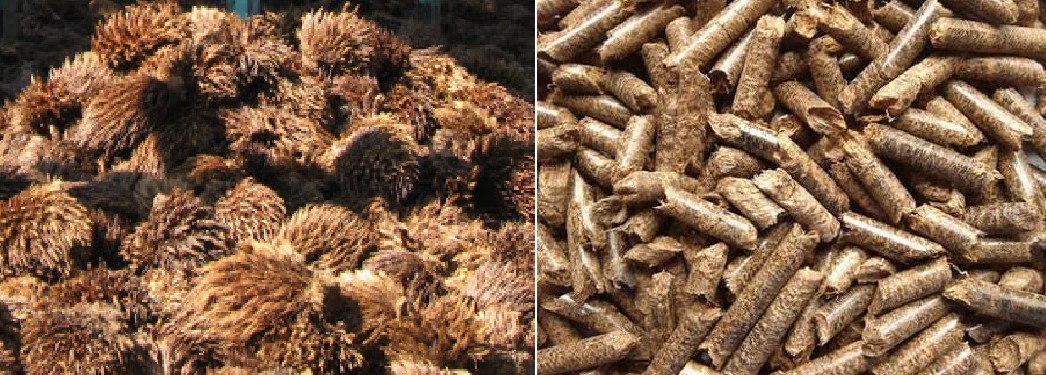
Palm oil plantations are the production base for palm oil mills, both CPO mills and PKO mills. Without the palm fruit produced from the palm oil plantation, the palm oil mill will not be able to produce. Operation of palm oil plantations is indeed not an easy and expensive thing. This is mainly a factor of the large usage fertilizer demand, so as to reach around 60% for the operation of the palm oil plantations themselves or with an area of 20,000 hectares of palm oil plantations, the cost needs reach more than 70 billion rupiahs ( (around US$ 4,766,667), for more details, please read here. The factor to reduce the cost of fertilizer and maintain the productivity of palm oil fruits or fresh fruit bunches and even increase them is the main target for the utilization or processing of palm oil EFB. If the cost of palm oil plantation operations can be reduced, the greater the benefits. Biochar is a palm oil EFB processing product that can be used to reduce fertilizer requirements in the palm oil plantation. Biochar production using pyrolysis as shown below.
Showing posts with label EFB processing. Show all posts
Sunday, March 15, 2020
Business Model Utilization of Palm Oil Empty Fruit Bunches to Maximize the Profit of the Palm Oil Industry
Palm oil empty fruit bunches (EFB) are still a problem for the palm oil
mills in general. The scenario of utilizing palm oil EFB as the goal
should be able to cope well with the environment and provide economic
benefits. Overcoming environmental problems is clearly a top priority
and must be met, but the best use of EFB scenarios should also benefit
the environment, both short term and even long term. Likewise for
economic benefits, economic benefits should also be obtained in line
with these environmental benefits, not counterproductive. That is the
best scenario for the use of palm oil EFB, which is currently still a
problem.
Palm oil plantations are the production base for palm oil mills, both CPO mills and PKO mills. Without the palm fruit produced from the palm oil plantation, the palm oil mill will not be able to produce. Operation of palm oil plantations is indeed not an easy and expensive thing. This is mainly a factor of the large usage fertilizer demand, so as to reach around 60% for the operation of the palm oil plantations themselves or with an area of 20,000 hectares of palm oil plantations, the cost needs reach more than 70 billion rupiahs ( (around US$ 4,766,667), for more details, please read here. The factor to reduce the cost of fertilizer and maintain the productivity of palm oil fruits or fresh fruit bunches and even increase them is the main target for the utilization or processing of palm oil EFB. If the cost of palm oil plantation operations can be reduced, the greater the benefits. Biochar is a palm oil EFB processing product that can be used to reduce fertilizer requirements in the palm oil plantation. Biochar production using pyrolysis as shown below.
In the process of pyrolysis, besides producing the main product in the
form of biochar, then biooil and syngas are also produced. The biooil
and syngas are then used as fuel generator to produce electricity. In
palm oil mills or CPO mills, fiber waste is also commonly found. The
fiber waste is often just piled up and never utilized so it tends to
pollute the environment. Though these fibers can be made pellets for
export and become fuel for power plants. In addition, currently millions
of hectares of old palm oil plantations in Indonesia need to be
immediately replanting. Millions of tons of old oil palm trunks are also
potential for pellet production. If old oil palm trunks are only left
in the plantation so they rot and decay, then it will become lava media
and subsequently become a beetle which actually disrupts productive palm
oil plantations as well as other plantations, for more details read here.
The production of pellets from fiber or palm trunks requires
electricity and this can be supplied from the pyrolysis of palm oil EFB
like the scheme above. Although palm oil mills also produce electricity,
but generally only for the purpose of CPO production, so it is not
enough for the production of fiber pellets and oil palm trunk pellets (OPT pellets).
Palm oil plantations are the production base for palm oil mills, both CPO mills and PKO mills. Without the palm fruit produced from the palm oil plantation, the palm oil mill will not be able to produce. Operation of palm oil plantations is indeed not an easy and expensive thing. This is mainly a factor of the large usage fertilizer demand, so as to reach around 60% for the operation of the palm oil plantations themselves or with an area of 20,000 hectares of palm oil plantations, the cost needs reach more than 70 billion rupiahs ( (around US$ 4,766,667), for more details, please read here. The factor to reduce the cost of fertilizer and maintain the productivity of palm oil fruits or fresh fruit bunches and even increase them is the main target for the utilization or processing of palm oil EFB. If the cost of palm oil plantation operations can be reduced, the greater the benefits. Biochar is a palm oil EFB processing product that can be used to reduce fertilizer requirements in the palm oil plantation. Biochar production using pyrolysis as shown below.
Sunday, March 3, 2019
EFB Pellet is Difficult Accepted by the Market, It's Time for EFB Charcoal Briquette to Come as a Solution
EFB is the most solid waste produced by palm oil mills, as an illustration for palm oil mills with a capacity of 60 tons / hour FFB will produce 264 tons of EFB. The EFB continues to be produced and if it is not treated it will cause more problems. Most EFB is currently only as waste and untapped. As a profit-oriented business entity the palm oil industry, EFB processing or utilization is certainly sought not only to overcome environmental problems but also generate profits. And with the production of EFB charcoal briquette, InsyaAllah, this goal can be achieved. Although the quality of the EFB charcoal briquette will be below the sawdust charcoal briquette, which is woody biomass raw material, there should be a reasonable price for the charcoal briquette EFB product.
The main markets or users of sawdust charcoal briquette are Turkey, Middle East and Saudi Arabia, which use them to roast meat, especially lamb. The charcoal briquette EFB can be used for substitution or an alternative to the sawdust charcoal briquette. Even for the palm oil mill industry which has very large land, it can also develop the livestock industry on the land. Cattle farming in oil palm plantations has started to be done a lot, but what about sheep? Why are sheep farms not getting enough attention? I try to explain in writing here, to try to answer the question above. As in palm oil cultivation on its extensive plantations using certain techniques to maintain its productivity, so also with livestock businesses should also use certain techniques to maintain productivity such as rotation grazing.
Friday, April 14, 2017
EFB Densification To CPO Downstream Industries
Energy is generally the highest cost component in the
production process. Energy savings would
give a significant impact on production costs and product prices. So that the
energy must be obtained at a low cost for production efficiency. Utilization of
wastes available is a surefire way to get the production efficiency, especially
these wastes generated daily is available or even with a large number or
capacity.
EFB (empty fruit bunch) is waste that is generated every day
in the palm oil mill or CPO factory. The EFB volume or capacity pretty much
every day, for example: the CPO mill with a capacity of 30 ton FFB (fresh fruit bunch) / hour will
be generated tankos 8.1 tonnes / hour (5.7 tons of water, 2.4 tons of dry
weight) or 162 tonnes each day (114 tons of water, 48 tons of dry weight). EFB
utilization for energy source in refining or downstream of CPO, is the perfect
solution for waste management and the source of energy.
EFB is wet waste of palm oil and large size from the CPO
mill can not be directly used but must be processed in advance so that a fuel
or energy source ready. Densification or compaction of EFB into pellets or
briquettes is the solution to fuel or energy source that is ready to use it.
Since the Government implemented customs exit (BK = Bea
Keluar in Indonesian) CPO, downstream palm oil industry in Indonesia is
growing. Finance Minister Regulation (PMK) No. 67/2010 on Stipulation of Export
Goods Subject BK and BK Rates mentioned, CPO exports imposed BK from 0-25%
depending on price developments in Rotterdam, Netherlands. But the government
ultimately lowering the amount of BK to 22.5% after the oil palm planters
protest. Magnitude BK was arranged through the PMK No. 128/2011 regarding the
Stipulation of Export Goods subject to export duty on August 15, 2011. Analogy in the fields of petroleum, sell
export crude oil should be restricted or even banned, but the industrial
products which have undergone treatment so as to give a great added value
supported and encouraged as much as possible. Indonesian palm oil product
exports 60-70% is in the form of CPO, while the downstream products is only
30-40%. Refinery or refining of CPO was built and some have already been
produced. In general, oil products are divided into crude palm oil (CPO),
refined products of CPO, palm kernel oil (PKO) and refined products of PKO,
biodiesel and oleo-chemical.
Purification or CPO refinery is now generally only owned by
CPO large factories, while the small and medium-sized CPO factories in general
do not have the CPO purification unit. Indonesian Palm Oil Association (GAPKI)
noted that currently there are 1,911 oil palm industries in Indonesia which
produce 23.5 million tonnes of crude palm oil (CPO) from an area of 8.2 million
hectares of land. Utilization of wastes optimally so that the production
process of CPO into zero waste and energy cost savings (energy efficiency), the
target of all production processes. Briquetting and peletting of EFB as a source
of cheap energy, environmentally friendly (carbon neutral) and sustainable for
CPO refining industries means will drive the downstream palm oil products, and
can be more affordable for the small and medium sized factories.
Simply put the small and medium palm oil mills are going process or producing EFB briquette thereby increasing revenue, making it more profitable than throw away or sold cheaply, while large factories which have CPO purification unit can buy it as fuel for the CPO refining. EFB briquettes price could be cheaper than other energy but still profitable for the EFB briquette producer. In addition to getting energy from burning EFB briquettes, the briquettes buyers will also get an additional benefit from the use of ash.
![]() |
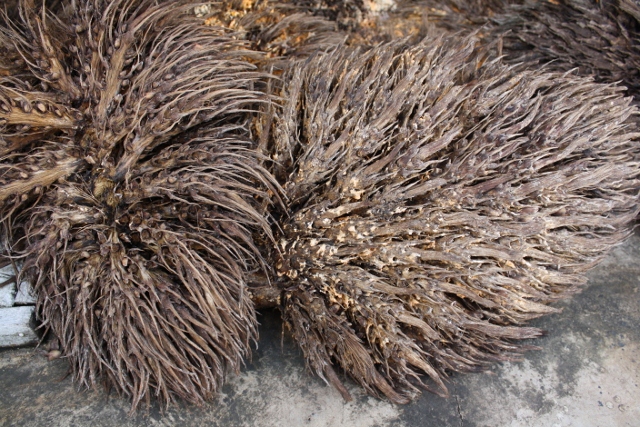
| EFB Ash, photo is taken from here |
![]() |
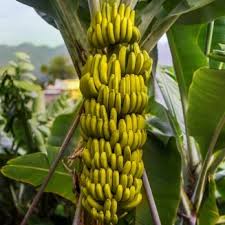
| Nutrient in Banana fruit and K have large portion on it |
![]() |
| Effect of K in banana yield |
After EFB densification or compaction product in the form of
briquettes or pellets then burned it will leave ash as combustion residue or
waste. Ash has many benefits for the life of plants. Ash
from EFB palm oil are also rich in various compounds, especially potassium (K)
which is necessary for the plant with the percentage ranges from 30-40%. Potassium has many functions for plant namely
transporting sugar, to control stomata on the leaves by maintaining
electro-neutrality in a plant cell, a co-factor of more than 40 enzime and
reduce the occurrence of various diseases. The ash of EFB can then be used as
organic fertilizer in the palm oil plantation itself and other plantations,
like banana. The high content of potassium in bananas and leaves, indicating
potassium is the most important nutrients in banana production. Some of
potassium from the soil is taken or removed from the plantation in the form of
a banana crop very much.
![]() |
| Banana fruit |
Estimated loss of the potassium element from the soil
through the banana fruit alone reached 400 kg (equivalent to 480 kg K2O) per
hectare with a production of 70 tons of fruit. Based on these reason, the
banana still require high amount of potassium supply, although the content of
potassium in the soil is already quite high. A study on the banana tree with
K2O giving as much as 1000 grams / tree has given a bunch of banana weighing
29.4 kg. Some plants are also less suitable and sensitive element of chloride
(Cl), so that the portions need to be reduced or even eliminated. In the banana
plant, for example the high chloride make banana seedling growth is disrupted
and empty fruit. K2O is a compound in EFB ash can be used as ideal organic
fertilizer, replacing KCl fertilizer. Potassium fertilizers on the market today
KCl and K2SO4 (ZK). The price of KCl fertilizer is cheap because of subsidy,
while K2SO4 (ZK) fertilizer is expensive, following the dollar exchange rate
because it is not subsidized so that only generally only used by large estates/plantations.
Whereas if our plants need potassium fertilizer and does not contain chloride,
and ZK fertilizer price in the market is much more expensive, the EFB ash
fertilizer that rich of K2O can be a perfect solution.
Saturday, December 26, 2015
Scrambling Biomass Waste Empty Fruit Bunch of Palm Oil: For Paper or Pellets?
In an effort to optimize the full potential of a number of
oil companies are planning to process their wastes that resulting from the CPO
production process. One of them is empty fruit bunches (EFB). Two alternatives are being hotly debated is
made pellets for energy and for the paper. Viewed from the business side, if it
is profitable so is certainly not a problem for the production of both
products. Availability of raw materials into one of the important factors in
terms of production and business in general.
Further analysis can be done by looking in more detail in
the production process technology, the amount of investment, ROI, environmental
aspects, sustainability of core business (palm oil) and benefits of the
products produced are a number of factors that will make it easier to
eventually choose one. Further know more detail about the characteristics of
each business such products will also further increase the stability of both
products. In the end, the higher score determines the choice or priority of
both, and if it turns out an analysis of both the same score then also no
problem if both run concurrently if the resource is also capable.
Monday, September 21, 2015
EFB Pellets Great Potential in Indonesia and Malaysia Has Not Been Taken
Wood pellets are still occupying the highest grade biomass
fuel than biomass pellets fuel from other than wood. This is because its
combustion properties are better than others. But as the magnitude of the biomass
energy needs, it is necessary to look
for some other alternatives. Palm oil empty fruit bunch (EFB) is a potential
raw material for pellets. Currently, Indonesia is the biggest palm oil
producing country, especially crude palm oil (CPO) in the world with an area of
palm oil plantations of more than 7 million hectares and hundreds of palm oil
milss to process the palm oil fruits. Palm trees require warm temperatures,
sunshine and high rainfall, so that only some parts of the world can do that,
those are Asia, Africa and South America. Palm oil production is dominated by
Indonesia and Malaysia with an amount between 85-90% of world palm oil
production. Empty fruit bunches itself is a waste of CPO production which are
numerous and today generally untapped.
Another factor driving this is when the supply of raw
materials by planting some sort of energy plantation perceived longer and
require more capital, or when the availability of raw materials such as woody biomass
derived from wastes of the wood processing industries has been limited, the
empty fruit bunches of palm oil can be a strong candidate. While the other factor
come from the palm oil mill itself that many industries were overwhelmed to
handle empty fruit bunch waste itself. Those things are more encouraging empty
fruit bunch (EFB) processing into EFB pellets.
In terms of combustion properties as EFB pellet is lower
quality from wood pellets, so it should also be used technologies that are more
appropriate (suitable) in accordance with the character of the EFB pellets
product. Type of fluidized bed combustion technology is the best choice because
it is able to optimally handle EFB pellets at once able to reduce the content
of a number of negative traits. Chlorine is the most avoidable component of
mainly pellets made from agricultural wastes such as EFB. The fluidized bed
combustion technology has also been developed from along ago so that is
supposed to achieve optimum combustion conditions of EFB pellets become easy thing
to do.
Sunday, January 26, 2014
EFB Briquetting For Bioenergy And Other Purposes
Solid waste such as
Empty Fruit Bunch-EFB numbers are very abundant in palm oil mills and to this
day are generally not processed moreover utilized optimally. EFB waste is generally just dumped somewhere
and left to decompose naturally through biological processes. Some places have
used it as mulch or as an organic fertilizer. But compared to the amount
produced, processed EFB are few in number and little added value. The
biological processes are also running slow so it takes a big investment to
process all EFB waste every day when will use the process. Eco-friendly palm
oil mills and "zero waste" certainly impossible achieved.
As energy needs
continue to increase every time the diversification of energy becomes important
and should be done. These shorter process and results can be used immediately
would be an option for the EFB waste processing. Desification technology of
biomass into briquette is an attractive option to implement. Briquetting is the
shortest route to process the EFB commercially. Process variables such as the
size of the briquettes, moisture content, particle size, ash content and plant
investment looser than pelleting make it the quickest route of the EFB waste
processing. While the briquettes usage is not a massive pellets but also very large
needs. A number of companies producing briquettes, and briquettes are used
itself to produce electricity by gasification, pyrolysis and direct combustion technology.
Gasification, pyrolysis and direct combustion technology also requires the size
and shape of certain raw materials to get optimal performance.
Subscribe to:
Posts (Atom)
Reject (Non-Standard) Coconut Fruit for Bioavtur / SAF Production
The international civil aviation organization (ICAO) has included non-standard coconuts on the ICAO positive list – ICAO document – CORSIA...
-
When using biomass as a raw material for wood pellet and wood briquette production, the level of dryness of the biomass must be dry en...
-
References are needed to make something no less quality or even better, as well as for a wood pellet production facility. Indonesia with...
-
In areas where electricity supply is sufficient and coconut coir waste is abundant, the coconut coir can be further processed into c...