Saturday, January 18, 2014

Torrefied Wood: Biomass Fuel of Substituting Coal in The Future


Compared to conventional biomass fuels such as wood pellets are only capable of a maximum of 10% in co-firing with coal because of the nature of chemistry and physic  are much different whereas if the percentage of co-firing with coal increased to 20% required the addition of a large investment for the handling and processingnya, then torrefied wood even capable of co-firing with coal to 40%. Another advantage is on the side of the powerplant also just needed a little extra investment for handling and processingnya for torrefied wood, due to the physico-chemical properties are not much different.


Densification or compaction into pellets or torrefied wood briquettes will also give a more significant savings than wood pellets, ie 15.0-18.7 MJ/m3 on torrified pellets and  7.5-10.4 MJ/m3 at wood pellets. Because the torrefied wood brittle, so it can be burned with coal dipulverize and more advisable, instead of using the material handling, processing to a separate injection system. This will result in significant savings on equipment modification when cofiring at a greater percentage. A number of agro-industry waste biomass such as empty fruit bunches and palm thatch can torrefaksi as well as woody biomass, to enhance combustion conditions in the coal system.
Torrefied wood cofiring has been successfully carried out one of them in the coal power plant in Borselle, Netherlands. Research also shows that the smoothing torrefied wood into powder with a specific particle size distribution and allows for the smooth fluidization regimes on the feeding entrained flow process (gasifier and pulverized coal boilers).

Monday, January 13, 2014

Briquettes and Pellets for Gasification

Uniformity of particle size is important for the operation of the gasifier. Unlike the updraft gasifier types (counter-current) are not too sensitive to the particle size of the raw material, the type downdraft gasifier (co-current) have a particle size uniformity requirement of raw material that  more stringent. Pelleting and briquetting is an attempt to obtain uniformity of particle sizes of raw materials, improvement of the quality of raw materials, and transportation savings. Materials such as sawdust, forest waste and empty fruit bunches of oil potential for compressed into pellets or briquettes.

Downdraft gasifier (co-current) will produce a cleaner gas from tar so that subsequent gas cleaning will be easier to do, to then be used as heating fuel, gasoline engines, diesel engines (dual fuel), or a gas engine to generate electricity. Updraft gasifier produces gas from too much dirty tar so that the gas cleaning more difficult and therefore its application mainly to the heat source. Downdraft gasifier applications so that wider and more widely used in a number of industries.

The production of briquettes or pellets should be done as close as possible to the raw material (raw material oriented) for technical and economic reasons, and then the product of wood pellets and briquettes can be transported to the gasifier unit location within a specified radius. Special briquettes, just type screw (extruder) are suitable for the gasification process. Gasifier product in the form of heat energy, mechanical energy, and electrical energy can directly be used by the user so that the orientation of the gasifier unit is approaching the user or market (market oriented).

Saturday, January 11, 2014

Promote Energy Plantations

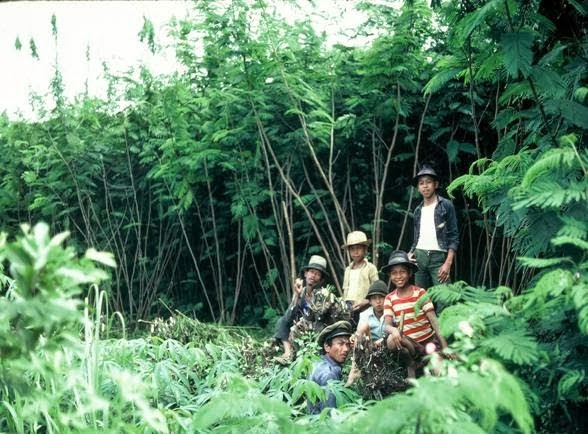
Photo is taken from here
Assuredness of supply of raw materials is absolutely necessary for the survival of industrial woodpellets, briquettes and other biofuels. Raw materials are homogeneous is better because it eases the process, compare with heterogeneous materials, such as raw materials are all derived from the tree trunk will be better than the raw material from a mixture of stems, midrib, leaves, roots, and so on. SRC with a short lifespan and can be harvested repeatedly is an ideal choice as energy crops. The extent of degraded land in Indonesia that reaches hundreds of thousands or even millions of acres of potentially utilized as an energy plantation by planting the SRC.

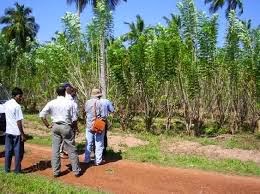
Gliricidia plantation
Calliandra and gliricidia are two types of SRC crops for energy plantation which has been widely cultivated as a pillar of wood pellet industry. Both the SRC plant was chosen because it requires prerequisites are easy to grow and thrive even live in degraded lands. It is possible to come at the same two advantages namely, sustainable supply of raw materials for industrial wood pellets and reforestation to prevent erosion, flooding and so on. Harvesting can be done after the age of about 1 year and crop later in the following year can be harvested again, up to a dozen times. Sri Lanka is one of the country due to lack of fossil energy then rested its energy from biomass, particularly the gliricidia plants. In addition to the stem can be used as raw material for wood pellet industry, the leaves can be fed to livestock, in addition to calliandra and gliricidia, the nectars can be used to farm honey bees.


Wood pellets are produced from raw material of calliandra and gliricidia has a high calorific value, ie more than 4000 kcal / kg, low ash content and high lignin content so as to facilitate the process of pelleting the wood pellets in the industry. Wood pellets for the main application as a source of renewable energy including carbon neutral fuel categories, this is because the source of wood biomass from photosynthesis using CO2 from the atmosphere and when used as a source of energy is released again into the atmosphere. So balance no additional CO2 in the atmosphere or carbon neutral.


The demand from countries such as South Korea with wood pellets made ​​from woody biomass only will further strengthen the promotion again this energy plantations for sustainable business. This is because the wood biomass has a number of advantages in calorific value, ash content and its ash chemistry than other biomass, especially agro-industry wastes. Compounds such as chlorine, sulfur and nitrogen is an important concern in the standard wood pellets.

Friday, January 10, 2014

Die and Roller in Pelletiser

Pelletiser is the heart of the production of wood pellets. The quality and quantity of products of wood pellets is mainly determined by this equipmnent. Quality equipment of pelletiser itself is determined by the ability to produce wood pellets according to specifications or international standards. More and more product of wood pellets are produced or the longer lifespan (life) of pelletiser it indicates good quality. After going through the boundary of the capacity or useful life of the pelletiser to be replaced because it is no longer effective when continuously used. As a benchmark cost for this pelletiser range from Rp 40-75, -/kg wood pellets, including good category.


Pelletiser which is the principle of compression or suppression of material by the roller into the mold (die) to form wood pellets. The high friction on the roller and die on the raw materials and the heat causes the temperature of the metal wear faster. The greater the friction the more dense wood pellet produced  or hard but metal material of pelletiser wear faster. The quality of the metal material in the die and roller of pelletiser and pelletiser design itself contributes greatly to the performance and life of the pelletiser.

Currently there are two kinds pelletiser commonly used in the production process of wood pellet flat die and ring die. The flat die design simpler, commonly used for woodpellet production in small capacity, its history  adopted from animal feed pellet machine. While the type of ring die is a more advanced design, the technique of making it more difficult than further development of the type flat die and commonly used  in production of wood pellets medium-large scale.

Thursday, January 9, 2014

Global markets for wood pellets are projected to grow by 200 to 300% from 2012 to 2020 – from 16 million tonnes to 40-50 million tonnes.

Forecasts indicate that Europe will remain the major market for wood pellets – at about 25-30 million tonnes in 2020 compared to 12 million tonnes in 2010. An important market change expected during the next eight years is the huge consumption growth forecast for the Asian market – from less than one million tonnes in 2010 to about 15 million tonnes in 2020.

As global wood pellet production increases, it is becoming clear that low-cost pellet production regions are becoming the major pellet exporters. The question of which low-cost production regions will evolve to supply the growing markets will depend to a great extent on the global competitiveness of the two major cost components of every pellet manufacturing plant: delivered raw material cost and transportation costs to market.


European Market Development
Growth of the European Union wood pellet market is the result of a number of government mandated energy targets, such as the EU’s “clean energy” policy adopted in 2005 that set a 20% reduction in greenhouse gas (GHG) emissions and a minimum of 20% renewable energy consumption by 2020. U.K. targets for 15% of total energy consumption to be produced from renewable energy forms by 2020 and a mandate that 35% of electricity supply must be renewable, have also helped spur exports.


U.S. Market Development
Until five or six years ago, U.S. pellet demand was limited to residential and institutional heating markets in mainly the U.S. North East. In the last few years, a rapidly expanding wood pellet industry has sprung up in the U.S. South to fill growing European industrial demand from a relatively cheap and abundant wood supply source
combined with the advantage of low shipping costs.

Growing wood pellet production capacity in the U.S. South made the U.S. the largest wood pellet exporting country in the world in 2012, when U.S. exports exceeded Canadian exports for the first time. U.S. export volumes are forecast to nearly quadruple by 2015.


Bulk shipment of wood pellet


Canadian Market Development
In Canada, 65% of the country’s pellet production capacity is located in Western Canada (mainly British Columbia) and 35% is located in Eastern Canada (mainly Quebec and New Brunswick). The B.C. mills are mainly focused on overseas exports (about 85% of shipments).

Eastern Canadian pellet mills mainly sell their production in bags in Eastern Canadian and U.S. Northeast wholesale/distributor markets. Just three of 21 plants in Eastern Canada exported pellets overseas in 2010.

In 2011, Canadian offshore exports equaled about 60% of total pellet production. Offshore exports from both Western and Eastern Canada are forecast to continue to grow, though not at the explosive rate being witnessed in the U.S.


Wood Pellet Loading in Sea Port

South Korea Market Development
Although South Korea is a small country, it is the world’s 10th largest energy consumer, fifth largest oil importer, and second largest coal importer. It currently produces about 65% of its electricity from fossil fuels. South Korea has become serious about reducing greenhouse gas emissions and has committed to a 30% reduction in CO2 emissions from 2010 levels by 2020. In addition, the Korean government has introduced renewable portfolio standards that require coal-fired power generators to begin producing a minimum of 2% renewable energy by 2012, increasing by 0.5%/year until 2020, at which time they will be required to produce a minimum of 10% renewable energy. It is expected that at least 60% of renewable energy will come from wood biomass, leaving about 40% for other sources.

Japan Market Development
Since the Fukushima nuclear accident in 2011, the Japanese government has been reviewing the country’s energy and resource development policies. The policy direction that the government is indicating it will follow during the next 10 to 20 years includes obligating utilities to use renewable energy; increasing non-fossil fuel energy utilization to 50% and increasing the zero GHG emission power supply from 34 to 70% by 2030.


China Market Development
Although very few specific renewable energy policies have been announced by the Chinese government so far, China’s 12th five-year plan allocates 4.75 billion RMB (US$750 million) in direct subsidies, incentives and tax exemptions to build 200 green energy demonstration projects by 2015. In addition, China has set a biomass energy production goal equivalent to 50 million tonnes of coal by 2012.

Although the five-year plan does not indicate specific types of green energy projects to be undertaken, it is assumed that China will move to include significant volumes of wood pellets in the production of biomass energy to replace coal. China has set the development of sophisticated, next-generation biomass energy plants as the key part of its renewable energy plan.


Thursday, October 24, 2013

Korean delegates see wood pellet potential in RI


Prof Gyu-Seong Han,  chairman of Korea Association of Pellet 


Abundant forests in Indonesia have the potential to supply Korea with much-needed biomass energy, says a Korean business delegate. 
Han Gyu-seong, chairman of Korea Association of Pellet, made the statement before around 50 Korean business delegates during the “Biomass Industry in Indonesia” business forum organized by the South Korea Embassy in Jakarta on Thursday.

Dr Ir Yetti Rusli,  The Forestry Ministry's environment and climate change expert
Thee forum discussed the prospects and challenges in developing Indonesia’s biomass potential, specifically wood pellets.

The East Asia nation saw an increase in pellet consumption, with 2013 figures estimated at 500,000 tons, compared to 174,000 tons in 2012.

Wood pellets, which can be used to fuel power plants, are compressed biomass deriving from sawdust and waste from sawmilling.
Kim Young-Sun, South Korean Ambassador

Many forum participants said the energy from wood pellets was “renewable, clean and economical”.

Korea is currently looking for biomass sources overseas, including from Indonesia, as the East Asian country is enforcing a 2012 energy policy mandating firms to resort to renewable energy to cut carbon emissions.

It is also targeting a 20 percent boost in renewable energy use as well as aiming to reduce fossil fuel consumption.

“Korea is the world’s 10th-largest energy consumer, fifth-largest oil importer, second-largest coal importer. Sixty-four percent of its electricity is produced from fossil fuels,” Han said.

To reach their objective, Korean firms have sought investments in a number of Asian countries for the development of wood pellets, mainly Vietnam and Malaysia.

Korea imported 122,447 tons of wood pellets in 2012, mainly from Russia, Malaysia and Vietnam.

According to data from Korea, Indonesia offers the cheapest pellet, with the cost, insurance and freight (CIF) price of US$ 131 per ton, below Vietnam’s US$ 144 per ton, and Malaysia’s US$ 141 per ton.

In Indonesia, Korean firm Depian Co. Ltd will work with state-run PT Inhutani III toward developing forest industries and a facility in Pelaihari, South Kalimantan, through PT SL Agri.

Depian has stated its readiness to invest US$20 million in the project, which will supply wood pellets to South Korea.

They will start building the planned facility in October and expect to start operating the plant by March 2014.

The plant will be able to produce 30,000 tons of wood pellets annually, before being upgraded to 100,000 tons annually in 2016.

Trees would be planted on 5,000 hectares to 8,000 hectares of industrial forest that PT Inhutani III was currently preparing, said SL Agri president director Muhammad Akbariah last month.

Depian plans to export all wood pellets produced at the plant back to South Korea.

Association of Indonesian Forest Concessionaires (APHI) executive director Purwadi Soeprihanto said the government should accelerate plantation forest development by issuing new licenses for industrial plantation forests, a key factor in supporting wood pellets.

“But if that is not possible, Korean firms can cooperate with domestic companies to use their licenses,” he said.

He said that out of the total industrial forest permits (HTIs) issued, only 45 percent were active. Many companies holding licenses had ceased operations due to losses.

“The government should also encourage clear incentives to utilize logging waste, as well as reduce
the fossil fuel subsidy,” Purwadi added. (asw)

Source : http://www.thejakartapost.com/news/2013/09/06/korean-delegates-see-wood-pellet-potential-ri.html

Biomass Boiler Testing and Selection of Suitable Biomass Fuel

In line with the trends toward decarbonization and sustainability across various sectors of life, particularly in the processing industries ...