Showing posts with label activated charcoal. Show all posts

Wednesday, March 4, 2026

Blue Economy & Bioeconomy – Seaweed, Coconut and Nyamplung

With the second longest coastline in the world, located on the equator so it has a tropical climate and the largest coconut producer in the world, maintaining and continuing to develop coconuts is very important and strategic for Indonesia, especially since Indonesia has long been famous as the land of waving coconut trees. The productive life of coconut trees is also very long, namely 60 years, so they can be passed down across generations. The nyamplung tree, which is easy to grow and is often found in coastal areas, should also be developed, as well as the potential for seaweed. With the development of the times to carry out decarbonization in various sectors of life, especially the use of renewable energy, coconut, nyamplung and seaweed can be an effective solution.

Coconut oil, like palm kernel oil (PKO), has a high lauric acid content, so it is very suitable for the production of Sustainable Aviation Fuel (SAF). Currently, Indonesia is planning to increase SAF production from palm oil, namely palm kernel oil, to 3% this year (2026). This policy was accelerated to support the aviation sector's decarbonization targets. Palm kernel oil production is around 5 million tons/year with the main uses currently being very diverse, including the food industry (margarine, chocolate, cakes), cosmetics (soap, shampoo, lipstick), oleochemicals (fatty acids, glycerol), to renewable energy (SAF) - still in the early stages, as well as non-food products such as lubricants. while the potential for coconut oil is 2.9 million tons with the main uses being cooking (cooking oil), processed food industry (biscuits, margarine, ice cream), cosmetics (soap, shampoo, moisturizer), health (consumed directly as Virgin Coconut Oil (VCO)) and pharmaceuticals (ointment base), skin/hair care and oleochemicals. Why coconut oil and palm kernel oil are very suitable for SAF production, read more details here.

In addition to the potential raw material for SAF from coconut, the international civil aviation organization (ICAO) has included non-standard coconut in the ICAO positive list - ICAO document - CORSIA Default Life Cycle Emissions Values for CORSIA Eligible Fuels, 6th Edition on October 28 20024. Non-standard coconut includes very small old coconuts, already sprouted, starting to rot or become moldy and those that are broken. Based on data from a number of research studies, the number of non-standard coconuts in Indonesia is estimated to reach 30% of Indonesia's coconut production.

Regarding coconuts, the government should limit or prohibit exports of round coconuts. This will not only hinder the domestic coconut processing industry but also more specifically the development of SAF. Apart from that, efforts to replant coconut plantations must also be carried out. The area of ​​coconut plantations that must be replanted currently reaches hundreds of thousands of hectares, such as in Riau alone with a coconut plantation area of ​​426,579 hectares (11.4% of the plantation area in the province, read more details here). 72 thousand hectares of coconuts need to be replanted, while the replanting speed is very low so coconut productivity continues to decline. Meanwhile, nyamplung trees and seaweed require socialization and real action so that they can meet production targets and expectations.

Meanwhile, nyamplung oil can be used for biodiesel / FAME production. From the government's plan to increase the biodiesel mixture from B-40 to B-50, this means requiring almost 60 million tons/year of vegetable oil, especially palm oil. Meanwhile, currently crude palm oil or CPO production is around 50 million tons/year and increasing 20% ​​or to 60 million tons/year is certainly not easy. Moreover, currently the expansion of palm oil plantations (extensification) is in the sharp public spotlight with widespread public attention. A number of natural disasters, especially the Sumatran floods, which have claimed the lives of thousands of people, with the extensification of palm oil plantations as the suspect, have made it increasingly difficult to increase palm oil production through expanding this land. And indeed land expansion (extensification) must always be in the corridor of sustainability, so that palm oil can be a blessing and not a disaster.

Nyamplung trees with productivity almost the same as palm oil trees are very interesting to develop for biodiesel production or more practically adding 10 million tons / year to reach the B-50 proportion. Along Indonesia's very long coastline, there are locations for coconut and nyamplung plantations. Apart from that, seaweed from its waste is also a potential raw material for renewable energy, both ethanol, biodiesel and SAF.

Meanwhile, from the seaweed sector, apart from the production of agar, carrageenan and alginate which are widely used for food products, biofuel can be produced from seaweed waste. Seaweed industry waste can reach 65-75% of the fresh raw materials processed. This very large amount is often wasted without further use which can increase added value. Because solid seaweed waste contains a high percentage of cellulose and only a small amount of lignin, this waste has the potential to be processed into bioethanol and sustainable aviation fuel (SAF). 

The process route, namely ATJ or alcohol to jet fuel, can be used to produce sustainable aviation fuel (SAF). Meanwhile, seaweed waste is usually disposed of in landfills, which can cause unpleasant odor problems. Specifications for industrial waste from the E. cottonii species are 3.66% water content; ash 36.84%; protein 1.78%; carbohydrates 11.36%; 0% cellulose; hemicellulose 12.86%; lignin 0%. Meanwhile, industrial waste specifications from the species Gracilaria sp. and Gelidium sp.: cellulose 26.92%; hemicellulose 16.11%; lignin 15.38%; ash 16.72%; water content 12.94%; NaCl 3.77%. 

After their productive life is over or ends, the coconut trees and nyamplung trees are cut down. Coconut tree trunks and nyamplung trees are very suitable for building wood used for housing. This will add economic value and is a necessity that will continue to be needed. In fact, efforts to improve the quality of wood can also be done by engineering the wood material, such as with CLT (cross laminated timber) and so on.

And like palm oil, both coconut and nyamplung also produce shells. Just as palm kernel shells can be used for fuel, so coconut shells and nyamplung shells as well. Even palm kernel shells or known as PKS (palm kernel shell) are the main competitors of wood pellets in the global biomass fuel market. However, because the quality of coconut shells is better or more suitable for the production of charcoal briquettes and activated carbon, coconut shells are generally carbonized or made into charcoal. Charcoal is an intermediate product or raw material for charcoal briquettes and activated carbon. Read more details about the production of activated carbon from coconut shells here. Meanwhile, because nyamplung shells are not widely produced, their use is still limited, but if the quantities are large, such as the production of palm kernel shells, then it could be like palm kernel shells, or perhaps also like the use of coconut shells.

Apart from that, both the production and extraction of coconut oil and nyamplung oil will produce cake. Coconut cake and palm oil cake can be used as animal feed, but nyamplung cake requires additional processing so that it is non-toxic and safe for animal feed. The development of a blue economy on the Indonesian sea coast should be an important concern as an environmentally friendly economic solution that suits the conditions and potential of Indonesian society and is in line with the global community's concerns about decarbonization as mitigation for climate change and global warming. Apart from also supporting food and feed security. 

Monday, December 30, 2024

Charcoal Production for Activated Carbon Raw Material

Charcoal characteristics are influenced by the raw materials used and the conditions of the production process. The use of charcoal for certain applications or industries also requires certain specifications or characteristics. For example, charcoal used for fuel can have different specification requirements from charcoal specifications for agriculture (biochar), or charcoal used as raw material for activated carbon. A number of parameters that are acceptable in certain applications may not be acceptable in other applications.

Charcoal products used as raw materials for activated carbon production are also the same. Parameters in the form of high fixed carbon (~80%), high hardness, low ash content (~3%) and low volatile matter (<10%) are prerequisites for the specifications or quality of charcoal as a raw material for activated carbon. As a comparison, charcoal for agriculture (soil amendment) or commonly called biochar has a wide range of quality or specifications, namely lower fixed carbon (FC), higher ash content and higher volatile matter, especially in agro type biochar according to WBC (World Biochar Certificate), while premium type biochar according to WBC has a higher or highest quality and can be used for various purposes. While the material type biochar according to WBC has the lowest quality with use mainly in certain industries such as cement, asphalt, plastic, electronics, and composite materials or cannot be used for agriculture, soil applications and consumer products.

 Raw materials for charcoal production for activated carbon production because it requires stricter parameters, especially high fixed carbon, low ash content and high hardness so that raw materials suitable for this purpose are more limited or not all biomass can be used for charcoal production for activated carbon raw materials. This is what makes coconut shells the best and most popular raw material for charcoal production as activated carbon raw materials today. And palm kernel shell raw materials (especially from dura variety) are expected to be the next candidate. The availability of abundant palm kernel shells (PKS) is a special attraction. But indeed with this palm kernel shell (PKS) charcoal raw material, there is still the smell of palm oil, so it is a challenge for activated carbon producers.

Tuesday, May 23, 2023

Become the Trendsetter of the World's Vegetable Oil Producers

In the vegetable oil market, there are 4 types of vegetable oils that are widely consumed around the world, namely soybean oil, sunflower oil, palm oil and rapeseed oil. Based on USDA data (2018) the total area of the 4 vegetable oil-producing plants in 2017 was around 208 million hectares. Soybean plantations have the largest proportion of area, namely 126 million hectares (61 percent), while the area of palm oil plantations is only 21 million hectares (10 percent). However, with an area of 126 million hectares, soybeans are only able to produce 56 million tons of oil or only 32 percent of the production of the world's 4 main vegetable oils. In contrast, palm oil with an area of 21 million hectares is capable of producing 73 million tons or 42 percent of the production of the world's 4 main vegetable oils.

The high level of palm oil production is obtained from the productivity of palm oil plantations which is much higher than the productivity of other vegetable oil producing plants. According to Oil World (2018), the average productivity of oil palm is 4.27 tons/hectare, while the productivity of other vegetable oil-producing plants is only 0.4 – 0.6 tons/ha. The productivity of palm oil is much higher, around 8-10 times compared to other types, making palm oil have a comparative advantage over other vegetable oils. This comparative advantage can be interpreted as saving deforestation in various regions of the world if palm oil is consumed by the global community or to produce the same amount of oil, the land needed for oil palm is 8-10 times smaller than other crops.


With an average annual productivity of 4.27 tons/hectare of palm oil or 17 tons of FFB/year, this is actually still quite low and productivity can be increased up to around 30 tons of FFB/hectare or 7.5 tons/hectare of oil. Increasing the productivity of palm oil is primarily by increasing soil fertility so that fertilization efficiency increases. Slow release fertilizer (SRF) is an efficient fertilizer that is economical and environmentally friendly. In addition, the use of biochar, apart from being a slow release agent in the fertilizer, will also improve soil quality or fertility by increasing soil porosity, providing organic carbon, raising soil pH, retaining water and nutrients so that they are more available to plants and as a medium for soil microbial colonies. By increasing the productivity of palm oil, followed by saving fertilizer due to increased efficiency, minimizing environmental pollution so that production costs can be reduced, it means that it is equivalent to increasing land efficiency by 76%. This means that the productivity of palm oil per year is 30 tons of FFB/hectare, or 7.5 tons/hectare oil and when compared to other vegetable oils it is 15 times more land-efficient or per tonne of palm oil requires 0.13 hectares while other vegetable oils require 2 hectares of land.

The climate solution in the form of carbon sequestration / carbon sink can also be done simultaneously with the biochar application. Every 1 ton of biochar will store or reduce CO2 (carbon dioxide) in the atmosphere by approximately 3 tons. Carbon credit from the application of biochar is a significant additional income apart from fertilizer efficiency and increased crop productivity, including palm oil yields. Moreover, the value of carbon credit tends to increase and the carbon (CO2) removal mechanism with biochar will become a trend in the future. The amount of income from carbon credit is proportional to the number of biochar applications in the oil palm plantation which will also be proportional to the area of the palm oil plantation.

The area of palm oil plantations ranging from thousands to tens of thousands of hectares owned by a company is common in Indonesia. This indicates the business potential that can be done. With the current area of palm oil plantations in Indonesia reaching around 15 million hectares, as much as 40% (6 million hectares) are smallholder plantations so that the company's plantation area is 60% (9 million hectares) which is divided into owned by Large Private Plantations (PBS), which is 8 .42 million ha (55.8%) and State Large Plantations (PBN) covering an area of 579.6 thousand ha (3.84%), for more details read here. Palm oil trees themselves can only produce well in the tropics because the temperature factor affects production through the rate of biochemical and generative reactions in the plant's body. To some extent, higher temperatures lead to increased fruit production. The temperature of 20°C is referred to as the minimum limit for generative growth and an annual average temperature of 22-23°C is required for continued fruit production. That is why not all locations on earth can be cultivated for palm oil even though the productivity of the oil is the largest compared to other plants, so that it becomes a comparative advantage in itself.

Meanwhile, from biochar production technology, it is also possible to reduce the use of solid fuels such as palm kernel shells (pks) which are commonly used in boilers at palm oil mills. Palm kernel shell which is a biomass fuel and used as boiler fuel in palm oil mills besides fiber (mesocarp fiber), can then be sold directly for both the domestic market (local) and the international market (export). The palm kernel shells can also be further processed into charcoal or activated carbon. The use of energy from biochar production technology (pyrolysis) will also increase the efficiency of boilers at palm oil mills, in addition to additional income from selling palm kernel shells or further processing. Becoming a trendsetter in the world's vegetable oil producers is very possible based on the reasons mentioned above. With Indonesia's current condition in particular, or other palm oil producing countries, with a little improvement, it is very possible to do this. Moreover, the palm oil industry produces a lot of biomass waste which is very potential as raw material for making biochar.

Saturday, August 4, 2018

Activated Carbon For Gold and Silver Industries

Initially wood charcoal with a surface area around 200 m2 /gram was used to extract gold and silver from the solution. As the development of the activated carbon having a surface area of  1,000 m2 / gram is used for that, of course, also with the increasing efficiency of the extraction. It encourages the production of activated carbon throughout the world. Coconut shell is the favorite material for active charcoal production today, and palm kernel shell is likely to be the next priority.
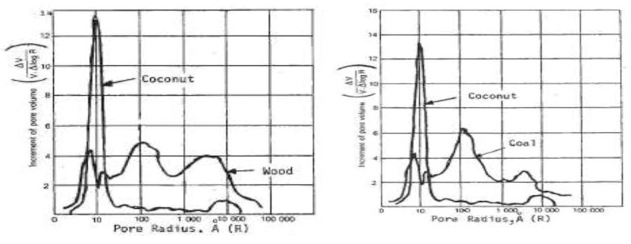
Activated carbon has a large surface area because of the large number of pores from its surface. The pores are intentionally made to improve the efficiency of adsorption. The more pores are formed the more activated carbon surface area. Based on the size of these pores are divided into macropore, mesopore and micropore. Macropore is the largest pore size located on the outer side or surface of activated carbon and as the entrance material will be adsorbed then through mesopore medium to last to the micropore. Micropore is the last terminal of material that is adsorbed. Micropore pore size ranges from 10 angstrom, mesopore 100-1000 angstrom and macropore larger 1000 angstrom (1 angstrom = 1e-10 meter). The raw material or activated carbon material, the choice of activation process used and the operating conditions that will determine the surface area of activated carbon consisting of macropore, mesopore and micropore. Hardness and density of materials are also often important considerations given the use of activated carbon itself, for example a number of extractions are carried out by stirring and there are also column operations.
The specific use of activated carbon for the application of certain materials or industries usually also requires certain specifications. Activated carbon used in fluid fluids will be optimal when specially designed under these conditions, as well as those used in gas fluids. The size of the target material and its extraction methods will determine the technical specifications of the activated carbon. Likewise in gold and silver, which extraction with stirring and column operations. So the raw material of coconut shell is generally still the main choice because it has a high level of hardness and density so that abrasion resistance. And so too the palm kernel shells can also be used given the high level of its hardness. So the activated carbon used must meet the criteria of quite hard, active enough and appropriate particle size. In the gold extraction activated carbon gold produced by the activation of physics (steam activation) is used. Rotary kiln is an activation equipment with raw materials such as coconut shell, while fluidized bed appliance and multi hearth kiln are commonly used for activated carbon from coal.
Activated carbon basically can be made from various materials that contain carbon (carbonaceous material) such as coal, coconut shell, palm kernel shell, wood, bamboo, heavy oil and even bone. Each material, type of activation and operating conditions of the process determines the quality or characteristics of activated carbon. Activated carbon from coconut shell has many micropore, while activated carbon from wood is dominated mesopore and macropore (micropore only has small portion) because wooden structure also more open. For activated carbon from coal micropore distribution, mesopore and macropore are almost evenly distributed. Based on the above characteristics, activated carbon coconut shell is widely used to adsorb small molecules of gas and liquid. Its uses such as gas masks, solvent recovery and gold recovery. While activated carbon from wood for the application of large molecules such as adsorbing organic dyes in the industry. While activated carbon from coal for the adsorption of organic molecules with varying sizes and their use is generally for drinking (potable) water treatment and wastewater treatment.

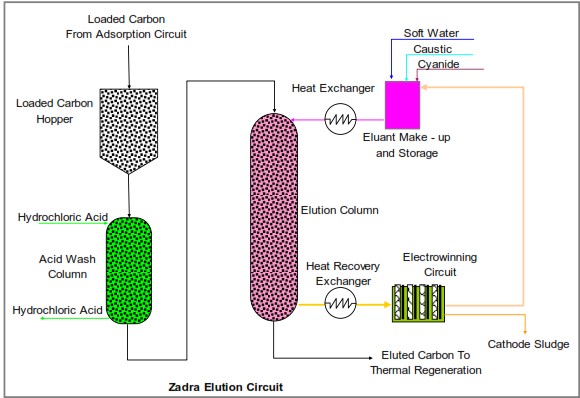
After gold or silver is adsorbed into the pores of activated carbon, the next step is to pick or remove (delution) from activated carbon. There are 2 technologies commonly used for this stage namely AARL elution process and Zadra elution process. The difference between electrowinning is an integral part of the Zadra circuit but a separate part of the AARL circuit. Zadra dominates in North America while AARL dominates in Southern Hemisphere, where the technology was originally developed. Which is the best? Operators factor and device performance more decisive. The 10 largest gold producers today include China, Australia, the United States, Russia, South Africa, Peru, Canada, Ghana, Indonesia and Uzbekistan.

Tuesday, May 22, 2018

Activated Carbon For Any Industries!

Activated carbon or activated charcoal is a material that is widely used in various industries, as auxiliary processing. Food, beverage, energy, mining and pharmaceutical industries use this activated carbon. The need for activated carbon also continues to increase so that production also needs to be expanded. Indonesia has great potential as a world class activated carbon producer considering the abundance of potential raw materials available.

Currently, large activated carbon producers are located outside Indonesia such as Europe and America. Yet neither Europe nor America have abundant source of raw materials or most imports including from Indonesia. The most favorite activated carbon feedstock today is coconut shell and once again Indonesia is the country with the largest coconut plantation in the world, which is about 3.7 million hectares. Palm kernel shells can also be the raw material of further choices. With a palm oil plantation area of approximately 12 million hectares, palm kernel shells produced more than 10 million tons / year.
The raw material of activated carbon is charcoal. The charcoal is then activated to become activated carbon. The process of making charcoal is by carbonization or pyrolysis. Coconut shell as an example of raw material of charcoal, then after carbonization the coconut shell convert into coconut shell charcoal, which then this charcoal become the raw material of activated charcoal. So basically the process of activated charcoal production is through 2 stages of the process namely pyrolysis (carbonization) and activation. The process of producing the charcoal or the carbonization process (pyrolysis) is the same as the biomass carbonization process in general, for more detail can be read here. Currently in large capacity the production of charcoal is carried out continuously with indirect-heating. Rotating kilns and heated auger pyrolyser are commonly used equipment for continuous production of charcoal. Continuous integration of charcoal production and activation process can be read here.
While the activation phase can be done in two ways namely the activation of physics and chemistry. The choice of activation depends on the target surface area, pore distribution and economy. Steam activation is the most widely used physics activation, whereas chemical activation is very diverse. The more surface area of activated carbon the more expensive the price is also proportional to the cost of production. Activation equipment commonly used there are 2 kinds namely, rotating kilns and fluidized bed. Of these 2 types of rotating kiln equipment is more widely used than the fluidized bed. The price of rotating kiln equipment is cheaper because the construction and operation are easier than the fluidized bed system. Fluidized bed systems are typically used for higher quality activated carbon production due to better distribution and pore engineering due to fluidization.
Standard and quality of activated carbon is determined primarily by surface area, pore distribution, size and hardness. The iodine number parameter is commonly used for the quality of activated carbon. The higher the iodine number the better the activated carbon quality. The iodine number is a number indicating how much adsorbent or activated carbon can adsorb iod. The greater the iodine value, the greater the adsorption power of the adsorbent or the activated charcoal. Conversely, the higher water content and ash content contained in the activated carbon will cause many pores to be covered by the impurities so that the surface area will be smaller. Where the surface area is closely related to the activated carbon adsorption capacity.All biomass basically can be used as an activated carbon raw material because it has a carbon content. Specific application of the activated charbon that determines the choice of raw material and its activation options.

Thursday, February 16, 2017

Activated Carbon Production From Coconut Shell and Palm Kernel Shell


Magnification of the surface area due to the increasing number of micro pores that have great adsoroption ability is the main purpose of the production of activated carbon. Characteristics of the pores and even then vary depending on the application or use of activated carbon as an example the pores of the activated carbon used in the liquid, will be different which is used in gas substances. Characteristics of the pores can be designed and made during the production process. Basically the manufacture of activated carbon will involve high temperatures and adjuvant activating that can be a steam, CO2 or chemical, depending on the characteristics of activated carbon, or more specifically in the pores of activated carbon are generally calculated  by its surface area of the activated carbon. Additionally hardness of activated carbon is also other important quality factors of the activated carbon. This article is a continuation of my previous article about the production of charcoal from coconut shell and palm kernel shell continuously. Alhamdulillah can be done writing.


Activated charcoal production requires charcoal as raw material. The charcoal can be produced in both traditional and modern process. Charcoal quality will affect the quality of the final product of activated carboon. Modern charcoal production continuously be able to make the whole process of the activated carbon production becomes efficient when both are integrated into one. In the process of making charcoal which usually need to be cooled beforehand so into charcoal, then it can not be done when the production of charcoal continuously. Results of carbonization directly into the activation unit with only slightly raise its temperature, ie, if the carbonization ranging from 600 C and the activation of about 900 C. When using raw charcoal from the traditional process as a raw material, it takes far more energy to achieve the activation temperature of about 900 C.


Once out of the activation process, the active carbon is cooled by removing a number of considerable heat. Heat is released in large enough quantities can be used for drying coconut shell or palm kernel shell, giving it a special process of carbonization become more efficient as well as a whole with the activation. Activation adjuvant to be inserted in the activation process is well regulated its operating conditions of temperature, pressure and residence time to get the quality and quantity of activated carbon desired. In the activation condition, likened charcoal is material be punched by the activation of materials at high heat. There are many variants of activated carbon can be designed specifically for their intended use, so that the operating conditions and auxiliaries activation there are also variations.
The use of activated carbon, especially in the food industry (food) including beverages and pharmaceuticals, precious metals refinery (favor) and the oil and gas industry. Once the extent and magnitude of this use of activated charcoal so it is a great opportunity also for Indonesia, which has the best raw materials are also the largest quantity in the world of coconut shell and palm kernel shell. Will this also would be ignored? It should not. InsyaAllah

Production of Bark Briquettes from Wood Pellet Factory Waste

To reduce the ash content of wood pellets and thereby improve their quality, a process known as "debarking" (removing the tree bar...