Showing posts with label carbon credit. Show all posts

Wednesday, March 11, 2026

Slow-Release Fertilizer: A New Trend in the Palm Oil Industry

Fertilizer is crucial for plant growth, especially for palm oils. Palm oil trees won't even bear fruit without fertilization. Fertilization is the highest cost component of palm oil plantation operations. Fertilizer efficiency is clearly a key consideration. This is why innovation in palm oil fertilization is rapidly developing.

Regarding innovations to increase fertilizer efficiency in palm oil plantations, the concept of slow-release fertilizer (SRF), or controlled-release fertilizer (CRF), is gaining increasing attention. By engineering the slow or controlled release of nutrients, the plant's nutrient use efficiency (NUE) increases. Fertilizer becomes more economical and environmental pollution is reduced. Indonesia's tropical climate, with its high rainfall, also results in high fertilizer leaching.

Several materials have been developed as SRF/CRF agents to achieve the desired nutrient release levels. These include polymers, sulfur, chemical compounds, and even compost. The characteristics of SRF/CRF agents vary depending on the material and product type. In addition to performance, the price of the SRF/CRF agent is also an important consideration.

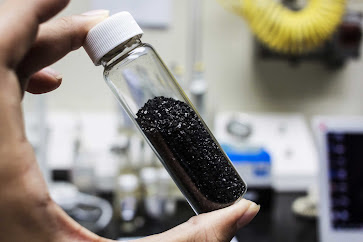
Biochar is a renewable SRF/CRF agent and a climate solution. Biochar can persist for hundreds of years in the soil as a carbon sequestration. In addition to synthetic materials derived from non-renewable sources, biochar is an alternative SRF/CRF agent derived from renewable sources. Biomass from agricultural, plantation, and forestry waste is the main source of biochar production through the pyrolysis process. A number of SRF/CRFs with slow-release biochar agents have also begun production. This will increase biochar production, which has so far been less popular. It will also provide a solution to the biomass waste problem and be economically valuable. 

Friday, October 24, 2025

Laboratory-Scale Pyrolysis Equipment for Biochar Production Trials and Research

The decarbonization trend continues to grow across all sectors of life as part of a global consensus to save the earth. Biomass plays a strategic role through biotransition, where biomass acts as a carbon-neutral fuel, thus preventing it from contributing to increased CO2 emissions in the atmosphere, and through carbon-negative programs with carbon sequestration. Substantively, decarbonization through carbon-negative programs (CDR/carbon dioxide removal) will be effective if biomass fuel, as a carbon-neutral fuel, or the use of other renewable energy sources, is also increased. In other words, efforts to reduce atmospheric CO2 concentrations cannot simply involve absorbing CO2 from the atmosphere (carbon capture and storage). In the context of biomass-based renewable energy, the practical application of wood chip and wood pellet production as carbon-neutral renewable fuels will complement biochar (carbon-negative). Read more details here.

Biochar, a product of biomass pyrolysis, or biocarbon products used as a medium for climate change mitigation through carbon sequestration/carbon sinks, is not yet as popular as the use of biomass as a renewable energy source, such as wood chips, wood pellets, or palm kernel shells (PKS). For comparison, global biochar production in 2023 was 350,000 tons, while wood pellet production was 47 million tons. With a conversion of biomass to biochar of approximately 30%, the amount of dry biomass processed into biochar in 2023 was 1.2 million tons, compared to 47 million tons of wood pellets in the same year, or only about 2.6% of the biomass used for wood pellets—a significant gap. However, biochar is predicted to gain momentum and be produced on a large scale globally. The application of biochar as part of carbon capture and storage (CCS) is currently experiencing the fastest growth compared to other CO2 reduction (CDR) efforts. Biochar leads in CDR credits in the voluntary carbon market (VCM), with over 90% globally by 2023 as per the cdr.fyi database.

Furthermore, carbon capture and storage (CCS) applications using absorber-stripper columns, where the captured carbon dioxide is stored in the Earth's crust, remain expensive. Pyrolysis technology for biochar production, meanwhile, is increasingly developing, making it easy to operate, efficient, and environmentally friendly, with the potential to produce various by-products that offer additional benefits. These pyrolysis units can even be integrated with processing plants, such as palm oil mills. For more details, read here.

Including the BECCS (Bioenergy with Carbon Capture and Storage) application which is overall a carbon negative program or CO2 removal from the atmosphere (CDR / Carbon Dioxide Removal) but building a bioenergy unit such as a biomass power plant itself is also not cheap, especially with the addition of carbon capture and storage (CCS) equipment. A number of countries that already have many biomass power plants, for example Japan with around 300 biomass power plants, to become carbon negative operations or part of CO2 removal from the atmosphere (CDR / Carbon Dioxide Removal) will be easier by upgrading them with the installation of carbon capture and storage (CCS) equipments. But in general, to absorb CO2 in the atmosphere and achieve climate targets, the application of biochar produced with pyrolysis units is easier, cheaper and strategic.

To anticipate and prepare for the growing era of CO2 removal from the atmosphere (CDR), biochar research must also be enhanced. Pyrolysis equipment that can cover or carry out comprehensive biochar production trials under all measurable production process operating conditions is crucial. Biochar product quality parameters are determined by three factors: the raw material or type of biomass, the production process, and the biomass pretreatment. For more details, read here. Important variables in the biochar production process in the pyrolysis unit, such as duration/residence time, temperature, and heating rate, must also be able to be handled with this equipment.

Furthermore, the issue of exhaust emissions is also crucial. This is because carbon standards organizations like Puro, Verra, and CSI require exhaust emissions to meet certain thresholds. Furthermore, excess heat from pyrolysis and/or liquid and gaseous products must be utilized. This means that laboratory-scale pyrolysis equipment must be sophisticated enough to meet these requirements. Following the methodologies developed by these standards organizations is essential for producing certified biochar to earn carbon credits. With each ton of CO2 equivalent removed from the atmosphere, or CO2 Removal Certificates (CORCs), worth over $150, this is certainly very attractive.

The diverse uses of biochar, such as in agriculture, animal husbandry, and even for concrete construction, further encourage its implementation in the future. Even if there is a question, for example, about the use of biochar in the agricultural sector: should biochar be prioritized for soil fertility or climate solutions first? This is certainly not a dichotomous question, but rather a driving force for its application, which is strongly influenced by factors that are problematic in the region or area. For more details, read here. To achieve the best performance while minimizing the risks of biochar production, increasing biochar production capacity is necessary, starting from the laboratory scale, pilot scale, demo scale, and finally commercial plants. By understanding the characteristics of the production process gradually and in depth, the hope is that the success rate of large-scale or commercial production will also be high. 

Wednesday, October 22, 2025

Exploring the Market for Bioenergy and Biocarbon Products in the Era of Global Decarbonization

The demand to lower the earth's temperature by reducing greenhouse gas concentrations through various global agreements such as the Paris Agreement and Net Zero Emissions (NZE) 2050, followed by technical follow-up through decarbonization for various sectors and industries, continues. This is the driving force for increasing renewable fuels, especially those based on biomass or bioenergy products, which have been implemented, but are experiencing dynamics in the form of fluctuations in demand and prices. Bioenergy, with its numerous advantages and uniqueness as a renewable energy, cannot be replaced in this era of global decarbonization, even though in the near future some subsidies for biomass fuels or bioenergy will be eliminated.

This is closely related to a government's decarbonization priorities, particularly among the various emerging options. Bioenergy products can vary in quality, but all have their own market segments within specific industries. Furthermore, the sustainability of biomass sources is also a crucial aspect in the business and use of bioenergy, and is strictly enforced by standards such as GGL, FSC, SBP, RED III, and SURE. Industrial groups such as cement, iron and steel, chemicals, and even the aviation sector, which previously relied 100% on fossil fuels or energy sources, are gradually shifting to renewable energy sources.

Bioenergy products such as industrial wood pellets and industrial wood briquettes are primarily marketed in the power generation industry and as fuel for industrial boilers. Industrial wood pellets are very popular and are produced in larger quantities than industrial wood briquettes. Due to the elimination of subsidies and the implementation of sustainability certification, biomass fuel producers are required to produce better quality products using environmentally friendly and accountable raw materials. This also applies to bioenergy derived from agricultural waste, which generally lacks sustainability certification at large production capacities.

Biomass power plants operating near carbon neutrality can then be upgraded to carbon-negative operation, or atmospheric carbon dioxide removal (CDR) by adding carbon dioxide capture and storage (CCS) equipment. Biomass power plants equipped with CCS devices are popularly called BECCS (Bio-Energy Carbon Capture and Storage). It is predicted that the BECCS era will not be far off, and countries with biomass power plants can easily upgrade to BECCS. Expensive CCS equipment and low carbon credit revenue from CDR remain current obstacles. Japan, with around 300 biomass power plants, has great potential to upgrade to BECCS. And as a biomass power plant, the need for fuel will always be needed, such as wood pellets and PKS (palm kernel shells). For more details, read here.

One successful example of BECCS is the Stockholm Exergi BECCS project. BECCS illustrates how existing biomass power generation infrastructure can be leveraged to generate sustainable carbon dioxide sequestration. The Stockholm project, based on sustainably sourced biomass fuel, secured one of the world’s largest carbon sequestration deals with Microsoft, a significant contract worth SEK 500 million (~89 billion rupiah). Their model integrates carbon capture with a district heating system, maximizing energy efficiency while achieving permanent carbon dioxide sequestration.

Similarly, several other large industries, such as cement, aluminum, and chemicals, are also gradually decarbonizing. Biomass fuels, such as wood pellets and agricultural/plantation waste like palm kernel shells (PKS), are preferred in this sector. Besides their high energy content, these biomass fuels are more affordable than derivatives like torrefied biomass and charcoal/biochar. With the gradual transition or decarbonization of these industries, the demand for biomass fuels will also continue to increase.

Meanwhile, biocarbon products such as torrified biomass (biocoal) and carbonized biomass (biochar/charcoal) are starting to attract attention and are expected to reach mass production levels in the near future. Power plants typically favor biocoal due to its higher energy content, hydrophobicity, which allows it to be stored in open areas like coal, and ease of crushing (high grindability index). Meanwhile, biochar/charcoal, especially in the iron and steel industry, is highly suitable for producing low-carbon steel and even green steel. The reductant for blast furnaces, which previously used coke from coal, can be replaced by charcoal or biochar. Charcoal or biochar with high purity (fixed carbon >85%) and low impurities are required for blast furnace reductants. For more details on this, please read here and here.


Meanwhile, the use of biomass for sustainable aviation fuel or SAF (Sustainable Aviation Fuel) is also very possible. This is because currently there are three leading production processes for SAF production: HEFA (Hydro-processed Esters and Fatty Acids), FT (Fischer-Tropsch), and ATJ (Alcohol to Jet Fuel). Biomass through thermochemical processes, namely in FT (Fischer-Tropsch) and biochemical processes, namely in ATJ (Alcohol to Jet Fuel), can be used as raw material or feedstock. Meanwhile, the raw material or feedstock for the HEFA process is not solid biomass but vegetable oil, used cooking oil, animal fats, and so on. So the broad application of biomass as various important energy sources in the era of global decarbonization is a driving force for biomass production both through the forestry sector and sustainable agriculture/plantations.


Monday, October 20, 2025

Biochar for Sustainable Coconut Productivity

Coconut fiber accounts for 30%, or about a third, of the weight of a coconut. This material is generally left in plantations and remains largely unused, potentially polluting the environment. With Indonesian coconut production reaching approximately 2.9 million tons per year, or 15.13 million coconuts per year, the potential for coconut fiber production is enormous, amounting to approximately 1 million wet tons (average moisture content of 60%) or 500,000 dry tons (10%) of moisture.

The volume of coconut husk is largely unaffected by the government's recent policy of exporting whole coconuts, particularly to China, as shown in this video. Many coconut-based industries are struggling to secure raw material supplies, even leading to factory closures. Industries such as dessicated coconut, coconut milk, coconut shell charcoal and charcoal briquettes, and activated carbon are severely impacted by this policy. Selling processed or industrialized coconut products would clearly add greater value and create jobs. Developed countries also export finished or semi-finished goods, not raw materials.

The industrialization of coconut-based products is crucial. Like palm oil, coconut processing products are primarily used for food products. Utilization for energy or biofuel is also very possible, such as for sustainable aviation fuel or SAF (Sustainable Aviation Fuel). Even for palm oil, the use of biofuel is in the form of a mandatory blend of palm oil from CPO (crude palm oil) in biodiesel 40% this year and is being reviewed to be 50% (B50) by 2026, as well as palm oil from PKO (palm kernel oil) for a 3% blend for sustainable aviation fuel or SAF in 2026. The main content of coconut oil is lauric acid, the same as palm kernel oil or PKO. Lauric acid consisting of 12 carbon atoms (C) or MCFA (medium chain fatty acids) is very suitable for the use of sustainable aviation fuel or SAF must have a carbon atom bond or C bond in the range of C10-C15, for more details read here.


Coconut productivity continues to decline due to inadequate or slow replanting programs. A similar situation is also experienced by oil palms (for more details, read here), and this presents a unique obstacle. The area of ​​coconut plantations that needs replanting also reaches tens or even hundreds of thousands of hectares. For example, in Riau Province, the target is 43,388 hectares of coconut plantations to be rejuvenated by 2025. In addition to increasing coconut productivity through the use of superior seeds, intensification is also necessary. High coconut productivity and high selling prices are driving this replanting.

Utilizing or producing biochar from coconut fiber is a solution to increase sustainable coconut productivity. Biochar can also significantly support organic coconut plantations. Although coconut trees are generally not fertilized adequately or even not at all, they still bear fruit. Biochar increases fertilizer use efficiency because biochar acts as a slow-release fertilizer agent. Regarding fertilization, coconuts differ significantly from oil palms, which require fertilization for fruiting and are highly dependent on chemical fertilizers. In fact, fertilization is the highest cost component in oil palm plantations. Organic coconut products produce desirable derivative products with high selling prices.

The potential revenue from carbon credits is also very attractive. To obtain carbon credits, or BCR (Biochar Carbon Removal), the biochar application, including the production process, must be verified by a carbon standards agency. Carbon standards agencies such as Puro Earth, Verra, and CSI have developed methodologies that biochar producers must follow to obtain these credits. 

Tuesday, September 2, 2025

Biochar and Premium Compost Production from Organic Waste Processing

Biochar and compost production both use organic materials. The difference lies in their compatibility level. Wet, nutrient-rich organic materials with little lignin are more suitable for compost production. Dry, lignin-rich organic materials are more suitable for biochar production. Therefore, sorting these organic materials is necessary to achieve optimal results. With organic waste comprising up to 60% of municipal waste, the raw material requirements for both biochar and compost production are estimated to be substantial.

Biochar production is a thermal process, while compost production is a biological process. A biochar production unit, a pyrolysis unit, can be installed adjacent to and integrated with a compost production unit at municipal waste treatment facilities and similar facilities. The biochar product is then used to produce compost, improving the quality of the compost to premium compost and accelerating composting times. For more details, read here. Premium compost can also be sold at a higher price commensurate with its quality. Excess energy from biochar production or pyrolysis operations can be utilized in the waste processing of RDF fractions or others. 

The production potential of this premium compost is enormous. This makes it suitable for use on critical land from post-mining reclamation, which covers millions of hectares, or even hundreds of millions of hectares of degraded drylands. When premium compost is applied to unproductive or less productive land, it becomes fertile. For example, revegetation of post-mining reclaimed land will yield a variety of agricultural or plantation products that are economically, environmentally, and socially beneficial. Biochar, with its high carbon content, will persist in the soil for hundreds of years and, as a carbon sequestration measure, can be offset by earning carbon credits. 

Monday, August 25, 2025

Biochar for Sustainable Palm Oil Productivity

The Indonesian government emphasized the importance of sustainable palm oil productivity for food and energy security, as conveyed by Deputy Minister of Agriculture Sudaryono, at the opening of ICOPE (International Conference on Palm Oil and Environment) in Sanur, Bali, mid-February 2025. The conference, attended by delegates from various countries, namely Indonesia, Malaysia, India, the Netherlands, France, Finland, Colombia, and Spain, aims to formulate a sustainable transformation for the palm oil industry. Sustainable palm oil productivity can be increased by land intensification and the use of superior seeds. Even if land expansion is necessary, it must be done without causing deforestation. Meanwhile, for replanting in dry land, it can also be combined with upland rice or corn through intercropping methods.

Biochar is a powerful solution
Palm oil productivity can be increased by improving fertilizer efficiency, or Nutrient Use Efficiency (NUE), as part of land intensification. Using the same fertilizer dose with the addition of biochar will increase palm oil productivity by around 20% or more. Fertilizer savings of around 30% with the addition of biochar will keep palm oil productivity relatively stable or at the same level as before. For efforts to increase palm oil productivity while avoiding deforestation, the first option is more appropriate: maintaining the same fertilizer dose as usual, but adding biochar to increase fertilizer efficiency.  

Indonesia's current CPO production reaches approximately 50 million tons/year across 16.4 million hectares, with an average CPO production of 3.55 tons/ha per hectare, or 3.55 million tons per million hectares. If biochar is used and productivity increases by 20%, this means an increase of 10 million tons of CPO per year (a total of 60 million tons of CPO per year), saving approximately 2.8 million hectares of land. The use of biochar will also slow down forest clearing (deforestation) for palm oil plantations.

Besides using biochar to increase palm oil productivity, other benefits from biochar production include the potential for carbon credits (BCR = biochar carbon removal) and the utilization of pyrolysis byproducts for palm oil plantations and palm oil mill operations in CPO production. This method offers several advantages for palm oil companies, such as savings in liquid organic fertilizer and pesticides, and the sale or export of 100% of the palm kernel shells (PKS). In addition to palm oil companies producing their own biochar through pyrolysis, it is also possible to establish separate companies or companies that collaborate with palm oil companies for biochar production under specific agreements.

Global pressure and scrutiny on the palm oil industry to adopt sustainable practices are increasing. Amidst soaring demand for palm oil in both global and domestic markets, increasing palm oil productivity is inevitable. Utilizing biomass waste from palm oil mills and plantations, such as empty fruit bunches (EFB) and trunks (OPT), for biochar production, and using biochar to increase palm oil productivity, is a powerful solution to address these challenges. Even for replanting dryland with upland rice or corn using intercropping methods, the use of biochar will also have a positive and significant impact on these intercrops. 

Wednesday, July 16, 2025

Palm Oil Mill Operation with Pyrolysis and Biogas Unit Integration for Zero Waste, Maximizing Profits and Sustainability

The goal of a palm oil mill to achieve zero waste, maximum profit, and sustainability can be achieved, among other things, through the integration of pyrolysis and biogas unit. This is because nearly all solid and liquid waste from the palm oil mill can be processed into products needed by the palm oil industry, both in the palm oil mill for CPO (crude palm oil) production and on the palm oil plantation for FFB production. With pyrolysis, solid waste is converted into biochar, producing excess energy in the form of syngas and biooil for boiler fuel. Biochar is first used to increase biogas production before being applied to plantation or agricultural land. 

The biogas product can also be used as fuel for palm oil mill boiler, along with syngas and biooil. This method allows 100% of the palm kernel shell (PKS) to be sold or even exported, thus providing additional profits for the palm oil industry. Currently, 30-50% of the palm kernel shell (PKS) is generally used for boiler fuel, mixed with mesocarp fiber, and the remainder is sold or exported. Biochar production with pyrolysis. The biogas product can also be used as fuel for palm oil mill boiler, along with syngas and biooil. This method allows 100% of the palm kernel shell (PKS) to be sold or even exported, thus providing additional profits for the palm oil industry. Currently, 30-50% of the palm kernel shell (PKS) is generally used for boiler fuel, mixed with mesocarp fiber, and the remainder is sold or exported. Biochar production by pyrolysis can utilize both coconut fiber (MF) and empty fruit bunches (EFB) of palm oil. The integration scheme is as follows:

 
The use of biochar on plantations and agricultural lands will save or reduce the use of chemical fertilizers. This is especially true for oil palm plantations, where the largest operational cost is the use of chemical fertilizers. Reducing chemical fertilizer use will result in savings in fertilizer costs. Furthermore, it will provide other environmental benefits, reducing environmental impacts by minimizing waste from excessive chemical fertilizer use. Biochar slow-releases chemical fertilizers, increasing fertilizer efficiency or Nutrient Use Efficiency (NUE). Furthermore, when combined with biochar and organic fertilizer from biogas residue, the slow-release capacity of chemical fertilizers is further enhanced, resulting in higher NUE. Furthermore, another pyrolysis byproduct, pyroligneous acid (PA), is also highly beneficial for palm oil plantations as a liquid organic fertilizer and biopesticide.

Another source of income is carbon credits, or BCR (biochar carbon removal). Furthermore, carbon credits are currently a strong motivator for producers to produce biochar. To obtain these credits, biochar producers must register with a carbon standards organization and follow their methodology. Some popular carbon standards organizations include Puro Earth, Verra, and CSI. Meanwhile, for biogas production, carbon credits can also be obtained through methane avoidance mechanisms. However, the price of biogas from methane avoidance is usually lower than carbon credits from carbon removal or carbon sequestration with biochar. However, both can be accumulated and yield greater profits.

The operational potential of palm oil mills with integrated pyrolysis and biogas units for zero waste, maximizing profits, and sustainability is enormous and is predicted to become a trend because financial returns align with environmental benefits. Furthermore, environmental and sustainability issues are currently a global concern. With approximately 17 million hectares of palm oil plantations and 5.5 million hectares in Malaysia, the potential for biomass waste, particularly EFB and mesocarp fiber for biochar production, and POME waste for biogas production, is abundant. Globally, palm oil plantations cover nearly 27 million hectares. By 2024, Indonesia will be the world's top CPO producer with 56%, followed by Malaysia with 26%, and Thailand with 5%. There are more than 1,000 palm oil mills in Indonesia and approximately 500 in Malaysia. 

Sunday, June 1, 2025

Important Parameters of Biochar Quality and Biochar Standards

The physical chemical properties (characteristics) of biochar are parameters of its effectiveness in its various different applications. Factors that affect the physical chemical properties of biochar are raw materials (feedstock), production operating conditions (production process), and treatment before and after processing (pre- or post-processing). And because biochar has different physical chemical properties, laboratory analysis is needed to predict the effectiveness of the biochar. Specifically, certain applications will require certain physical chemical properties so that the selection of the appropriate biochar product is very important. For example, biochar with a high surface area has great potential to absorb environmental toxins, metals and nutrients. This is so that biochar with these characteristics is suitable for environmental remediation applications. And because biochar works on various different contaminants, the biochar needs to be modified for a specific application.

The chemical properties of biochar that are usually used as references are organic carbon (Corg) and carbonates (as CaCO3), H/C ratio and fixed carbon (FC), ash content, and volatile matter (VM). While the physical properties that are usually used as references are bulk density, surface area and particle size distribution. And because the main application of biochar is for agriculture including plantations and forestry, namely to increase the productivity of agricultural, plantation and forestry products by increasing soil fertility, the parameters related to soil fertility are also important references. These parameters are nitrogen, pH & liming, liming equivalent, electrical conductivity, total potassium (K), total phosphorus (P) and metal.

Although biochar has multiple benefits both for improving soil fertility and also climate solutions in the form of carbon sequestration / carbon sink, so biochar products can be selected according to usage priorities. Optimizing the benefits between the two important things is certainly the best choice. The perspective or point of view for optimizing benefits is very dependent on a person's profession or expertise, for more details read here. Parameters in the form of organic carbon (Corg), H / C ratio and fixed carbon (FC) are mainly related to climate solutions, namely carbon sequestration / carbon sink or also commonly called BCR (biochar carbon removal) which can get compensation in the form of carbon credit. To be able to get carbon credit, biochar producers must follow the methodology created by the carbon standard institution (Puro Earth, Verra, European Biochar Certificate), so that BCR can be quantified and sold on the carbon market (currently in VCM = voluntary carbon market).

Meanwhile, regarding the priority in soil fertility, the biochar product made must come from a source rich in nutrients or plant nutrients such as from livestock manure. Biochar from livestock manure tends to have lower organic carbon (Corg) than biochar made from wood. Biochar with high ash content such as that from livestock manure usually also has a higher liming equivalent than biochar from wood. High volatile matter (VM) is also beneficial for soil fertility. VM containing gases such as carbon monoxide and methane, organic hydrocarbons, acids and tar and a number of inorganic compounds can be an important food source for soil microbes. A number of studies also show that biochar from livestock manure has a high portion of phosphorus (P) so that it can meet the P needs of plants, as well as its potassium / potassium (K) content.

Transactions or buying and selling of biochar (physical) or BCR credit require certain quality standards. Without an agreed standard, it will certainly be very difficult to determine a meeting point between the seller and the buyer. There are a number of institutions that develop standards for biochar, including the European Biochar Certificate (EBC), Organic Material Review Institute (OMRI), USDA Certified Bio-based Product and World Biochar Certificate (WBC). To obtain quality parameters or specifications of biochar that are in accordance with its use, a certain type of laboratory is needed. Not many laboratories can conduct this biochar test. Some laboratories that can do it include compost, soil, coal and activated carbon analysis laboratories. With a number of these technical supports, of course, the development of biochar for the future will be easier, especially with the various real benefits of biochar and the increasing public awareness of environmental sustainability issues, especially climate issues. 

Food Estate or Biochar? Indonesia becomes the Champion of Global Climate Solutions?

Currently, there are millions of hectares of land in Indonesia that are in dire need of biochar, namely dry land 122.1 million ha; post-mining land 8 million ha; critical land 24.3 million ha; total around 154.4 million ha. Meanwhile, the potential raw materials for biochar production are also abundant (agricultural, plantation and forestry waste) such as dry empty fruit bunch of palm oil around 30 million tons/year, baggase 2 million tons/year, corn cobs 5 million tons/year, cassava stems 3 million tons/year, waste wood 50 million tons/year, rice husks 15 million tons/year, cocoa shells and so on. With biochar, agricultural productivity will increase from an average of around 20% to even 100%.

If applied on a macro or national scale, say with a 20% increase in production, for example, rice production will increase to 36 million tons/year from the previous 30 million tons/year, corn will increase to 18 million tons/year from the previous 15 million tons/year, crude palm oil or CPO will increase to 60 million tons/year from the previous 50 million tons/year. This will save land use so that the opening of forest land for food crops and (bio)energy such as food estates may not be necessary or at least slow it down.

For example, Indonesia's current CPO production reaches around 50 million tons per year with a land area of ​​around 17.3 million hectares. This means that the average CPO production per hectare is only 2.9 tons or per million hectares produces 2.9 million tons. If biochar is used and there is a 20% increase, it means there is an increase of 10 million tons of CPO per year and this is equivalent to saving around 3.5 million hectares of land, or the use of biochar will slow down forest clearing for palm oil plantations.

There is a rough calculation that with an investment of 10 million US dollars, approximately 200,000 tons of biochar produced with more than 400,000 carbon credits will be produced over a period of 10 years. And for example, with a selling price of biochar of 200 dollars per ton and a carbon credit of 150 dollars per unit (per ton of CO2), then within 10 years, the income will be almost 10 times the investment or it is estimated that in less than 2 years the initial investment has been returned (payback period). Carbon credits sellers or biochar producers also try to get sales contracts for 5-10 years.

Of course when the price of biochar is higher and / or its carbon credit then of course the return on investment will be faster. And that does not include the utilization of liquid and gas products and excess heat from pyrolysis which also have economic potential that is no less interesting. 

Sunday, April 27, 2025

Biochar: Priority for Soil Fertility or Climate Solution First?

Perspective or point of view on biochar is greatly influenced by a person's expertise, while the driving force of its application is greatly influenced by factors that are the problems of the area or region. For example: climate scientists see soil improvement from biochar applications as an additional benefit (co-benefit). For soil scientists or farmers who use biochar as a soil amendment because of their practical experience that has a positive effect on soil fertility and the economic aspects of their farming, while climate benefits become additional benefits (co-benefits). And in reality the accumulation of benefits (including economic) and the effectiveness of providing environmental solutions will accelerate the use of biochar in the real world.

The photo taken from here

To maximize the benefits of biochar applications, the quality of biochar becomes very important, or in other words the physical and chemical properties of biochar control the level of its effectiveness for various applications. These properties are determined by factors, namely, raw materials, process conditions and before and after the production process. This is so that the biochar produced has different properties so that laboratory analysis is a method used to predict the effectiveness of the biochar. And also to qualify for certain incentives that apply in certain countries, the biochar produced can also meet certain criteria, for example the standards made by the IBI (International Biochar Initiative). Or to get carbon credit or BCR (biochar carbon removal) credit that has been applied internationally also requires biochar with certain criteria and quality, and for that biochar production must follow a certain methodology according to international carbon standard institutions such as Puro earth, Verra, and European Biochar Certificate (EBC). To get quality parameters or biochar specifications that are in accordance with their use, a certain type of laboratory is needed. Not many laboratories can do this biochar test. Some laboratories that can do this include compost, soil, coal and activated carbon analysis laboratories.

Currently the main and long-standing focus, namely the use of biochar for agriculture, plantations and forestry is to increase productivity / yield. However, in fact the added value that biochar can offer in its application in the soil, especially in cultivation, not only includes increasing crop yields, but also preventing the loss of humus in the soil, preventing nitrate leaching, and increasing water storage capacity to increase plant resistance to drought and its resilience to the climate crisis. As for how the fastest entry point for the biochar industry, for more details read here.

Bioeconomy: Carbon Neutral Economy (Wood Pellets & PkS) VS Carbon Sink Economy (Biochar)

Market readiness and availability are important factors for the growth and development of a business in general and biomass-based businesses in particular. And globally according to Hawkin Wright, predicting wood pellet sales will reach the highest among other biomass fuels, which is more than 27 million tons/year in 2025. While FutureMetric also predicts that the market for wood pellets for industry (industrial pellet fuel) can reach 55 million tons in 2030. Thus the need for wood pellets will continue to increase by an average of more than 5.5 million tons per year since 2025, so too for wood pellet production. In addition, PKS (palm kernel shell) are also an alternative biomass fuel besides wood pellets and PKS is the main competitor of wood pellets in the global biomass fuel market. But compared to wood pellets, global PKS trade is relatively small, estimated at only 5 million tons/year. Indonesia is the largest producer of PKS in the world because it is comparable to the area of  palm oil plantations and as a producer of palm oil / CPO or the owner of the largest oil palm plantation in the world.

Meanwhile, biochar, specifically for Europe alone, is estimated to have 51 new biochar factories or a total of 220 units, with biochar production estimated to be 115,000 tons per year. And global biochar production in 2023 is estimated to reach 350 thousand tons or equivalent to 600,000 carbon credits and is expected to continue to increase. And in 2025, the biochar industry is predicted to grow more than 5 times compared to 2023. The existence of carbon credits is one of the biggest motivations for biochar production. With the existence of carbon credits, there is a significant surge in biochar production from before. As an illustration, in 2023, this biochar carbon credit will make the largest contribution, namely 90% of carbon removal in the voluntary carbon market according to data from CDR.fyi.

The main market or user of wood pellets (industrial pellet grade) are power plants that carry out cofiring with renewable fuels, namely biomass-based, especially wood pellets. The greater the cofiring ratio, the greater the need for wood pellets. With a capacity or size of hundreds or even thousands of MW of power plants, the need for wood pellets is also high even with a low cofiring ratio. The trend of coal-fired power plants to carry out cofiring is getting bigger and also the increase in their cofiring ratio, even a number of coal-fired power plants can switch to 100% using wood pellets (fulfiring). In addition, a number of biomass power plants, both 100% with wood pellets or PKS, have also been built and started operating. There is a global target that the portion of coal-fired power plants must decrease to 4% (from the current condition of around 30%) by 2030 and 0% by 2040 if the world wants to limit global warming to 1.5 degrees Celsius (2.7 degrees Fahrenheit) and prevent the occurrence of severe damage from the climate crisis. This is also what makes a number of coal companies in Indonesia develop renewable energy, especially wood pellets from energy plantations.

While biochar, although its market potential is also very large, the problem is that awareness is still low, so education and socialization still need to be improved. Like the market for biomass fuel in the form of wood pellets and PKS / palm kernel shells which are generally large companies (because they are also the largest CO2 emitters), to accelerate the biochar industry, a large capacity market or user is needed. Large farms and plantations as well as energy plantation forests or energy plantations are potential markets / large users of biochar. Likewise, post-mining reclamation lands that will be revegetated are also potential users / large markets for biochar. This is also related to the fact that a significant volume is needed to be able to produce adequate CO2 absorption volume (carbon sequestration / carbon sink). Meanwhile, from the agricultural or plantation side or application to the soil related to the use of biochar, so far, when considering the effects of biochar, the focus has only been on increasing crop yields. However, the added value that biochar can offer in its application in soil, at least in optimal agricultural systems, includes not only increasing crop yields, but also counteracting the loss of humus in the soil, preventing nitrate leaching, and increasing water storage capacity to increase crop resistance to drought and resilience to the climate crisis.

And basically both biomass fuel production such as wood pellets and carbon sink materials such as biochar will have a positive impact on the climate, even both can support each other such as if biochar is used for energy plantations and then wood products from the energy plantation are used for wood pellet production, more details read here. The use of renewable energy will reduce the concentration of CO2 in the atmosphere because it does not increase the concentration of CO2 or is carbon neutral, while biochar will reduce the concentration of CO2 in the atmosphere because it absorbs CO2 in the atmosphere in biomass which is then concentrated by pyrolysis to become biochar, or carbon negative. Even making a carbon sink, but not reducing the source of its emissions is a futile or irrelevant effort, more details read here. So bioeconomy with carbon neutral economy, namely biomass fuels such as wood pellets or PKS or carbon sink economy, namely with biochar, will be closely related to business readiness such as market / user aspects, raw materials for certain production capacities, raw materials and so on. These characteristics need to be considered carefully and comprehensively so as to produce optimal and sustainable profits.

Reject (Non-Standard) Coconut Fruit for Bioavtur / SAF Production

The international civil aviation organization (ICAO) has included non-standard coconuts on the ICAO positive list – ICAO document – ​​CORSIA...