Showing posts with label carbonization. Show all posts

Monday, December 30, 2024

Charcoal Production for Activated Carbon Raw Material

Charcoal characteristics are influenced by the raw materials used and the conditions of the production process. The use of charcoal for certain applications or industries also requires certain specifications or characteristics. For example, charcoal used for fuel can have different specification requirements from charcoal specifications for agriculture (biochar), or charcoal used as raw material for activated carbon. A number of parameters that are acceptable in certain applications may not be acceptable in other applications.

Charcoal products used as raw materials for activated carbon production are also the same. Parameters in the form of high fixed carbon (~80%), high hardness, low ash content (~3%) and low volatile matter (<10%) are prerequisites for the specifications or quality of charcoal as a raw material for activated carbon. As a comparison, charcoal for agriculture (soil amendment) or commonly called biochar has a wide range of quality or specifications, namely lower fixed carbon (FC), higher ash content and higher volatile matter, especially in agro type biochar according to WBC (World Biochar Certificate), while premium type biochar according to WBC has a higher or highest quality and can be used for various purposes. While the material type biochar according to WBC has the lowest quality with use mainly in certain industries such as cement, asphalt, plastic, electronics, and composite materials or cannot be used for agriculture, soil applications and consumer products.

 Raw materials for charcoal production for activated carbon production because it requires stricter parameters, especially high fixed carbon, low ash content and high hardness so that raw materials suitable for this purpose are more limited or not all biomass can be used for charcoal production for activated carbon raw materials. This is what makes coconut shells the best and most popular raw material for charcoal production as activated carbon raw materials today. And palm kernel shell raw materials (especially from dura variety) are expected to be the next candidate. The availability of abundant palm kernel shells (PKS) is a special attraction. But indeed with this palm kernel shell (PKS) charcoal raw material, there is still the smell of palm oil, so it is a challenge for activated carbon producers.

Sunday, July 7, 2024

Energy Plantation: Wood Pellet or Wood Charcoal Production?

Energy plantations are starting to develop and large-capacity wood pellet production is emerging in line with the development of these energy plantations. It could be that now is the right momentum as predicted several years ago by the author in the following article. It is also possible that the Covid-19 era which has lasted for about 3 years has slowed down this momentum. The vast area of ​​industrial plantation forests (HTI) in Indonesia allows for the creation of energy plantations for large-capacity wood pellet production along with additional products such as animal feed and food (honey). The production of wood pellets as biomass fuel or carbon neutral fuel is mainly made or produced in the context of the energy transition towards the net zero emission era.

Viewed from the business side, the production of wood pellets is demand driven because efforts to achieve the net zero emission target require industries, especially coal-fired power plants, to carry out gradual decarbonization through cofiring biomass fuel (wood pellets) with coal. The target, which is getting closer in time, with various efforts that require planned programs and large costs, does require serious and sustainable efforts. Not only in the power generation industry, especially coal-fired power plants, but also other industries such as the iron and steel industry. Coal-fired power plants contribute 40% of CO2 concentration globally, while the iron and steel industry contributes 9% globally.

In the current power generation industry, more than a third of global electricity production still uses coal. That portion must drop to 4% by 2030 and 0% by 2040 if the world is to limit global warming to 1.5 degrees Celsius (2.7 degrees Fahrenheit) and prevent the devastating impacts of the climate crisis. Developed countries should be able to reach zero coal faster because they have a stronger financial position than developing countries, most of which still rely on coal. The world has 6 years from now to reduce coal use in power generation to less than 4% by 2030, and a number of countries have taken rapid steps to eliminate coal use, which can be read here.

Meanwhile, in the decarbonization of the iron and steel industry, the fact is that currently it is still far from achieving this goal because the construction of blast furnaces - basic oxygen furnaces (BF -BOF) is still being carried out, which should be EAF (Electric Arc Furnace) or currently only around 30% globally the iron and steel industry uses this EAF. Even the International Energy Association (IEA) highlighted this critical issue to achieve the Paris Agreement's net-zero target by 2050. The CO2 intensity in this industry has only decreased slightly so that the use of renewable energy is becoming increasingly important and accelerated.

Currently, large energy plantations have begun to be created in the context of the energy transition. The main production of energy plantations is wood pellets which can be said to be carbon neutral fuel. Almost none of these energy plantations are designed for charcoal production, even though the need for charcoal is also projected to be very large. The difference is that wood pellets will be used in power plants while charcoal is for the iron and steel industry. The production process for wood pellets is biomass compaction / densification while charcoal is carbonized or pyrolysis. In the future, a number of these energy plantations could be designed for wood pellet production while other energy plantations are designed for wood charcoal production. Given that the agreed time target for net zero emissions is not long away, the creation and utilization of energy plantations for these things will automatically not be long away.

Thursday, November 16, 2023

Don't Choose The Wrong Machine: Wood Pelletizer With Feed Pelletiser, and Wood Extruder With Charcoal Extruder

The visual appearance alone can sometimes be unbelievable. Two things can visually appear the same or very similar but turn out to be different. This often happens in the production of wood pellets and wood briquettes (pini kay briquette / uncarbonised briquette). And what's worse, this machine is the heart of the industrial production process, namely the pelletiser in the wood pellet industry and the extruder in the wood briquette industry (pini kay briquette / uncarbonised briquette). So that errors in selecting the machine can also have fatal consequences, namely not only is the production target not achieved, even the product in question is not successfully produced. This is why the buyer or user of the machine must be careful about the machine that will be purchased and used.

In the wood pellet industry, mistakes often occur, namely pelletisers are used for animal feed but are used for wood pellets. As a result, wood pellets may not be formed at all because the power for feed pelletisers is much smaller compared to pelletisers for wood or wood pellet production. Offers of cheap prices often make buyers or users tempted and do not look further, so that as a result they will be disappointed.

Likewise in the wood briquette industry (pini kay briquette / uncarbonised briquette). Wood extruders also have much larger motors than charcoal extruders. Briquettes produced with a wood extruder apart from not requiring additional adhesive are also denser and harder due to the use of a high-powered motor. The mistake that can occur is that a charcoal extruder is used for a wood extruder and this also usually happens because the price is cheaper. The briquettes produced from the wood extruder can then also be made into charcoal, producing the final product in the form of charcoal briquettes. Although charcoal briquette production using a charcoal extruder will also produce this product, the process route and product quality are different. Below is the route for the charcoal briquette production process.

The raw material used in route 1 is wood dust such as sawdust which is then pressed or compacted with a wood extruder. With strong pressure and high heat, no additional adhesive is needed, but lignin, which is a natural polymer found in wood, acts as an adhesive. The resulting briquettes can then be charcoaled in a carbonization furnace and the final product is charcoal briquettes. Meanwhile, in route 2, the raw materials are charcoaled or carbonized first, then the charcoal is mixed with adhesive, usually starch and pressed or compacted using a charcoal extruder. The use of additional adhesive is because in charcoal, lignin has been decomposed in the previous carbonization or carbonization process. The final product produced is charcoal briquettes. The quality of the charcoal briquettes in the route 1 process is better than the route 2 process because apart from being denser so the burning time is longer as well as the heat produced.

So, in order not to make the wrong choice, buyer / user have to be careful and precise about the specifications of the machine, as well as knowing the raw materials and production process and don't be easily tempted by offers of cheap prices. The greater the production capacity, the greater the need for pelletiser and extruder equipment, so that if the wrong choice occurs, the risk is fatal, because these machines are expensive. It is also important to note that the equipment purchased also comes from a manufacturer that has been tested so that it has reliable performance.

Wednesday, October 11, 2023

Biochar to Increase the Porosity of Damaged and Marginal Soils

Basically, porous materials will have large surface areas. The more pores, the greater the surface area of the material. Efforts to increase pores or expand the surface can be done in many ways depending on the goal. The type of pores also affects the total surface area and also the use or application of the material. For example, materials that have more micropores will have a larger surface area and have different specific uses than materials that are dominant with medium pores (mesopores) or large pores (macropores). Designing a material so that it is micropore, mesopore or macropore dominant can be done, namely by selecting raw materials and process technology, for example biochar produced from pyrolysis will produce a larger surface area compared to the initial unprocessed biomass.

In land related to use for agriculture or plant cultivation, the aspect of soil porosity or pores is an important aspect. This is mainly related to nutrient and water retention as well as soil aeration. Expanding soil pores will be very useful for improving soil quality so as to support the success of agriculture or plant cultivation. Soil that has more pore space will be able to store large amounts of water and nutrients too. Soil that has a high number of small (micropore) and medium (mesopore) pores will tend to hold water and nutrients more strongly than soil that has many large pores (macropore). And if there is evaporation or use of water by plants or a leaching process occurs in nutrients, then the large pores (macropores) left behind by the water and nutrients will follow the medium (mesopore) and  micropore.

Providing organic material in the form of compost to the soil is generally used to form more micropore spaces. The more micropore spaces that are formed, the more moisture the soil will have. Soil organic matter has more pores than soil mineral particles, which means that the surface area for absorption is also greater. Providing organic material in the form of compost, apart from increasing the number of pores or soil porosity, also reduces the volume weight. This organic material or compost is a source of energy for soil microbial activity, reduces soil volume, improves soil structure, aeration and air binding capacity. Soil with high total pores, such as clay, tends to have a low volume weight, while soil with low total pores, such as sandy soil (coarse texture), tends to have a high volume weight.

Apart from increasing total pores, adding compost also increases soil pH, namely in sandy soil and acidic soil, including entisol, ultisol and andisol and is able to reduce soil exchangeable Al. The increase in pH is due to the process of breaking down the compost. The results of this overhaul will produce basic cations which can increase the pH or release basic cations from the compost into the soil so that the soil is saturated with basic cations. The weathering or decomposition process of the compost will release alkaline cations which cause the soil pH to increase.

Soil organic C will also increase with the addition of compost and total N (nitrogen). The more organic matter added to the soil, the greater the increase in organic C in the soil. Compost from animal waste has the lowest C/N ratio compared to compost from plants. Organic materials that have a high lignin content will inhibit the speed of N mineralization and the C/N ratio will be high. In fact, further decomposition of organic matter is characterized by a low C/N ratio. Meanwhile, a high C/N ratio indicates that decomposition has not yet continued or has just started. In this process there is a decrease in carbon / C and an increase in nitrogen / N.

The need for compost on marginal land such as sandy land is also much greater, reaching almost twice as much as on ordinary or standard land. Meanwhile, the need for chemical fertilizer on marginal land is usually less than on normal/standard land. Ideally, using compost at optimal doses will be able to increase plant productivity and preserve the environment.

Unlike compost which will completely decompose, as a soil amendment, biochar can last hundreds of years in the soil. Biochar, which has a large surface area, also has many micropores which increase soil porosity, like compost. Pyrolysis conditions are important in determining the quality of biochar besides the biochar raw material itself. In rough textured soils such as sandy land, biochar will improve water and nutrient retention because its micro pores slow down its release (slow velocity). The quality of biochar is directly proportional to the efficacy of biochar treatment. A number of parameters related to the application of biochar for soil improvement/treatment are also similar to compost, including: soil carbon content and mineralization, soil micro-structural & aggregation, bioavailable nitrogen, and microbial activity & diversity. Almost all biochar is not fertilizer like compost, read more details here, so inoculation (charging) of biochar before application can be done by filling the biochar pores with water containing specific chemical elements or microbes. This will produce rapid positive effects compared to biochar alone. Apart from that, biochar is also used to reduce carbon dioxide (CO2) in the atmosphere as carbon sequestration. This is very much in line with the current problems of climate change and global warming.

Biochar is a heterogeneous substance rich in aromatic carbon and minerals. Biochar is produced from the pyrolysis process (a process where organic material is decomposed at temperatures between 350 to 1000 C with well-controlled conditions of minimal or no oxygen and is widely used for soil amendment). The carbon content for biochar must be above 50%, whereas if pyrolysis products of organic material with a carbon content of less than 50% are not included in the biochar category but are referred to as pyrogenic carbonaceous material (PCM). The organic carbon content of pyrolyzed char fluctuates between the range of 5% and 95%, depending on the raw material and temperature. process used. For example, the carbon content from pyrolysis of chicken manure is around 25%, while from wood it is around 85% and bone is less than 10%. When using mineral-rich raw materials such as sewage sludge or animal waste, the pyrolysis products will contain high ash so that the total pores are smaller.

Apart from that, biochar must also have a molar ratio of H/Corg of less than 0.7 and a molar ratio of O/Corg must be less than 0.4. The molar ratio of H/Corg is an indicator of its degree of carbonization (pyrolysis) and is therefore closely related to the stability of biochar, which is one of the most important characteristics of biochar. This ratio fluctuates depending on the type of biomass used and the conditions of the production process. A ratio value that exceeds 0.7 indicates non-pyrolytic char or inadequate pyrolysis process conditions. Meanwhile, the O/Corg ratio is also used to differentiate it from other carbon products. Specific surface area is also a measure of the quality and characteristics of biochar, and also a control value for the pyrolysis method used. Although a surface area of less than 150 m2/gram can be used in certain cases, it is preferred or preferred if it is more than 150 m2/gram.

With the characteristics above, compost and biochar as well as chemical fertilizers can be used together, even in the composting process biochar can also be added to reduce N organic released into the atmosphere. Apart from increasing the number of micro pores in the soil or increasing the total pores, the nutrients from compost and chemical fertilizers will also be released more slowly (slow release). How slow release the fertilizer can be designed depends on needs, for more details you can read here. When biochar is used properly, it can maximize harvest productivity, improve soil fertility and minimize environmental impacts. Four things need to be considered when applying biochar, namely the right source of biochar, the right location (right place), the right dose (right rate) and the right time. Not all types of soil and plants will produce increased yields from biochar applications, so it is important to know what type of soil produces increased productivity. A soil map can help to identify soil types that have the potential to provide benefits or advantages from the application of biochar. Farmers can consult with agricultural consultants or professionals in the field to help with the selection and application of biochar. 

Thursday, October 13, 2022

PKSC For Activated Carbon Production

The production of palm kernel shells (PKS) in Indonesia and Malaysia is very large, with more than 15 million tons annually which comes from palm oil mill waste. There are about 20 million hectares of palm oil plantation from these two countries (Indonesia and Malaysia) as sources of crude palm oil and are the largest in the world today. Utilization of PKS can be optimized for the production of activated carbon. The demand for activated carbon is predicted to increase by around 10% per year and the demand will reach nearly 4 million tons in 2021 worth 8.12 billion USD, while data in 2015 recorded global activated carbon production of around 2.7 million tons worth 4.74 billion USD. Powdered activated carbon (PAC) has the largest market share followed by granular activated carbon (GAC). The high demand for PAC is mainly driven by the need in a number of industries such as chemical, petrochemical, food and beverage for decolorizarion and deodorization applications. More specifically, the use in the liquid phase has the largest portion.

However, it is recognized that coconut shell is the current favorite material for activated charcoal production, and PKS is likely to be the next priority. The area of ​​Indonesian coconut plantations is estimated at around 3.7 million hectares so that the number of coconut shells that can be used as activated carbon is also not as much as PKS because the area of Indonesian palm oil plantations has also reached approximately 15 million hectares. With a coconut plantation area of 3.7 million hectares, coconut shells have a composition of 12% of coconuts so that the total coconut shells that can be produced are around 23,000 tons/year. This is in stark contrast to PKS which have the potential to reach tens of millions of tons every year.

The characteristics of coconut shells are also almost the same as PKS. Likewise for the use of activated carbon which emphasizes factors such as hardness and ash content. The harder the material and the smaller the ash content, the better the quality of activated carbon produced. Currently there is a need for palm kernel shell charcoal / PKSC  of 20,000 tons / year for the raw material for the production of activated carbon. Groups of palm oil companies that have a number of palm oil mills (1 group of palm oil companies having 5 palm oil mills is common in Indonesia) or other private parties by taking raw material for PKS from these palm oil mills to be able to produce PKSC to be exported as raw material for the activated production. The use of a large capacity carbonization (pyrolysis) equipment that works continuously is needed to meet these needs. This will be a business development for the palm oil companies and will be more environmentally friendly because less solid biomass waste is produced.

Monday, September 12, 2022

Cocopeat and Biochar

Both cocopeat and biochar have uses in agriculture, but there are a number of differences between the two. Cocopeat is mainly used as a planting medium because of its water holding capacity, while biochar in addition to having the ability to hold water like cocopeat also raises soil pH, holds or makes nutrients more available (nutrient retention), and also becomes a colony of soil microbes so that organic matter becomes rapidly decomposed and absorbed by plants. Cocopeat will also decompose in a not too long time like compost while biochar can exist and not decompose for hundreds of years. Under these conditions, biochar is also used to store CO2 (carbon sequenstration) and obtain carbon credits with a carbon sink mechanism.


Choose Biochar or Cocopeat?
With these advantages, choosing biochar would be better. Moreover, the cocopeat can also be used for biochar production. The carbon removal program to reduce the concentration of CO2 in the atmosphere is also in line with the application of the biochar. Increasing global awareness of climate change and global warming makes carbon removal programs that also provide economic benefits from carbon credits likely to continue to increase in the near future. This cannot be done with cocopeat.

Converting cocopeat into biochar is also not difficult, even with a variety of simple (low tech) equipments it can be done. But for a large capacity so that the carbon credit program can run, it requires modern pyrolysis equipment with a large capacity. With this equipment, in addition to biochar production, there is also a number of excess energy that can be used for various purposes, one of which is drying cocopeat before it becomes raw material for biochar with such pyrolysis equipment.

Monday, April 12, 2021

Carbonization Furnace Innovations To Improve Coconut Processing Efficiency

Inefficient production processes will encourage waste, resulting in high production costs. Energy is an important factor for a lot of industries, especially in the integrated coconut processing industry. Carbonization or the coconut shell charcoal process is generally inefficient besides it also produces a lot of smoke pollution in the charring process, for more details, please read here. This much wasted energy should be used for various coconut processing, such as making white copra, dessicated coconut (DC), nata de coco, and drying cocofiber or cocopeat. Furthermore, the smoke that comes out of the carbonization process can also be condensed so as to produce liquid smoke product. With the above configuration, the carbonization furnace can be used optimally as well as waste or smoke pollution can also be minimized as little as possible. A simple carbonization furnace scheme is as follows:

The input of the carbonization furnace is mainly coconut shell, but coir/fiber, bunch, and frond can also be used. A heat exchanger is installed to extract or utilize heat from the carbonization process. The air from the environment after passing through the heat exchanger will become hot. The hot air produced can then be used as needed as above. In the production of white copra where only clean hot air is needed, not from smoke or flue gas can take advantage of this hot air, as well as in the production of dessicated coconut (DC). Coconut water, which is still disposed of so much that it pollutes the environment, should also be processed into nata de coco or vinegar. The process of boiling coconut water for the two products above can also take advantage of the heat from the carbonization furnace. With energy costs that can be cut or minimized in this way, coconut processed products become more competitive and provide additional benefits for the producers.

Sunday, March 15, 2020

Three in One with Carbonization Furnace Innovation

At present we still encounter a lot of inefficient charcoal production (carbonization). Besides producing a lot of pollution there is also a lot of heat or energy lost, which should be used for others, for example drying copra or cooking coconut water for the production of nata de coco and so on. If the carbonization process can be made more efficiently then it can be integrated with the production of white copra and nata de coco. The production of white copra and nata de coco has also become very economical because energy or heat needs can be supplied from the charcoal process or carbonization. Fuel or energy sources can be minimized or even eliminated altogether.
The heat energy from the charcoal process is very large, so efforts to use it are important to increase production efficiency. The carbonization furnace which is designed for charcoal production while producing heat for copra drying with indirect heating and boiling coconut water for nata de coco production is a solution to increase this efficiency. The quality of the charcoal products produced is also higher and stable because of the better control of the production process. With a minimum raw material capacity of 3 tons/day of the coconut shell carbonization furnace can be operated. This is equivalent to processing 6.5 tons of coconut meat/day or white copra production around 3.25 tons/day and nata de coco 5 tons/day. The scheme of carbonization furnace design is as below.
The need for coconut shell charcoal is increasing over time as are other coconut products. Indonesia's export of coconut shell charcoal is about 250 thousand tons / year. White copra is also needed for the production of coconut oil whose quality is better than black copra. The quality of oil from white copra is cleaner and clearer so that it can be consumed directly, while black-black copra is commonly called crude coconut oil. The world's white copra exports were 137 thousand tons in 2013 (APCC-Coconut Statistical Yearbook, 2013) with a total value of more than 2 trillion rupiah. The potential of nata de coco is also no less great in line with the growth of food and beverages, which averages 8% per year and it is estimated that the national potential of nata de coco reaches 1.6 trillion / year. The coconut shell charcoal can also be processed further into briquettes or activated carbon. For the export of briquette charcoal and activated carbon (activated carbon), Indonesia is classified as small, namely 20 thousand tons / year and 25 thousand tons / year. For detailed information on coconut shell carbonization furnace, please email at cakbentra@gmail.com

Thursday, February 13, 2020

Reviving the Integrated Coconut Industry Part 7: Production Integration of VCO, Nata de Coco, and Shell Charcoal

Basically the campaign to save the coconut plantation (tree of life) is to revive the integrated coconut industry. Damaged and not maintained of coconut plantations due to lack of funding to maintain and develop it in a sustainable manner.

Bioeconomy is defined as knowledge-based production and uses biological resources or living things to produce products, processes, and services in the economic sector within the framework of a sustainable economic system.


One of the fundamental questions about the integrated coconut industry is why should the coconut business be made in an integrated manner? Why not just process one part of the coconut? In almost all regions coconut is sold in the form of whole coconut without coir. When the raw material is whole coconut, all parts can be processed and become various products. And when only processing one part of coconut as an example of a shell for the production of charcoal and coconut water for the production of nata de coco, then that means only taking waste or byproducts from processing or utilizing the main coconut which in general is coconut meat. This condition is very dependent on the processing or main utilization of the coconut fruit. The same thing is similar to the biomass processing industry such as wood pellets and briquettes originating from sawmill waste or the wood industry. And when all parts of the coconut can be processed, it will be more economical and efficient and no waste will be produced. The combination of these types of coconut processing also determines the level of efficiency and economical production. The efficient use of energy is one of the keys to its success. So if the combination of coconut processing can make energy use efficient, so that the use of external energy can be reduced or even eliminated, then that is the best condition sought.

VCO is quite well known and popular among the people of Indonesia. Some time ago this product exploded in the market and many small industries have sprung up to produce it. Unfortunately this trend only lasted a short time. With the decline in the demand for VCO in the country quite a lot of these producers who close their businesses and switch to other professions. VCO has the main content in the form of lauric acid, which is a medium chain fatty acid (MCFA: Medium Chain Fatty Acid) that has many health benefits. Consuming VCO will also provide instant energy addition, and not be stockpiled in the form of fat. For more clearly read here. Besides being in VCO, lauric acid is also found in palm kernel oil (PKO) and mother breast milk. Palm kernel oil mills (PKO mills or KCP: kernel crushing plants) are not as many as palm oil mills (CPO mills). Many CPO mills do not have kernel processing (KCP) or the palm kernel.
Palm kernel oil (PKO) is also commonly called lauric oil and is a competitor for VCO. This is also the case among competing palm cooking oils and coconut cooking oils. Some parties may be more interested in VCO because it comes from coconuts, whereas PKO comes from palm oil and is currently undergoing a bad campaign from Europe, although this could be part of a trade war. Coconut oil from copra has also experienced the same thing. Indonesia, which has historically been the largest producer of copra, has subsequently its coconut industry been destroyed due to a trade war with soybean oil in the United States.

As for the export market, besides requiring better specifications or quality, it is also generally required to be accompanied by organic certification. Organic certification is something that is not easy especially for small businesses. Information from the APCC (Asia Pacific Coconut Community) that the Philippines is the largest producer of VCO at present even though the area of coconut plantations is still below Indonesia with export volumes continuing to grow. It was noted that the Philippines' VCO exports in 2006 were 461 tons, then nine years later, in 2015 it increased to 36.3 thousand tons. The coconut industry in the Philippines is also more developed than in Indonesia, this is evident from the many export commodities from coconut products. The Philippines exports 30 kinds of coconut products while Indonesia only has 14 kinds of products.
The combination of integrated coconut processing that can be combined with VCO production is the production of nata de coco and coconut shell charcoal. VCO production can be done on a medium scale so that the coconut shell produced is also not so much that the production of charcoal with carbonized furnace in batch is sufficient. The heat lost or wasted from the carbonization process can then be taken again and used to cook coconut water in the production of nata de coco. In addition, if the nata de coco is sold in ready-to-consume form, the nata de coco needs to be cooked at least 3 times so that it becomes soft and clean. Cooking can also use waste heat from the carbonization process. The production of nata de coco will be competitive and more profitable because it does not need to use external thermal energy such as LPG.

Sunday, July 29, 2018

Set Up Wood Charcoal Briquette Production in ASEAN Countries

ASEAN countries have large forests and various forest resources. However, there is a decrease in some countries due to irregular logging in some countries. This is why sustainable forest management is needed to maintain the biomass of forest resources. Indonesia has the largest forest area, but has declined since 1990 primarily due to illegal logging and forest fires. Malaysia has the highest number of biomass and forest growth in area ratio, while Thailand is the lowest. This could also be due to higher rainfall in Malaysia compared to other ASEAN countries, which is 2,875 mm / year, with an world average of 900 mm / year and Indonesia 2700 mm / year. For more details can be seen in table below. Indonesia and Malaysia mainly produce sawn wood and plywood, while Thailand is wood chip and particle board. Vietnam produces many sawn wood, while Cambodia and Laos consume lots of logs as fuel.
Wood charcoal briquette or sawdust charcoal briquette have a very high market especially in Middle East, Saudi Arabia and Turkey. These countries use sawdust briquette charcoal to bake the meat, especially the lamb which is a favorite food there. The production of sawdust briquette charcoal uses logging residues and industrial wood residues. This should be the extent of forest and wood processing industries comparable to the sawdust briquette charcoal industry. The abundant logging wastes are usually the tops of small diameter trees and branches. The logging waste is about 100% average for the production of the logs themselves, so that the amount is huge. Sabah, Malaysia and Kalimantan, Indonesia produces many of these logging wastes at very cheap prices.
As for waste wood processing industry is usually in the form of sawdust, and wood pieces both board and round wood. It is estimated there are 1600 sawmills and 120 plywood factories in Indonesia. The raw materials of the plywood industry are originally from natural forest, but as demand continues to increase the supply of natural forest timber decrease so that it shifts with wood from the planted trees. When using wood from natural forest, the diameter of wood can be more than 70 cm and when using wood the trees planted wood diameter is only about 30 cm. Samarinda, East Kalimantan, Indonesia at first many plywood factories were operating but due to the declining timber supply of many of these factories which shut down production. The yield of plywood from raw materials is 50%, while the remainder becomes waste. Part of the waste is used for block board and packing material, but only about 10%, so 40% is still waste. 
While in Malaysia, the total volume of wood industry waste estimated 7.5 million cubic meters per year. The highest sawmill waste in Sabah, while plywood waste in Sarawak. Sawmill produces sawn wood products ranging from 40-65% and the remaining 35-60% are sawdust. While yield for ply wood ranged 50-60%, while 40-50% as waste. For the molding plant its yield is higher ie 70-74%, means waste 26-30%. Percentage of wood waste from 75% ply wood industry and 25% from saw mill industry. Utilization of wood industry waste is still not optimal, even just stockpiled and then burned because it is considered polluting the environment.

In Laos, there are about 200 wood processing factories (furniture, packing materials, flooring and doors) located mostly around Vientiane, the capital of Laos and only one plywood factory. Charcoal producers are scattered everywhere in the country due to high demand for households. The yield of the wood processing industry is about 60%, so that 40% is waste. Utilization of waste is also not optimal, such as sawdust just dumped just behind the saw mill.
Production of sawdust briquette charcoal (wood briquette charcoal) will be the solution for the utilization of such waste. Sawdust is the best raw material because it does not need size reduction and can be shorter production process. Whereas if the waste is still in the form of pieces of wood then it needs for size reduction first to the size of the particle like sawdust. After that if the wood powder is still wet (moisture content more than 10%) it is necessary for drying with a rotary dryer or drum dryer. Furthermore, after dry powder material is followed by briquetting and carbonisation process into sawdust briquette charcoal as the product. 

Wednesday, May 23, 2018

See Modern Charcoal Production Today

More specifically than the use of charcoal in general, the agricultural world, especially organic farming has become one of the current users of charcoal. Charcoal in the agricultural world or commonly known as biochar is widely used because it can withstand nutrients or fertilizers from leaching so that it is widely used for the manufacture of slow release fertilizer, then the pores in the char also become the home of microbes that break down various organic materials become fertilizer to the plant, the pores also improve the physical structure of the soil. In addition, biochar can also keep the soil moisture because water is also easily absorbed in the structure of the pores. Biochar also increases soil pH, is also able to absorb carbon dioxide (CO2) from the atmosphere (carbon negative scenario), and can last up to tens or even hundreds of years in the soil. These are the things that encourage the use of biochar in the agricultural world, which in short can increase agricultural productivity or help improve the world food products.

The role of biochar in some ways can indeed be substituted with other materials, for example for the ability to retain water, cocopeat is better than biochar, for the surface area with the number of pores the activated charcoal is much larger than the biochar, and to raise the pH for the soils acid then dolomite lime better. In an application in the field of planting media engineering to obtain the best agricultural media is very likely use a number of materials mentioned above. Optimal results can be obtained based on soil characteristics and plant species. Economic factors are also an important consideration factor after the above technical aspects.
Modern biochar production currently uses thermochemical processes continuously. There are two thermochemical technologies for biochar production namely pyrolysis and gasification. Pyrolysis technology is more widely used because it produces more biochar and better quality. Why with pyrolysis can get 2 things? This is because basically (slow) pyrolysis is a technology used for the production of charcoal or maximizes its solid product, so the process control is also designed for that purpose. While the gasification is designed to maximize its gas product, so the char is only positioned as a by-product. The operating temperature of gasification is also higher (800 C) than pyrolysis (450 C) so that the char is also mixed with ash.
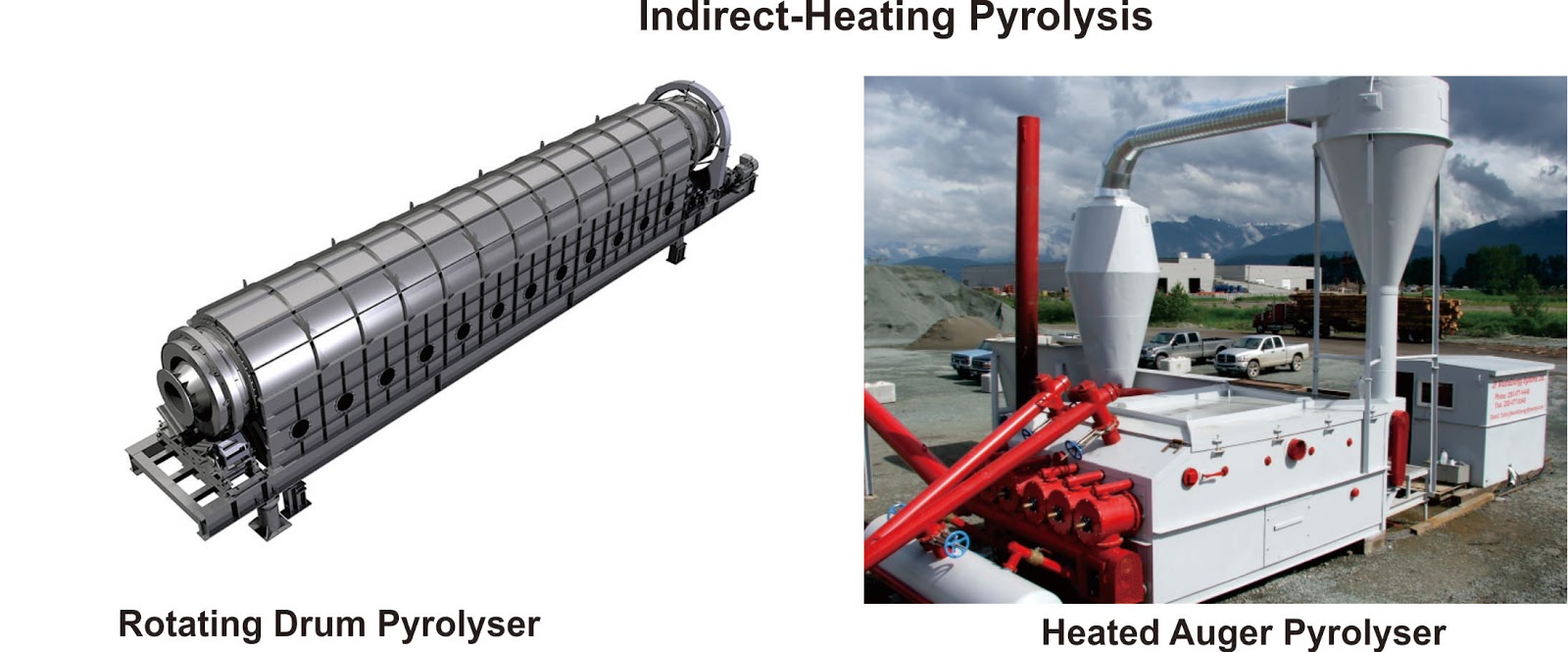
More specifically the indirect heating pyrolysis technology is more widely used for biochar production today. With this technology the pyrolysis process control is easier and the charcoal quality is also better. Application of indirect heating pyrolysis technology for continuous process generally use rotating drum and heated auger type. Biochar production capacity is generally in the range of 2-4 tons / hour. The byproducts of the pyrolysis process are also of high economic value such as bio-oil for fuel, pyroligneous acid (liquid smoke) for fertilizer and biopesticide, as well as syngas for fuel and more specifically for electricity production.

Tuesday, May 22, 2018

Activated Carbon For Any Industries!

Activated carbon or activated charcoal is a material that is widely used in various industries, as auxiliary processing. Food, beverage, energy, mining and pharmaceutical industries use this activated carbon. The need for activated carbon also continues to increase so that production also needs to be expanded. Indonesia has great potential as a world class activated carbon producer considering the abundance of potential raw materials available.

Currently, large activated carbon producers are located outside Indonesia such as Europe and America. Yet neither Europe nor America have abundant source of raw materials or most imports including from Indonesia. The most favorite activated carbon feedstock today is coconut shell and once again Indonesia is the country with the largest coconut plantation in the world, which is about 3.7 million hectares. Palm kernel shells can also be the raw material of further choices. With a palm oil plantation area of approximately 12 million hectares, palm kernel shells produced more than 10 million tons / year.
The raw material of activated carbon is charcoal. The charcoal is then activated to become activated carbon. The process of making charcoal is by carbonization or pyrolysis. Coconut shell as an example of raw material of charcoal, then after carbonization the coconut shell convert into coconut shell charcoal, which then this charcoal become the raw material of activated charcoal. So basically the process of activated charcoal production is through 2 stages of the process namely pyrolysis (carbonization) and activation. The process of producing the charcoal or the carbonization process (pyrolysis) is the same as the biomass carbonization process in general, for more detail can be read here. Currently in large capacity the production of charcoal is carried out continuously with indirect-heating. Rotating kilns and heated auger pyrolyser are commonly used equipment for continuous production of charcoal. Continuous integration of charcoal production and activation process can be read here.
While the activation phase can be done in two ways namely the activation of physics and chemistry. The choice of activation depends on the target surface area, pore distribution and economy. Steam activation is the most widely used physics activation, whereas chemical activation is very diverse. The more surface area of activated carbon the more expensive the price is also proportional to the cost of production. Activation equipment commonly used there are 2 kinds namely, rotating kilns and fluidized bed. Of these 2 types of rotating kiln equipment is more widely used than the fluidized bed. The price of rotating kiln equipment is cheaper because the construction and operation are easier than the fluidized bed system. Fluidized bed systems are typically used for higher quality activated carbon production due to better distribution and pore engineering due to fluidization.
Standard and quality of activated carbon is determined primarily by surface area, pore distribution, size and hardness. The iodine number parameter is commonly used for the quality of activated carbon. The higher the iodine number the better the activated carbon quality. The iodine number is a number indicating how much adsorbent or activated carbon can adsorb iod. The greater the iodine value, the greater the adsorption power of the adsorbent or the activated charcoal. Conversely, the higher water content and ash content contained in the activated carbon will cause many pores to be covered by the impurities so that the surface area will be smaller. Where the surface area is closely related to the activated carbon adsorption capacity.All biomass basically can be used as an activated carbon raw material because it has a carbon content. Specific application of the activated charbon that determines the choice of raw material and its activation options.

Thursday, March 2, 2017

Charcoal Production, Marketing and Use


Good quality charcoal will be able to maintain the wooden structure. On lump charcoal, particularly in softwoods, circular structure is clearly visible. Good quality should be solid charcoal, black and have little cracks in a circle. The charcoal will produce like a metallic ringing when is dropped. High humidity of the wood to make charcoal quality decreases due to the onset of many cracks. Likewise when experiencing excessive drying timber so that moisture damage wooden structures, the quality of charcoal also decreases namely fragile and a lot of cracks. Besides high-quality charcoal is also easily burn without odor or smoke. Charcoal is also  hygroscopic, which easily binds water from the air, especially in the rainy season. That is why the charcoal must be kept dry or with pallets in roofed room.

The other main quality parameters of charcoal is a strength, to reduce the loss of material during the loading - unloading and transportation. Species or type of wood has a significant influence on the strength of such charcoal. For example wood charcoal of tamarindus indica is one of the strongest charcoal and pine charcoal including fragilest charcoal. The most dense charcoal made from tree trunks. Good quality charcoal will burn cleanly and has a calorific value of 13,000 BTU/pound or about 1½ times the weight of dry wood. Low ash levels in the range of 2-3% makes selected for the field of metallurgy and household fuel. Sulfur and phosphorus contents are also very low on charcoal.  This further encourages the use of charcoal in the field of metallurgy, but with an inexpensive carbon sources found has shifted the use of charcoal in metallurgy.

Charcoal has become an important product for many years and received good market acceptance. The greatest use to fuel domestic cooking and BBQ at the picnic. Saudi Arabia and the Middle East countries in large quantities using charcoal for grilling lamb meat as food is important to them. Besides charcoal is also used for the manufacture of carbon disulfide, carbon tetrachloride, sodium cyanide, calcium carbide, silicon carbide, potassium cyanide, carbon monoxide, black powder, plastics, gas adsorbent, crayons, pharmaceutical, poultry - animal feeds and other industrial chemicals. Another great use for the production of activated carbon. Use for other industries are for heating steel (steel, pig iron, foundry molds), nonferrous smelting (copper, brass, nickel, aluminum, manganese electro, armor plate etc) and metal casehardening. Today the use of charcoal for agriculture (soil conditioner) also began much done and especially for increased production in the food sector. A large factory integrative for the recovery of hardwood byproduct recovery plant ever built and operates include carbonization and refining facilities for the production of acetic acid, methanol and charcoal in the form of lumps, briquette and charcoal, such as this photo below.
Hardwood Byproduct Recovery Plants 
Costs for charcoal production investment is cheap, so it can be done by small and medium industries. But the charcoal business success is not necessarily determined by the cheap cost of the equipment but rather to study the commercial aspects such as source and raw material costs, the availability and cost of labor and market aspects of charcoal produced.  Raw materials and labor costs, efficient operations and marketing capabilities are a major factor of success in charcoal production.
Beehive Kiln, carbonization batch type popular in the early 1900s
Missouri Kiln, carbonization batch type popular in the 1950s
In the era of the early 1900s charcoal production world experienced its heyday in the production of more than 500 thousand tons.  The driving force of the high acid requirement for the production of textiles with charcoal as raw material for production of the acid has been pushing the charcoal industry. As a result the factory for the production of charcoal and recovery of byproducts to be expensive. In this era of crude liquor obtained from the condensation of volatiles. Crude liquor is then refined into pure acetic acid and methanol.  In the years between 1910 and 1940 charcoal production fell to almost half of the era of the early 1900s caused other carbon material replacing charcoal in the manufacture of metals and chemicals.
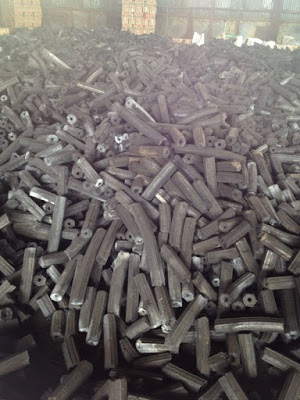
Sawdust Charcoal Briquette

Pillow Charcoal Briquette

Particularly woody biomass contains mainly hemicellulose, cellulose and lignin. Hemicellulose contribute to the non-condensable gas and a little tar. Hemicellulose begins to decompose at a temperature range of 150 C and decomposes overall above 180 C. Cellulose is mainly contributed to the condensable vapor and begins to decompose at 275 C.  Hemicellulose and cellulose is the main source of volatile material. While lignin has a degree of decomposition harder than hemicellulose and celullose. Lignin begins to decompose at 280 C, a peak temperature the range of 350-450 C and has a great contribution to the formation of charcoal and aromatic compounds. Charcoal production requires a lower heating rate with a long duration and relatively low temperatures, ie 450 C. During pyrolysis or carbonization gas production also varies with changes in temperature. CO2 (carbon dioxide) have high concentrations at low temperatures and decreases with increasing temperature. Hydrocarbon gases will come out at a temperature of 450 C maximum and down above 500 C, after which it begins to form hydrogen gas. Hydrogen itself mainly formed at a temperature of 700-950 C.
Traditional Charcoal Production
Scheme of semi-continuous carbonization process suitable for lump material
charcoal production continuously suitable for bulk material 

Traditional charcoal production process takes a long time up to weeks. Semi-continuous process requires only a relatively short time of their 20 hours, whereas the continuous process even faster. Charcoal production of logs or wood-logs or of wood briquette will match with semi-continuous, while the bulk raw materials will be more suited to a continuous process. Semi-continuous type kil that use heat supply through the wall and after-burning pyrolysis products, can be used for the production of charcoal. Two chambers were used interchangeably namely the drying mode and pyrolysis mode or carbonization make the process more effectively so they no longer require additional (external) fuel in the carbonization process. Exothermal heat the pyrolysis process ranges from 1000 to 1150 KJ, making enough (when there is no heat losses) make the pyrolysis process to run without additional (external) fuel. Control of operating conditions that the heating rate, temperature and residence time in the semi-continuous process is also more accurate so that product quality charcoal can be maintained properly.

Reject (Non-Standard) Coconut Fruit for Bioavtur / SAF Production

The international civil aviation organization (ICAO) has included non-standard coconuts on the ICAO positive list – ICAO document – ​​CORSIA...