Showing posts with label shariah Islam. Show all posts

Wednesday, June 15, 2022

Sheep Goat Livestock or Insect Livestock?

According to the United Nations, the global population is predicted to reach 9 billion people by 2050. The food sector is looking for a solution to the protein deficit due to per capita protein demand and population growth. Insects are a source of protein that is promoted in both feed and food. The nine billion people who are predicted to live on planet Earth in 2050, need an additional 250 million tons of protein per year, an increase of 50% compared to today. And according to the FAO, crickets need 6 times less feed than cattle, four times less than sheep, and twice less than pigs and broilers to produce the same amount of protein. A number of insect breeding companies have sprung up, especially in Europe for the production of protein from these insects, and there has even been an organization specifically formed for this, namely IPIFF (International Platform of Insects for Food and Feed). About a third of the production of these insects is for food and two-thirds for protein sources of feed. Will we Muslims be raising insects instead of sheep for protein sources? As Muslims, we shouldn't have to eat crickets to get protein intake as is widely promoted in the west. The types of insects permitted to be bred by the European Commission for this purpose include only 7 species of insects, namely 3 types of crickets, 2 types of caterpillars and 2 types of flies. We choose halal Thaiban, namely mutton and lamb.

Consumption of goat-lamb meat per capita in Indonesia is still very low, which is less than 1 kg per year and this could be only during Eid al-Adha or Eid al-Qurban. Of course this is very concerning, so its consumption needs to be increased. Even though this lamb meat is the best meat and the Prophet Muhammad liked it. Protein is one of the important elements for human food and more specifically lamb and goat meat as a source of protein has its own advantages, for more details read here. In a hadith the Prophet Muhammad SAW also ordered his people to keep these sheep because of blessings. These goats and sheep are closely related to the Muslim worship practices, namely aqiqah and qurban which are part of Islamic law (shariah) until the Day of Judgment, so that raising sheep and goats also has many virtues.

"Take care (use) by you goats because in them are blessings." [HR Ahmad]

"No prophet was sent except that he shepherded the goats. The friends ask, are you too?". He replied, "Yes, I used to herd the goats of the residents of Mecca for a few qirath wages." [HR. Al Bukhari, no. 2262] 

Abu Hurairah r.a. said: "Once served to the Prophet Shallallaahu 'alaihi wasallam a bowl of porridge and meat. So he took part of the arm (of the meat), and that part was most liked by the Prophet Muhammad Shallallaahu 'alaihi wasallam." (HR. Muslim)

Abu Hurairah radhiyallahu 'anhu narrated, "The Prophet Shallallaahu 'alaihi wa sallam was served meat. The leg (of that meat or thigh) was given to Him. The Prophet Shallallaahu 'alaihi wa sallam liked it, so he took a bite of the meat." (HR. Bukhari and Muslim)

With the development of energy plantations or legume plantations, sheep and goat farming can be increasingly encouraged. The main problem in the form of feed availability and more specifically the source of feed protein becomes easy to overcome. Thus, large capacity farms are also very likely to be developed, because the demand for goat and sheep meat is also very large. In addition, Indonesia's palm oil plantation area which reaches 15 million hectares is also potential for livestock, especially sheep, for more details read here. From this it can be concluded that in anticipation of the population growth, Muslims should be serious about raising these goats - sheep.

Thursday, March 24, 2022

Sheep Breeding with Rotation Grazing

Efforts to achieve self-sufficiency in meat, especially for Muslims to strengthen their aqidah (faith) by means of qurban and aqiqah, are still facing many obstacles. The main obstacle is the number of seed sheep which are difficult to obtain because of the large number of productive females that are slaughtered for both aqiqah and daily consumption. Muslims are important and obligated by law (fardhu kifayah) or as a collective obligation to raise sheep to achieve the above objectives. Do not let Muslims can not perform these prayers because there are no livestock, especially sheep. Of course, it is also not good if because they are reluctant to raise sheep, Muslims will have to buy sheep from non-Muslims, even though the number in Indonesia is the majority and is also the largest in the world.

There are at least two things to overcome the problem of the sustainability of the supply of sheep, namely, firstly with a set of regulations to provide strict sanctions and provide a deterrent effect for anyone who is proven to slaughter productive females, and secondly, by increasing the production of seed sheep or lamb breeds as much as possible so that they can keep pace with the rate of productive ewes that are slaughtered. In the first point, although there is  a regulation, in fact it is difficult to implement because the government is not firm and the light sanctions. While in the second point, anyone can do it, so it seems that the second point is easier to do.

The location of sheep farming can be done anywhere, whether in villages, mountain slopes, forest edges and even in urban areas. These livestock models adapt to the characteristics of the location, especially regarding the source of feed. For example, in urban areas with limited land, the sheepfolds must even be leveled, with feed sources especially from food industry wastes. In the food industry, the main product are for human food and by-products or waste for animal feed, such as tempe and tofu factories, noodle factories, biscuit factories and so on. Meanwhile, in rural areas with large areas of land, grazing is also very possible. Grazing will save on feed costs and is very suitable for seed sheep production or breeding. While rotation grazing is a better grazing technique so that the efficiency and performance of the farm is better. Even on land that is close to an energy plantation, apart from grazing with abundant sources of feed, a feed factory can also be built in that location. And basically the more models with various variations, the more regions in Indonesia that can be worked on for self-sufficiency in meat especially halal meat.

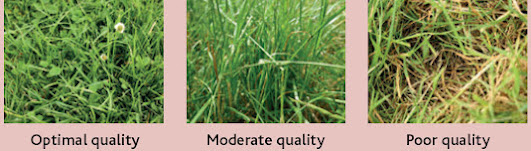
In rotation grazing, the grazing area will be divided into paddocks. And basically the more paddocks, the better because pasture can be utilized as a source of animal feed to the fullest. In general to start with 5 to 10 paddock with each paddock for grazing 3 to 7 days then rested 25-30 days. Of almost all rotation grazing practices, 4 paddock is the minimum number to start with. The square shape is the best shape for the paddock, so try to get as close to it as possible. The shape of the small elongated and circular paddock is not good because it is more difficult to achieve an even utilization of grass by livestock.


By increasing its production centers, the problems of seed sheep will be overcome. Of course this takes time and continuous effort. The unused, marginal and critical lands which amount to millions of hectares can be converted into the livestock area. Divine motivation to strengthen aqidah and part in enforcing Islamic law will continue to motivate Muslims to raise sheep farming, in addition to meeting their daily protein needs in the form of meat. The people's culinary shift from protein consumption of chicken meat to duck meat and currently more and more lamb is consumed. The halal industry should also be growing with Muslim business actors themselves. 

Biomass Boiler Testing and Selection of Suitable Biomass Fuel

In line with the trends toward decarbonization and sustainability across various sectors of life, particularly in the processing industries ...