Showing posts with label ex-coal mine. Show all posts

Sunday, April 17, 2022

Mining Sector and Post-Mining Reclamation

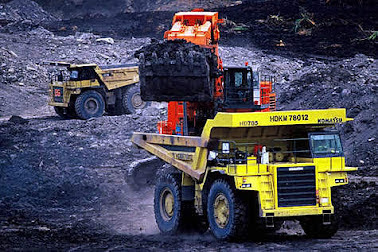
The photo is taken from here
Among the mining sector, coal is the largest mining product in Indonesia and even ranks third at the world level. In 2021 coal production was recorded at 576 million tons and it is projected that there will be only a slight decline in 2024, which is to 570 million tons. This coal is also the largest source of state income after Indonesia's oil can no longer be exported because production runs out for domestic consumption and even less so that it has to become an oil importer. But in the long term the future of coal is bleak as its use is increasingly restricted due to climate concerns. Countries that have ratified the Paris agreement have committed to reducing fossil fuels, especially coal with concrete steps, namely not building new coal power plants, cofiring with renewable energy at coal power plants, converting coal power plants into 100% biomass power plants (fulfiring) and closing a number of coal power plants and replace it with other renewable energy sources.

On the other hand, the post-mining activity also caused a lot of environmental damage, especially the land. Land damage will trigger natural disasters that endanger human life. Do not let the mining activities exploit its natural resources to the fullest but also leave natural damage that is no less severe. Of course this condition is very bad. The obligation of reclamation has also not been carried out properly, many even do not do it or just do it symbolically, imaging and mere formality while the purpose of reclamation itself is not achieved. The threat of a fine of 100 billion rupiah is also imposed for companies that ignore the reclamation to further encourage the reclamation activities.

According to Rizal Kasli, the general chairman of Perhapi (Indonesian Mining Experts Association), currently there are infrastructure and resource constraints (costs) in the implementation of the reclamation, namely for medium and small mining companies, for more details read here. This means that for large companies with large volumes of mining production there should be no obstacles, but stricter law enforcement is needed, according to Rizal Kasli. If large mining companies carry out reclamation properly, of course this is good and becomes an example for small and medium mining companies, but if the opposite happens, it will exacerbate environmental damage. Compensation or profit from the mining business should be in line and proportional to the improvement of the land or post-mining land (reclamation and rehabilitation).

The photo is taken from here
Why do a lot of mining companies generally ignore or neglect reclamation and post-mining land rehabilitation? In addition to the rules that are not strictly enforced, of course the problem is the cost. Mining companies have to spend a lot of money for the reclamation and rehabilitation of post-mining land, the costs depend on the conditions and the area of ​​the land. This of course burdens and reduces the profits of the mining company itself, causing reluctance. So even if reclamation and land rehabilitation are carried out, they are only symbolic, imaging and formality. This can be said to have no impact or achieve the goals of post-mining land reclamation and rehabilitation itself. 

Whereas the purpose of land reclamation and rehabilitation is one of the efforts to prepare fertile land for the future. So what if the reclamation turns out to be a profitable activity? This is certainly very interesting and motivating the mining companies. Bio-economy based reclamation and rehabilitation projects will be able to provide benefits for mining companies that do so. With these benefits, the land reclamation and rehabilitation program will be able to run well and sustainably, so that the entire post-mining area can be touched. We are currently developing a bioeconomic program for the post-mining land reclamation and rehabilitation, for more detailed information please contact us at cakbentra@gmail.com

Saturday, March 19, 2022

Bioeconomy in Ex-Coal Mining Land

Bioeconomy is defined as knowledge-based production and uses biological resources or living things to produce products, processes, and services in the economic sector within the framework of a sustainable economic system.

Coal which is a fossil energy with bioeconomy seems to be two contradictory thing. In practice, however, this may not be the case. After the coal deposit is extracted from the bowels of the earth, the land should be reclaimed so that it can be used for bioeconomy. Moreover, in the future era or era of decarbonization, the use of coal will also begin to be reduced due to its bad influence on climate change and global warming. A number of countries have prepared systematic plans for reducing the use of coal and in the future to not use it at all. Indonesia itself is a coal producing country with the third rank in the world (after China and India) with more than 550 million tons of production, which is the largest source of state revenue from the mining sector as well as many environmental problems due to the exploitation of the coal. The ex-coal land should be reclaimed so that it can be used again for productive activities such as agriculture, animal husbandry and forestry. Soil conditions after exploitation should be at least the same as before the coal exploitation. With its tropical climate, the bioeconomic programs should also be easier to carry out.

We are required to continue to learn so that we understand the changing circumstances, then understand the core of the problem so that we can do the best, including providing solutions. Sometimes a problem can be solved quickly, but on the other hand a problem needs a long and continuous solution. Factors of religion, politics, economy and natural conditions are a number of things that influence these changes. The problems of climate change and demographics are examples of problems facing humanity globally today and require gradual and long-term solutions. For the problem of climate change, in particular, a number of efforts have been made and seem to be getting more intensive lately.

In the future era, the combination of economic activities that are environmentally sound, but also capable of providing good economic growth or bioeconomy, with its premise on the safety of the earth, will greatly color human life. The high awareness of environmental problems distinguishes it from the exploitative economy of the past that left massive environmental damage. The financial economy or the financial sector but does not have an impact on the real sector, clearly does not provide benefits, even has repeatedly caused crises or has been proven to damage the economy itself. In more practical terms, the financial sector economy does not create new jobs. The food, energy and human goods sectors must be produced in an environmentally friendly and sustainable manner. For example, bioenergy as the best energy source must be continuously encouraged and improved, for a detailed explanation, read here.

Post-coal mining land is very minimal in nutrients and even acidic, so it needs preparation in the form of special treatment before being used for various purposes. This process can't be fast but also not too long, in a matter of 2-3 years the land should have been able to be used with the condition of the land or soil in good condition even better than before the coal mining activity. In addition to improving the physical and chemical structure of the soil, it is also necessary to add nutrients from organic matter. The use of biochar with its characteristics will be able to improve the physical and chemical properties of the soil, even with the addition of organic matter it will also fertilize the soil better. The biochar will also be able to last for hundreds of years, unlike organic materials that may need to be added periodically to maintain soil fertility. The best organic material for post-coal mining is livestock manure. This makes livestock ideally suited to be integrated into the post-mining reclamation program.

With a land area of ​​​​millions of hectares, the recovery of the post-coal land will provide environmental, economic and social benefits. Of course this is very strategic considering the environmental hazards due to environmental damage can bring much greater natural disasters. Livestock especially ruminants will be the best entry point or “weapon” to start the reclamation by using biochar as a multi-benefit material. After the soil is fertile, any activities related to agriculture, animal husbandry and forestry can be carried out optimally. Biochar in addition to soil improvement also absorbs CO2 gas in the atmosphere so that it is very good for productivity and the environment, especially the climate. Climate change has now become a central and global issue in environmental issues and even the existence of the earth so that the policies of countries in the world take it into account. Raw materials for biochar production are also very abundant, both from plantation industrial waste such as palm oil and from forestry.

One of the tasks of human life according to Q.S. Adz Dzariyat 56 that must be carried out is 'Abdullah (a servant of Allah who is always submissive and obedient to His rules and will and only serves Him). The task of human life is also as the caliph of Allah on earth. This can be understood from the word of Allah in Q.S. Al-Baqarah: 30. Man is the noblest creature among other creatures (Surah al-Isra ': 70) and he/she was made by Allah in the best form/event, both physically and psychologically (Surat at-Tin: 5), and equipped with various potential tools and basic potentials (fitrah) that can be developed and actualized as optimally as possible through the educational process. Because of that, it is proper for humans to carry out the task of being the caliph of Allah on earth. The task of man as the caliph of Allah on earth, among others, involves the task of realizing prosperity on earth (Q.S. Hud: 61). Therefore, the task of caliphate is a sacred duty and a mandate from Allah from the first human to humans at the end of the age to come, and is a manifestation of the implementation of devotion to Him ('abdullah).

Furthermore, Allah SWT also mandates humans to re-establish balance in the universe that has been disturbed by justice (Surah 55:8-9). Currently, when the concentration of greenhouse gases continues to increase in the atmosphere so that the earth's temperature increases, it will cause icebergs at the two poles of the earth to melt, raise sea levels, climate change, to change the concentration of the earth's mass point and shift the earth's north pole. The shift in the earth's poles will affect the circulation of the earth to the earth and so will affect the position of the earth in the universe. What happens if these changes continue or even accelerate? The balance of nature is disturbed, the sun rises from the west and at the end there will be a collision between planets and stars in the solar system and the universe, there will be doomsday. Carbon trading is one of the efforts to reduce these greenhouse gases, and as human awareness continues to increase, the price of carbon or the cost of compensating for CO2 gas has increased recently.

To reduce the earth's temperature, namely by reducing the concentration of greenhouse gases. To reduce 1 ppm concentration of CO2 in the atmosphere is equivalent to absorbing about 15 gigatons of CO2. Meanwhile, the costs required for mitigating major climate change disasters are estimated at USD 1.6 trillion to USD 3.8 trillion annually. To reach the concentration of CO2 in the atmosphere to 350 ppm, it takes about 70,000 biochar the size of the Giza pyramid, assuming that fossil fuels are discontinued. With a Giza pyramid volume of 2.6 million m3 and an average biochar density of 200 kg/m3, the Giza pyramid-sized biochar weighs 520 million kg or 520 thousand tons. Great job of course. Biochar production should grow 5000 times from its current production capacity. With biochar the size of the Giza pyramid unit we need to build 4 pyramids per day (about 2 million tons of biochar per day) for the next 100 years and starting now. And the post-coal mining land is likened to a dead earth, while humans as caliphs on earth are ordered to prosper this earth by fertilizing the soil.

Friday, December 3, 2021

The Urgency of Ex-Coal Mine Reclamation With Biochar

The large number of ex-coal mines that are not reclaimed causes various environmental problems and even life safety. There have been many casualties from the former coal mine pit. The simple logic should be that after the coal deposit is taken or extracted during the mining activity, the land is returned and repaired so that the quality is better than before the mining activity or at least the same, but not worse so that various environmental problems arise. The era of decarbonization is accelerating because of the driving force of climate change and global warming. Fossil fuels, especially coal, are starting to be abandoned, of course, including the coal mining activity itself. Meanwhile, the area of former coal mines which reaches millions of hectares is a lot of environmental problems today.

When the quality of the soil is improved so that it has high fertility then this becomes a very extraordinary potential so that a number of important activities can be carried out, such as agriculture, animal husbandry and forestry. With such conditions, the effort to self-sufficiency or food sovereignty is not impossible. Technically, it can be analyzed which of the agricultural, livestock and forestry sectors can reach the goal faster, namely food independence or sovereignty. But before going far and doing business on the ex-mining land, to be more specific what products will be made, the basic question is how to improve the condition of the damaged soil and the scale is also massive?

The application of biochar to the soil is a surefire solution in an effort to repair damaged soils. Depending on how severe the damage is, the characteristics of the soil type and the final quality level being targeted will determine the application or dosage of the biochar. In addition to improving the soil, the biochar application also absorbs CO2 from the atmosphere, thereby reducing the concentration of CO2 from the atmosphere or is a carbon negative scenario. Biochar buried in the soil becomes a carbon sink, similar to creating a conservation forest to absorb CO2 from the atmosphere. How much biochar is buried so that it can be calculated that the CO2 absorbed into the carbon sink can be sold on the carbon market and get carbon credit. Biochar itself is able to last in the soil for hundreds of years and is not decomposed for a long time. Even when the land has been repaired with biochar and then a conservation forest is made on it, the carbon credit obtained are double, namely from the application of biochar itself and from the conservation forest. But once again, of course, economic factors are another important consideration, so as above, after soil fertility is improved with biochar, there are a number of options for using the land. Of course which one provides the best economic benefits will be the choice.

Millions of hectares of land can be recovered so that its benefits will be maximized. Say, for example, that one million hectares of land can be recovered and then used for activities that support food security or self-sufficiency such as agriculture and animal husbandry, then how much output can be calculated. Even better if there can be a surplus of food production so that it can export. Or even in the longer term, the land is reforested into conservation forest, so how much CO2 can be absorbed by the forest plus the application of biochar. Of course very much. Then why have to build a food estate but have to clear forest land, while there are other better ways? Namely not only restoring but improving the condition of the land even better before the coal mining activity was carried out.

Reject (Non-Standard) Coconut Fruit for Bioavtur / SAF Production

The international civil aviation organization (ICAO) has included non-standard coconuts on the ICAO positive list – ICAO document – ​​CORSIA...