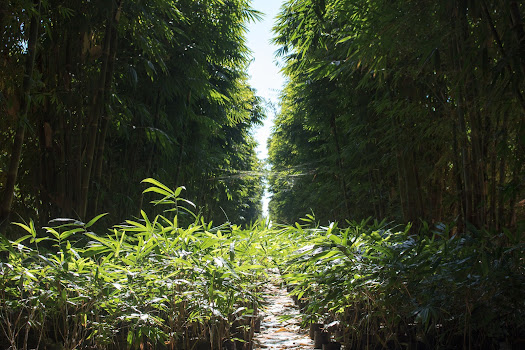
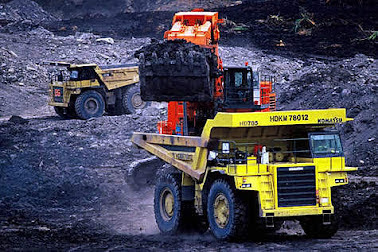
Post-mining reclamation is the obligation of mining companies / IUP (Mining Business License) holders so they must prepare funds for this. Apart from reforesting mining areas in forest areas, other forms of reclamation are more flexible because there are many types, but the aim can provide economic, social and environmental benefits. If the mining company does not carry out reclamation, it will receive heavy sanctions, namely a fine of up to 100 billion rupiah. Post-reclamation business or activity management is also flexible according to the agreement as long as it does not conflict with the above objectives.
Thursday, November 16, 2023
Another Form of Reclamation - Energy Plantation for Wood Pellet Production and Integrated Farming
Wednesday, November 8, 2023
Decarbonization of Coal Mining with Reclamation for Energy Plantations for Wood Pellet Production
Wood pellets are carbon neutral fuel so they do not add CO2 to the atmosphere, which is different from fossil fuels such as coal which are carbon positive, namely adding CO2 to the atmosphere, which is part of the climate solution. Net zero emissions and decarbonization efforts are also accelerated by the use of carbon neutral fuel such as wood pellets. This is an important and main reason for the production of wood pellets in mining companies, especially coal, so that they can reduce CO2 emissions from burning coal. Post-mining land at coal companies can be reclaimed in another form, namely by creating energy plantations as raw material for wood pellet production. There are millions of hectares of ex-mining land that have potential as energy plantations, for more details read here.
The implementation of a carbon tax in Indonesia is planned for 2025, after several postponements. The lowest carbon tax rate is IDR 30 per kilogram of carbon dioxide equivalent (IDR 30,000 or around US$ 2 per ton of CO2 equivalent). This tariff is actually much smaller than the initial proposal of IDR 75. With a tariff of IDR 30, Indonesia is one of the countries with the lowest tariff in the world for carbon tax. By burning 1 ton of coal, it will produce around 3 tons of CO2 emissions, so the carbon tax imposed will reach IDR 90,000 per ton of coal. Meanwhile, the use of renewable or carbon neutral fuels such as wood pellets is not subject to the carbon tax. Apart from that, mining companies are also obliged to reclaim their post-mining land, which if not done will be subject to heavy sanctions.
Thursday, August 10, 2023
Post-Mining Reclamation with Energy Plantation Revegetation for Wood Pellet Production
Revegetation is one option for post-mining reclamation. The choice of revegetation options also has certain considerations apart from environmental, social and of course economic or business aspects. The vision for the future in the form of sustainability is an important factor for post-mining reclamation, especially the revegetation.
Revegetation with palm oil plantations is one of the most popular revegetation options. This is because palm oil product (CPO) and their derivatives sell well in the market. However, the land requirements and operational costs for palm oil plantations themselves are not easy and cheap. The choice of revegetation with other plants should also be considered.
Creating an energy plantation from short rotation crops (short rotation coppices) can be considered. This is because land and operational requirements are much easier and cheaper. Even in the long term the use of the land will also improve the quality of the land. Products from energy plantations will also become a world trend and the current global climate solution, namely wood pellets. Meanwhile, by-products in the form of animal feed (feed pellets or hay) and honey from beekeeping are no less interesting by-products.
The extent of post-mining land, which reaches millions of hectares, is of course a very attractive potential for the development of these energy plantations. The need for bioenergy, especially wood pellets, is also getting bigger along with the global decarbonization program. Likewise the need for animal feed which is a link in the chain of human food needs, especially meat or protein. Efforts to increase land use value, prevent natural disasters, absorb employment and economic benefits are the thrust for revegetation reclamation with the energy plantations.
Thursday, June 15, 2023
Sustainable Business in Post-Mining Land: A New Paradigm
The land area of 8 million hectares (80,000 km2) is a large area, even the area is roughly equivalent to twice the size of the Netherlands or Switzerland or as large as Austria. Various types of plants can be planted or cultivated on the land, both food crops, energy (bioenergy), feed and biomaterials. This is very much in line with the current era of bioeconomics and decarbonization where world attention is focused on reducing carbon (CO2) emissions from fossil fuels to non-carbon in an environmentally friendly and sustainable way. And moreover Indonesia's location is on the equator so it has a tropical climate so it is very suitable for plant cultivation or biomass production for the purposes as above. The 8 million hectares of land is unproductive land or more precisely damaged land, namely post-mining land in Indonesia. Restoring (recovering) the land to a minimum condition like pre-mining is the responsibility of the mining companies. Of course it would be even better if the recovery was better than pre-mining conditions considering that a number of mining businesses generate large profits so environmental improvement efforts such as reclamation and post-mining rehabilitation should be carried out easily.
In addition to residential areas, tourism, water sources and cultivation areas, revegetation is one of the efforts for reclamation and rehabilitation of post-mining land (OP phase reclamation program attachment VI Kepmen ESDM No. 1827 K/MEM/2018). Revegetation for the ultimate goal of an environmentally friendly, sustainable and profitable business activity is certainly the best solution. The general characteristic of ex-mining land is a thin layer of top soil and subsoil so that little soil organic matter and soil microbes are needed for plant growth. It is impossible to simply revegetate land with these extreme conditions, therefore successful revegetation of ex-mining land can only be achieved by combining soil amendments, species selection and application of appropriate silvicultural techniques. This is because these business activities provide environmental, social and financial benefits. Revegetation with productive plantations or forests is an effort to achieve this. How big the benefits are, of course, needs to be studied in more depth on the types of productive plantations or forests that will be created.
The type of mine also influences the post-mining reclamation and rehabilitation work. In almost all coal mines there is no further processing, in contrast to mineral mines which require further processing. In post-mining reclamation coal mines it is simpler just to return the soil to its original condition whereas in mineral mines, apart from returning the soil as in coal mines, the problem of tailings (waste soil left over from the mining ore extraction process) is also another problem, whereas in smelters or smelters (processing/refining) of these minerals also produces slag (post-operation) which can also be another additional problem. The damaged lands in the post-mining reclamation area need to be repaired or rehabilitated so that they can return to their previous condition. The addition of organic fertilizer and biochar, will accelerate the improvement of soil fertility. Acceleration of soil fertility is important to accelerate the growth of plants planted in the area so as to reduce the potential for natural disasters such as floods and landslides. The use of biochar can also provide valuable additional income from carbon credit through a carbon sequestration / carbon sink mechanism.
The potential of 8 million hectares of land will produce very large biomass products if managed properly and correctly. The era of electric vehicles which is also expected to soon become a world trend will also require electrical energy stored in the battery. The electrical energy used should also come from renewable energy, not from fossil energy sources. The energy source from biomass to electricity is an ideal renewable energy source for the electric vehicle energy source. Production of biochar by pyrolysis and production of biogas from livestock manure as organic matter can be used for electricity production. With a number of driving forces and future trends, it is important to consider the utilization of the 8 million hectare land.
Thursday, June 16, 2022
Ruminant Farming and Post-Mining Reclamation
To fertilize post-mining soil, organic matter or compost is important and much needed. Land or post-mining land is damaged with a very low fertility level so it needs to be processed (treatment) first before it can be planted. The choice of plants depends on the purpose of using the post-mining land, whether for agriculture, forestry or others. Planting fast growing trees and short rotation coppice i.e. legume group trees is the best option. In addition to the ability to survive, its deep roots are also able to withstand erosion and the ability to symbiotic with azetobacter so that it binds nitrogen in root nodules so that it fertilizes the soil. And furthermore, the legume tree can be used as a source of animal feed (the leaves), bioenergy (the wood) and honey (the flowers).
The creation of livestock and their supporters such as forage plantations is like an ammunition factory to reclaim the post-mining land. The wider and faster the target time for reclaiming the land, the larger the farm required. Ruminant farms with thousands or even tens of thousands of livestock can be made with this purpose. Although the main objective is to produce compost for post-mining land reclamation, the indirect benefits from the farm are no less large. Even from the farm business can get big financial benefits. The main and common problem faced by mining entrepreneurs is that they are reluctant to do reclamation because it costs a lot and does not provide financial benefits. But when the reclamation activity does not reduce the company's finances even provide large profit, of course it will be a different story. The volume of mining carried out should also be proportional to the repair or post-mining reclamation.
To maximize the reclamation, biochar needs to be used. The use of biochar will make compost in post-mining land not easily lost after being washed by rain, maintain soil moisture because biochar is able to hold water (water holding capacity), raise soil pH so that soil microbial activity is more optimal and more nutrients are absorbed by plants, and biochar also will become a home or colony for soil microbes so that it will further fertilize the soil. Meanwhile, in terms of climate change mitigation, the use of biochar in the soil will also store carbon (carbon sequestration) for a very long time, up to hundreds of years. Carbon credits with a carbon sink mechanism as part of the CCS (carbon capture and storage) application can also be obtained. The carbon trading market is predicted to get bigger as global awareness of climate change and biochar as one of the solutions are also increasingly being applied, discussed and paid attention to by the earth's population.
The extent of post-mining land that reaches millions of hectares, the high demand for domestic meat as well as the export market, and the large amount of biomass waste that can be converted into biochar, post-mining reclamation should be a priority for mining entrepreneurs moreover, the reclamation activity does not reduce the company's profit but instead gives more profits. If this can be done, the environmental damage caused by mining can be minimized. Indeed, humans need various products that come from the mining to make their lives easier, but also not to the point that on the other hand the mining business actually damages the environment which will lead to disasters in the future.
Sunday, April 17, 2022
Mining Sector and Post-Mining Reclamation
![]() |
| The photo is taken from here |
On the other hand, the post-mining activity also caused a lot of environmental damage, especially the land. Land damage will trigger natural disasters that endanger human life. Do not let the mining activities exploit its natural resources to the fullest but also leave natural damage that is no less severe. Of course this condition is very bad. The obligation of reclamation has also not been carried out properly, many even do not do it or just do it symbolically, imaging and mere formality while the purpose of reclamation itself is not achieved. The threat of a fine of 100 billion rupiah is also imposed for companies that ignore the reclamation to further encourage the reclamation activities.
According to Rizal Kasli, the general chairman of Perhapi (Indonesian Mining Experts Association), currently there are infrastructure and resource constraints (costs) in the implementation of the reclamation, namely for medium and small mining companies, for more details read here. This means that for large companies with large volumes of mining production there should be no obstacles, but stricter law enforcement is needed, according to Rizal Kasli. If large mining companies carry out reclamation properly, of course this is good and becomes an example for small and medium mining companies, but if the opposite happens, it will exacerbate environmental damage. Compensation or profit from the mining business should be in line and proportional to the improvement of the land or post-mining land (reclamation and rehabilitation).
![]() |
| The photo is taken from here |
Whereas the purpose of land reclamation and rehabilitation is one of the efforts to prepare fertile land for the future. So what if the reclamation turns out to be a profitable activity? This is certainly very interesting and motivating the mining companies. Bio-economy based reclamation and rehabilitation projects will be able to provide benefits for mining companies that do so. With these benefits, the land reclamation and rehabilitation program will be able to run well and sustainably, so that the entire post-mining area can be touched. We are currently developing a bioeconomic program for the post-mining land reclamation and rehabilitation, for more detailed information please contact us at cakbentra@gmail.com
Sunday, September 12, 2021
Utilization of Marginal Land and Former Coal Mines for Ruminant Livestock and Charcoal Briquette Production
![]() |
| Photo is taken from here |
The need for red meat, namely lamb, goat and beef in the country itself is still lacking, so it requires an adequate supply. In terms of goat and lamb meat, the need for the Jabodetabek (Jakarta, Bogor, Depok, Tangerang and Bekasi) area alone has not been met, so it is supplied alternately from East Java, Central Java and Lampung alternately. In addition, according to Aspaqin (Association of Indonesian Aqiqah Entrepreneurs) there has been an imbalance in the supply of sheep and goats due to the large number of female productive sheep and goats being slaughtered. This condition causes the sustainability of the supply of sheep and goats to be disrupted. According to data from Aspaqin that they collected, 63% of female sheep and goats were slaughtered from a total of 331,693 slaughtered tails. Of course there are still many who are not recorded because there are still many aqiqah entrepreneurs who are not members of the Aspaqin. In addition, there are also many stalls for eating goat dishes, such as satay stalls which still slaughter productive sheep and female goats. Aspaqin continues to strive for education and socialization to improve these conditions, including a proposal to provide punishment for the slaughter of these productive females.
Meanwhile, in the beef cattle sector, Indonesia has the advantage of fattening cattle (feedlot). With the availability of a lot of agricultural wastes and agro-industrial wastes in Indonesia, this business is very competitive, even indonesia is the best. Moreover, this is by creating a plantation that is specifically designed for the feed source by utilizing land that can be said to be unproductive at first. By only taking about 100-120 days, the fattening was successful or completed, although in general, breeder or seed cattle are generally still imported from Australia. Australia, especially northern Australia is the center of the seed cattle. With the vast grazing area there, the cost of producing feeder cattle is very competitive and cannot be done well in Indonesia. Although there are a number of discourses to produce seed cattle in eastern Indonesia and palm oil plantations, the facts are still not or are still very minimal. In addition, according to Gapuspindo (Indonesian Beef Cattle Farmers Association), the domestic demand for beef has not been met or there is still a shortage of around 60% and this shortage is filled by imports of buffalo meat from India. Buffalo meat from India actually has to be sold cheaper than beef, but in fact it is the same as beef. This condition is getting worse, especially in the period leading up to the Eid al-Fitr holiday with lots of illegal meat circulating, such as wild boar meat.
Charcoal briquettes are a product of wood processing from the plantation. The production of charcoal briquettes using wood raw materials must also be managed properly so that it can be sustainable. The important thing to note is that the harvest of wood for the production of charcoal briquettes should not exceed the production of wood from the plantation itself, for example the need for wood for the production of briquettes is 1000 tons / month, the speed of wood production from the plantation is at least the same as the wood harvested every month. Charcoal briquette production techniques are also available in 2 options or routes such as the scheme below. However, route 1, which is briquetting before carbonization, is more in demand because the quality of the briquettes produced is better. In this route, the wood biomass raw material has been downsized so that the particle size is suitable for the production of the briquettes and the dryness level has also been adjusted and then briquetted or pressed in a briquette machine without using additional adhesive. The briquette product is then carbonized so that it becomes the final product in the form of charcoal briquettes or commonly known as sawdust charcoal briquette.
![]() |
| Photo is taken from here |
And lastly, basically the need for food, especially animal protein and more specifically from ruminants sheep, goats and cattle will continue to increase along with the increase in the population itself. The world population is estimated to reach 10 billion in 2050 or 1.3 times today and Indonesia's population will reach 319 million in 2045 or 1.2 times from today. Another thing that deserves attention is Indonesia's demographic bonus. The demographic bonus with the dominance of the productive young generation should be a separate strength for the Indonesian nation if it is supported and directed properly. This sector is certainly one solution. With the vast land area in Indonesia that can be used for this business, God willing, it will overcome various important problems today such as food security, preventing environmental damage, creating jobs, improving living standards, improving food quality and so on.
Sunday, July 11, 2021
Energy Plantation in Coal Mine Reclamation, Wood Pellet Factory and Coal Powerplant Cofiring in Indonesia
The extent of ex-coal mining area which reaches around 8 million hectares is an environmental problem itself that needs to be addressed. Energy plantations are an effective solution for the reclamation of the former coal mine land for more details, you can read here. Reclamation of ex-coal mining land is a form of responsibility of the coal mining company. Reclamation should be carried out as well as possible, not only symbolic and ceremonial, so that the effects of environmental damage can be minimized. Efforts to reclaim ex-coal mining land is not an easy thing and requires a lot of time and money, so it is not surprising that many avoid this responsibility. The best solution is to tackle the problem while generating both economic and environmental benefits. The production of wood pellets with wood raw materials from the energy plantation is a surefire solution to overcome this environmental damage as well as economic benefits.
Recently, the government launched a cofiring program for a number of coal powerplants in Indonesia. In 2020 the cofiring program has been initiated with a target of 37 coal powerplants and by the end of 2020 it has been reported that 20 coal powerplants have been implemented. While in total there are 114 units of coal powerplans owned by PLN (Indonesia state owned electricity company) that have the potential for cofiring spread over 52 locations with a total capacity of 18,154 megawatts (MW) with a target completion of 2024. Consisting of 13 coal powerplant locations in Sumatra, 16 coal powerplants locations in Java, Kalimantan (10 locations), Bali and Nusa Tenggara (4 coal powerplants unit), Sulawesi (6 locations) and Maluku and Papua (3 coal powerplant locations). Meanwhile, the cofiring ratio ranges from 1-5% of biomass with an estimated biomass requirement of 9-12 million tons per year. Cofiring is the easiest and cheapest effort for coal powerplant to gradually use renewable energy, especially biomass with main purpose of CO2 reduction. Currently, there is also a national standard for wood pellets (SNI wood pellets) for the purposes of cofiring and for more details, please read here. The use of biomass fuels, especially wood pellets, is a carbon neutral scenario that needs to be continuously improved. The biomass fuel will save the environment and not increase the earth's temperature, for more details read here.
Policies to reduce the consumption of fossil fuels, especially coal, also continue to be carried out globally. For Asia, for example, Japan and Korea with their leading Feed in Tariff and Renewable Portfolio Standard (RPS) in the use of renewable energy, especially wood pellets. While in Europe with the Renewable Energy Directive II (RED II) renewable energy is targeted to reach 32% by 2030, biomass fuel is predicted to account for around 75% of the portion of renewable energy and the target is that coal is not used in total by 2050. Germany announced not to use coal in 2038, the UK even targets to no longer use coal for electricity production starting in October 2024. North America, namely the United States and Canada as members of the G7 are also committed to reducing coal consumption, even Canada in 2018 announced regulations to no longer use coal for electricity generation by 2030. On the other hand, the construction of coal power plants financed by China in various countries has failed. In addition, the G7 countries (Canada, France, Germany, Italy, Japan, Britain, and the United States) have been aggressively blocking the use of coal. Countries that still support coal use, such as China and Indonesia, are increasingly isolated and could face more pressure to stop the activity.
Leaves as a by-product of the energy plantations have the potential to be used as animal feed. The leaves of this type of legume have a fairly high protein content. The quantity of leaves produced is also large, proportional to the area of the energy plantation. Ideally, the development of energy plantation will support the livestock industry, so that not only energy needs are met but also food needs. As a comparison, the European animal feed producer association, FEFAC, prioritizes protein sources for animal feed from rapeseed energy plantations from a number of efforts to obtain protein sources for animal feed, for more details please read here. The main products of rapeseed energy plantations are oil which is used for biodiesel production, and meal as a by-product of the oil production which is used as a source of animal feed protein. The need for protein sources for animal feed has an important role as nutrition for livestock, especially ruminants. Europe is still very shortage of these protein sources so that imports cannot be avoided. It is estimated that around 48 million tons of feed protein sources are needed by Europe, so there is a chance that leaves from energy plantations can be exported to Europe for this. When the domestic feed industry has not been able to absorb it, export is the best choice.
Tuesday, June 11, 2019
Energy Plantation for Coal Mine Reclamation
Energy plantations with fast rotation plants and leguminoceae groups such as calliandra and gliricidae are the right solutions to reduce these environmental impacts. After the reclaimed energy plantation can be made in the area of the former coal pit. With an area of thousands to millions of hectares, the woody biomass production from the energy plantation will also be large. The wood is then used as an energy source too. Coal companies are basically energy companies, so it will be in line if it also produces wood as an energy source as well. The difference is that wood from the energy plantation is renewable energy, is a carbon neutral fuel and sustainable. Reclamation with energy plantation also provides a positive image for the company. In order to provide high added value, the wood can be processed into wood chips or wood pellets.
Why are fast-rotating plants from the leguminoceae group such as calliandra or gliricidae chosen as energy plantation tree species? This is because a number of advantages of these plants include pioneer plants and are very easy to grow, easy to care for, can be harvested quickly and with roots that are symbiotic with azetobacter so that they can bind nitrogen from the atmosphere to increase soil fertility. The condition of infertile reclamation land can also be repaired with the energy plantation. Indonesia's position on the equator is also very supportive for the production and use of energy from biomass, especially energy plantations. There is a lot of cloudiness because the island nation makes solar energy use of solar panels less suitable to be applied in Indonesia, for more details can be read here.
The use of renewable energy is gradually starting to replace fossil energy. Renewable energy, especially biomass, is environmentally friendly and sustainable. The coal power plant can also gradually use biomass as its fuel by means of cofiring. Cofiring is the easiest and cheapest way for coal power plants to go to biomass power plants. In this way automatic waste of fly ash will also be reduced. Conversion of up to 100% biomass or full firing is the target for the coal power plant. In addition, power plants also do not have to be centralized with large capacity, for example, hundreds of MW or thousands of MW, but more scattered with small to medium capacity with biomass fuels, especially those that are intensively cultivated with energy plantations that can be made in various corners of the archipelago. Gasification and fluidized bed technology are a number of technologies that can be used for small and medium scale power plants and use wood biomass as fuel. It is not even impossible that the power plant is only the size of a refrigerator.
Biomass Boiler Testing and Selection of Suitable Biomass Fuel
In line with the trends toward decarbonization and sustainability across various sectors of life, particularly in the processing industries ...
-
References are needed to make something no less quality or even better, as well as for a wood pellet production facility. Indonesia with...
-
When using biomass as a raw material for wood pellet and wood briquette production, the level of dryness of the biomass must be dry en...
-
In areas where electricity supply is sufficient and coconut coir waste is abundant, the coconut coir can be further processed into c...