
Showing posts with label climate solutions. Show all posts

Sunday, June 1, 2025

Important Parameters of Biochar Quality and Biochar Standards

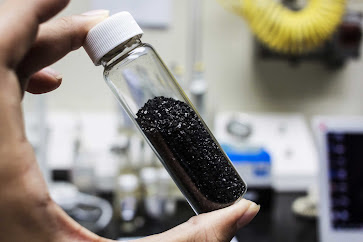
The physical chemical properties (characteristics) of biochar are parameters of its effectiveness in its various different applications. Factors that affect the physical chemical properties of biochar are raw materials (feedstock), production operating conditions (production process), and treatment before and after processing (pre- or post-processing). And because biochar has different physical chemical properties, laboratory analysis is needed to predict the effectiveness of the biochar. Specifically, certain applications will require certain physical chemical properties so that the selection of the appropriate biochar product is very important. For example, biochar with a high surface area has great potential to absorb environmental toxins, metals and nutrients. This is so that biochar with these characteristics is suitable for environmental remediation applications. And because biochar works on various different contaminants, the biochar needs to be modified for a specific application.

The chemical properties of biochar that are usually used as references are organic carbon (Corg) and carbonates (as CaCO3), H/C ratio and fixed carbon (FC), ash content, and volatile matter (VM). While the physical properties that are usually used as references are bulk density, surface area and particle size distribution. And because the main application of biochar is for agriculture including plantations and forestry, namely to increase the productivity of agricultural, plantation and forestry products by increasing soil fertility, the parameters related to soil fertility are also important references. These parameters are nitrogen, pH & liming, liming equivalent, electrical conductivity, total potassium (K), total phosphorus (P) and metal.

Although biochar has multiple benefits both for improving soil fertility and also climate solutions in the form of carbon sequestration / carbon sink, so biochar products can be selected according to usage priorities. Optimizing the benefits between the two important things is certainly the best choice. The perspective or point of view for optimizing benefits is very dependent on a person's profession or expertise, for more details read here. Parameters in the form of organic carbon (Corg), H / C ratio and fixed carbon (FC) are mainly related to climate solutions, namely carbon sequestration / carbon sink or also commonly called BCR (biochar carbon removal) which can get compensation in the form of carbon credit. To be able to get carbon credit, biochar producers must follow the methodology created by the carbon standard institution (Puro Earth, Verra, European Biochar Certificate), so that BCR can be quantified and sold on the carbon market (currently in VCM = voluntary carbon market).

Meanwhile, regarding the priority in soil fertility, the biochar product made must come from a source rich in nutrients or plant nutrients such as from livestock manure. Biochar from livestock manure tends to have lower organic carbon (Corg) than biochar made from wood. Biochar with high ash content such as that from livestock manure usually also has a higher liming equivalent than biochar from wood. High volatile matter (VM) is also beneficial for soil fertility. VM containing gases such as carbon monoxide and methane, organic hydrocarbons, acids and tar and a number of inorganic compounds can be an important food source for soil microbes. A number of studies also show that biochar from livestock manure has a high portion of phosphorus (P) so that it can meet the P needs of plants, as well as its potassium / potassium (K) content.

Transactions or buying and selling of biochar (physical) or BCR credit require certain quality standards. Without an agreed standard, it will certainly be very difficult to determine a meeting point between the seller and the buyer. There are a number of institutions that develop standards for biochar, including the European Biochar Certificate (EBC), Organic Material Review Institute (OMRI), USDA Certified Bio-based Product and World Biochar Certificate (WBC). To obtain quality parameters or specifications of biochar that are in accordance with its use, a certain type of laboratory is needed. Not many laboratories can conduct this biochar test. Some laboratories that can do it include compost, soil, coal and activated carbon analysis laboratories. With a number of these technical supports, of course, the development of biochar for the future will be easier, especially with the various real benefits of biochar and the increasing public awareness of environmental sustainability issues, especially climate issues. 

Food Estate or Biochar? Indonesia becomes the Champion of Global Climate Solutions?

Currently, there are millions of hectares of land in Indonesia that are in dire need of biochar, namely dry land 122.1 million ha; post-mining land 8 million ha; critical land 24.3 million ha; total around 154.4 million ha. Meanwhile, the potential raw materials for biochar production are also abundant (agricultural, plantation and forestry waste) such as dry empty fruit bunch of palm oil around 30 million tons/year, baggase 2 million tons/year, corn cobs 5 million tons/year, cassava stems 3 million tons/year, waste wood 50 million tons/year, rice husks 15 million tons/year, cocoa shells and so on. With biochar, agricultural productivity will increase from an average of around 20% to even 100%.

If applied on a macro or national scale, say with a 20% increase in production, for example, rice production will increase to 36 million tons/year from the previous 30 million tons/year, corn will increase to 18 million tons/year from the previous 15 million tons/year, crude palm oil or CPO will increase to 60 million tons/year from the previous 50 million tons/year. This will save land use so that the opening of forest land for food crops and (bio)energy such as food estates may not be necessary or at least slow it down.

For example, Indonesia's current CPO production reaches around 50 million tons per year with a land area of ​​around 17.3 million hectares. This means that the average CPO production per hectare is only 2.9 tons or per million hectares produces 2.9 million tons. If biochar is used and there is a 20% increase, it means there is an increase of 10 million tons of CPO per year and this is equivalent to saving around 3.5 million hectares of land, or the use of biochar will slow down forest clearing for palm oil plantations.

There is a rough calculation that with an investment of 10 million US dollars, approximately 200,000 tons of biochar produced with more than 400,000 carbon credits will be produced over a period of 10 years. And for example, with a selling price of biochar of 200 dollars per ton and a carbon credit of 150 dollars per unit (per ton of CO2), then within 10 years, the income will be almost 10 times the investment or it is estimated that in less than 2 years the initial investment has been returned (payback period). Carbon credits sellers or biochar producers also try to get sales contracts for 5-10 years.

Of course when the price of biochar is higher and / or its carbon credit then of course the return on investment will be faster. And that does not include the utilization of liquid and gas products and excess heat from pyrolysis which also have economic potential that is no less interesting. 

Sunday, April 27, 2025

Biochar: Priority for Soil Fertility or Climate Solution First?

Perspective or point of view on biochar is greatly influenced by a person's expertise, while the driving force of its application is greatly influenced by factors that are the problems of the area or region. For example: climate scientists see soil improvement from biochar applications as an additional benefit (co-benefit). For soil scientists or farmers who use biochar as a soil amendment because of their practical experience that has a positive effect on soil fertility and the economic aspects of their farming, while climate benefits become additional benefits (co-benefits). And in reality the accumulation of benefits (including economic) and the effectiveness of providing environmental solutions will accelerate the use of biochar in the real world.

The photo taken from here

To maximize the benefits of biochar applications, the quality of biochar becomes very important, or in other words the physical and chemical properties of biochar control the level of its effectiveness for various applications. These properties are determined by factors, namely, raw materials, process conditions and before and after the production process. This is so that the biochar produced has different properties so that laboratory analysis is a method used to predict the effectiveness of the biochar. And also to qualify for certain incentives that apply in certain countries, the biochar produced can also meet certain criteria, for example the standards made by the IBI (International Biochar Initiative). Or to get carbon credit or BCR (biochar carbon removal) credit that has been applied internationally also requires biochar with certain criteria and quality, and for that biochar production must follow a certain methodology according to international carbon standard institutions such as Puro earth, Verra, and European Biochar Certificate (EBC). To get quality parameters or biochar specifications that are in accordance with their use, a certain type of laboratory is needed. Not many laboratories can do this biochar test. Some laboratories that can do this include compost, soil, coal and activated carbon analysis laboratories.

Currently the main and long-standing focus, namely the use of biochar for agriculture, plantations and forestry is to increase productivity / yield. However, in fact the added value that biochar can offer in its application in the soil, especially in cultivation, not only includes increasing crop yields, but also preventing the loss of humus in the soil, preventing nitrate leaching, and increasing water storage capacity to increase plant resistance to drought and its resilience to the climate crisis. As for how the fastest entry point for the biochar industry, for more details read here.

Monday, March 10, 2025

Biochar for Energy Plantations

The low productivity of wood from energy plantations is one of the obstacles to the development of energy plantations. Although energy plantation plants such as calliandra can grow on marginal or critical lands, the quality of the soil affects the productivity of the wood produced. This makes it important to improve the quality of the soil of these energy plantations so that they can produce optimal plant productivity. Biochar can be an effective solution for this. Biomass waste that pollutes the environment can be used for biochar production or wood products from these energy plantations can be partly used for biochar production.

Biochar and energy plantations are two positive things for climate solutions. Energy plantations for the production of carbon neutral biomass fuels such as wood pellets, while biochar is to improve soil quality, save fertilizer use and so on and as carbon sequestration / carbon sinks that are carbon negative. The biochar solution for energy plantations will maximize CO2 reduction and sustainability efforts. The vastness of energy plantations is because they are pursuing the target of producing biomass fuel quantities which are comparable to land use and also comparable to the use of biochar. This is so that industrial-scale biochar production is needed to support this, read more details here. The more damaged the land or critical lands are, the greater the need for biochar. And the production of large-capacity biochar has the opportunity to get carbon credit or BCR (Biochar Carbon Removal) credit which can be a driving force for the growth of biochar industries.

Critical and marginal lands should be prioritized as energy plantation lands. This will not only restore land quality but will also provide added value to land use and efforts to prevent disasters. Land legality is also an important concern. Land must be clear and clean, meaning free from disputes so that it does not cause problems in the future. Furthermore, industrial forest plantation land (HTI) which is indeed in accordance with its designation as a production forest can also be used for energy plantation land. How damaged or degraded the land is will determine how much biochar is used. Meanwhile, the creation of energy plantations from land conversion from protected forests / conservation forests to production forests should be prohibited, because instead of saving the environment, it will actually have a greater negative impact on the environment. So opening forest land (deforestation) for energy plantations is not recommended at all.

Wednesday, November 8, 2023

Why Is It Better For Palm Oil Mills To Use Pyrolysis Rather Than Combustion Furnaces?


The palm oil mill production process or CPO production always requires steam for sterilization, this means a boiler is needed. The heat needed by the boiler usually comes from a furnace with fuel in the form of mesocarp fiber and palm kernel shells. Apart from being used for sterilization, the steam is also used to rotate turbines and produce electricity. With continuous pyrolysis, heat for the boiler can be supplied from syngas and biooil products. Apart from that, pyrolysis also produces biochar as the main product and pyroligneous acid, which is a kind of wood vinegar. The last two ingredients will be very useful in palm oil plantations. Using these two fuels (gas and liquid fuel) will make the furnace produce cleaner smoke compared to burning solid fuel in the form of mesocarp fiber and palm kernel shells which is usually done up to now.

Many palm oil plantations are on acidic soils so the pH needs to be raised and biochar can be used effectively. The biggest operational cost for palm oil plantations is fertilizer and the use of biochar will increase fertilizer efficiency thereby reducing fertilizer input and saving costs. The application of biochar in palm oil plantations apart from improving soil quality thereby increasing the productivity of palm oil fruit or FFB (Fresh Fruit Bunch) is also part of the climate solution, namely carbon sequestration which receives compensation in the form of carbon credits. The carbon credits will also provide additional income for the palm oil company. Apart from that, pyroligneous acid can also be used as fertilizer and biopesticide.

The development of combustion technology is also increasingly developing, starting with the use of moving grates to reciprocating grates used to increase boiler efficiency. But the basic question is how profitable is the use of this technology for palm oil companies in overall? The use of the combustion furnace only increases the efficiency of the boiler, whereas the use of continuous pyrolysis in addition to sufficient boiler heat can also produce other benefits in the form of environmental and financial benefits. Environmental benefits from improving soil fertility conditions and minimizing fertilizer being leached or lost into the environment with the slow release fertilizer technique, for more details read here and also the income from carbon credits which is also big.
The application of biochar is for palm oil plantations, while biochar production is from palm oil mills, while the plantation division and mill division are two separate organizations within the palm oil company. The role of the general manager in particular is needed to handle this so that the company's big goals as a profitable, environmentally sound and sustainable company can be achieved. Factors in the form of maximizing profits, improving land and the environment, as well as being part of the climate solution with carbon sequestration will be a strong driving force for the use of continuous pyrolysis compared to combustion furnaces.

Monday, April 17, 2023

Biochar to Improve Soil Fertility, Fuel, Industrial Raw Materials or Climate Solutions?

Currently there are still a lot of agricultural wastes (corn stalks, soybean plants, soybean shells and so on) that have not been utilized so that they pollute the environment. Utilizing these wastes so that they become useful products that provide added value is the best solution. What kind of utilization or processing is the best solution for utilizing these wastes? This of course depends on a number of influencing factors such as market readiness, availability and continuity of supply of biomass waste, especially agricultural wastes, technological readiness including technology investment, profits and business continuity, infrastructure and human resources (HR). Production of biochar or charcoal from biomass waste could be the best option. But indeed biochar or charcoal is multifunctional or can be used for a number of uses. Then the question is the use of biochar for what field gives the best results or benefits?

The biochar production is carried out using slow pyrolysis technology. With this technology biochar production can be optimal both in quality and quantity. It is different when using fast pyrolysis technology which produces biooil product or liquid product as the main product, with much less biochar product. Or if you use gasification technology where the main product is gas, so that the proportion of biochar is smaller or it can be considered as a side product, then this will also be less than optimal. These things make choosing the right technology an important thing to be able to give optimal results.

The production of biochar for agriculture has also not become a trend among farmers in Indonesia, so that much of their agricultural waste is not utilized and even pollutes the environment. Another influencing factor is the condition of the agricultural land itself. Dominant and excessive use of chemical fertilizers has damaged agricultural lands so that agricultural productivity continues to decline. And efforts to improve the soil require effort that is not easy and quick so that the fertility of the soil can be restored (recovery) and continues to be maintained for the long term. The combination of using organic materials with certain techniques needs to be done to achieve this. Biochar can also be used to make the use of organic matter more efficient, such as reducing leaching and increasing soil microbial activity. With the increased efficiency of this technique due to the use of biochar, it also minimizes input so that production costs can be further reduced. The integration of agriculture and animal husbandry is a must in order to obtain an adequate supply of organic matter, the quality is maintained and sustainable. Whereas in acid and dry soils, the use of biochar will have a more significant effect.

The use of biochar as an ingredient, especially for bbq and cooking as well as other uses, namely as a reducing agent in steel making. There are not too many uses for BBQ, this is processing or cooking food on a BBQ basis only as a hobby or only for special community segments. And there isn't much biochar for cooking either, or this is more common in Africa, while in Indonesia the option of using firewood or LPG is more common. Likewise, the need for biochar as a reducing agent in steel making is also not much. Meanwhile, the use of biochar for industrial fuels such as boiler fuel and electricity generation is almost non-existent. This is because the production process takes longer (requires a carbonization process), the conversion from biomass to biochar is small (~25%), and the price of biochar is more expensive. Wood pellets and palm kernel shells (PKS) are more of an option for these industrial fuels.

Biochar can also be used as a raw material for various industrial goods for human needs or for the substitution of materials derived from fossils (such as oil and gas) into more environmentally friendly and renewable materials. Materials such as plastic can be replaced with biochar. Particle board, which usually still uses wood waste, can also be replaced with biochar. This trend has not yet occurred, but it is predicted that soon it will become a concern and even a new trend in the industry.

Biochar for climate solutions is likely to become a trend soon. CO2 from the atmosphere is converted into biomass by plants, converted into biochar and stored (sequestration), especially in the soil. The carbon stored in the biochar will not be released into the atmosphere because biochar does not decompose for hundreds or even thousands of years or can be stored permanently. In principle, this is like storing carbon (CO2) with a conservation forest so that it becomes a carbon sink. Trees or plants will absorb CO2 from the atmosphere and be maintained in such a way as to achieve the desired CO2 uptake target then compensated with carbon credits, as well as biochar, how much carbon can be stored (sequestration) then also compensated with these carbon credits. In practice, the use of biochar will be optimal with efforts to enrich the soil on damaged or problematic soils such as post-mining soil, acid soil and diseased soil due to an overdose of chemical fertilizers. Carbon sinks with biochar are easier and cheaper than the carbon capture and storage (CCS) method with CO2 stored beneath in the earth's layers.

To reduce the temperature of the earth by reducing the concentration of greenhouse gases. To reduce 1 ppm of CO2 concentration in the atmosphere is equivalent to absorbing about 15 gigatonnes of CO2. Meanwhile, the costs needed to mitigate major climate change disasters are estimated at USD 1.6 trillion to USD 3.8 trillion each year. To reach the concentration of CO2 in the atmosphere to 350 ppm, around 70,000 biochar the size of the Giza pyramids is needed, assuming that fossil fuels are discontinued. With a volume of the Giza pyramids of 2.6 million m3 and an average biochar density of 200 kg/m3, biochar the size of the Giza pyramids weighs 520 million kg or 520 thousand tons. Huge job of course. Biochar production must grow 5000 times from its current production capacity. With biochar the size of a unit of the pyramids of Giza we need to build 4 pyramids per day (about 2 million tonnes of biochar per day) for the next 100 years and starting now.

Reject (Non-Standard) Coconut Fruit for Bioavtur / SAF Production

The international civil aviation organization (ICAO) has included non-standard coconuts on the ICAO positive list – ICAO document – ​​CORSIA...