Showing posts with label Indonesia. Show all posts

Thursday, May 21, 2026

Biochar Needs for the Iron and Steel Industry

As awareness of climate change and global warming grows, along with the Paris Agreement and Net Zero Emissions (NZE) 2050 targets for decarbonization, the use of biomass to produce biocarbon products is increasing. The iron and steel industry, in particular, faces significant demand, while supply remains limited. This has prompted several large companies to invest in large-scale biocarbon production, particularly biochar/biocoke.

Such large-scale production naturally requires abundant biomass feedstock. Specifically, in Indonesia, biocoke/biochar production from palm kernel shells (PKS) reportedly began last year. PKS was chosen because it is a readily available biomass waste product from palm oil mills. PKS and palm oil mill production in Indonesia is estimated to be around 12.5 million tons/year, but because some of the PKS is used as boiler fuel, the estimated usable PKS or remaining boiler fuel is around 6.25 million tons/year. To increase the supply of PKS from palm oil mills, cogeneration of empty fruit bunches (EFB) can be used. For more details, read here.

In addition to the PKS, biocoke/biochar and even black pellets (torrified pellets) are also produced using wood from energy plantations. Energy plantations with short-rotating crops like calliandra and gliricidia have great potential to produce this wood. Currently, wood pellets (white pellets) are being produced from these wood plantations. For more details on whether wood from energy plantations is better for wood pellets (white pellets) or biocoke/biochar/charcoal, read here.

Biocoke, biochar, and charcoal are used in the iron and steel industry as a substitute for coal-based coke in blast furnaces, while wood pellets (white pellets) and torrified pellets (black pellets) are used in power plants using both cofiring and fulfiring. In addition to their higher calorific value (around 20% higher than wood pellets (white pellets)), torrefied pellets (black pellets) are also hydrophobic, allowing them to be stored outdoors, like coal.

In today's era, the use of biocoke / biochar / charcoal to replace coal coke in blast furnaces is becoming important. Biocoke / biochar / charcoal derived from biomass is a renewable material that is sustainable as a reducing agent or fuel in blast furnaces. The chemical reaction will separate oxygen atoms from iron atoms and this will emit CO2. This will convert iron ore (Fe2O3) into crude (pig) iron.

However, the difference lies in the fact that the carbon source used as a reducing agent or fuel in a blast furnace comes from renewable and sustainable sources, making it a carbon-neutral process. Conversely, using coke from coal, as it comes from a fossil source, makes it a carbon-positive process. Similarly, using natural gas, a fossil fuel, as a carbon source for the reducing agent or fuel in a blast furnace, despite its lower carbon intensity, is considered less carbon intensive. 

Friday, January 2, 2026

EFB Pellets: Indonesia and Malaysia's Huge Potential Ready to be Monetized

Empty oil palm fruit bunches (EFB) are the most abundant solid waste from palm oil mills. Efforts to utilize them have also attracted considerable attention. With hundreds of tons of waste produced daily, it certainly presents a challenge, but also an attractive opportunity. Considerations of investment size and potential profits are key. EFB pellet production is an attractive option given the need for biomass fuel for decarbonization, renewable fuels, and carbon-neutral fuels to achieve Indonesia's Net Zero Emissions (NZE) by 2060.

The global population of palm oil plantations, with Indonesia and Malaysia leading the way, makes processing this material highly attractive. Many machinery companies have focused on empty fruit bunch processing, particularly through size reduction and pressing, but few have focused on producing EFB pellets. This is because empty fruit bunches, with their high fiber content, are more difficult to process than wood materials like sawdust or other agricultural waste biomass. 

Selecting the right, reliable, and experienced production machinery supplier is key to success. Performance guarantees, such as agreed quality and quantity targets, as well as timely machine manufacturing, installation, commissioning, and production, are indicators of the supplier's reliability. A track record is also an important consideration. Furthermore, the high potassium content of empty fruit bunches (EFB) poses a challenge in producing boiler-friendly fuel, particularly for pulverized combustion, commonly used in power plants.

And with the increasing number of companies producing EFB pellets, there will be competition for the supply of empty fruit bunches raw materials, such as PLN EPI (Energi Primer Indonesia) which signed a Memorandum of Understanding (MoU) with PT Biomassa Energi Group (BEG) and G7 Group SP.Z.O.O from Poland which was developed jointly will start operating in February 2026, with an initial production target of 120 thousand tons per year, and will be followed by five additional factories with similar or larger capacities, more details read here

Wednesday, December 31, 2025

OPT Pellets for Biomass Power Plants and BECCS in Japan and Europe

As a tropical region known for biomass heaven, there are numerous sources that can be utilized for biomass pellet production, particularly OPT pellets or oil palm trunk pellets. This potential is certainly in line with global decarbonization efforts to save the earth from climate change and global warming. Indonesia is currently the world's largest palm oil producer, with approximately 17 million hectares of palm oil plantations. Of this area, 9 million hectares are managed by private companies, 550,000 hectares are owned by state-owned companies (PTPN), 6.1 million hectares are owned by smallholders, and the remainder remains unverified. Crude palm oil or CPO productivity has stagnated over the past five years due to the slow pace of replanting, which is around 45 million tons per year. Therefore, replanting, especially for smallholders, must be encouraged.

Most palm oil companies affiliated with GAPKI have conducted replanting periodically or once a year with an area of ​​4-5%. The palm oil companies that are members of GAPKI are 731, while according to BPS 2023 the number of palm oil companies in Indonesia reached 2,446 companies, spread across 26 provinces. Meanwhile, in smallholder palm oil plantations, replanting is very small, namely in 2024 alone with a target of 180,000 hectares (around 3% of smallholder palm oil plantations) but the realization is less than 40,000 hectares (0.7% of smallholder palm oil plantations) and even because it is so far from the target set in 2025 the government's target for replanting smallholder palm oil plantations was reduced to only 120,000 hectares (around 2% of smallholder palm oil plantations).

With an average of 125 trees per hectare of palm oil plantation, each tree yielding an average dry weight of 0.4 tons, this yields 50 tons of dry biomass per hectare. For an area of ​​10,000 hectares, this translates to 0.5 million tons of dry biomass, and for an area of ​​100,000 hectares, this translates to 5 million tons of dry biomass. Optimistically, Indonesia could achieve 5% replanting, or 820,000 hectares, which would yield 41 million tons of dry biomass per year. Malaysia, with 5% replanting, or 285,000 hectares, would produce 14.25 million tons of dry biomass per year.

For a more practical calculation, let's consider the average palm oil company group in Indonesia with five palm oil mills and 50,000 hectares of palm oil plantations. With annual replanting of 5% of the total plantations, 2,500 hectares are replanted annually. This replanting will produce 125,000 tons of dried oil palm trunks. This volume will then be used to produce oil palm trunk pellets, or OPT pellets, assuming 3% loss during the production process. This yields 121,250 tons of OPT pellets per year.

Using a Handymax vessel with a capacity of 25,000 tons per shipment, five shipments are required, or using a Panamax vessel with a capacity of 50,000 tons per shipment requires two shipments plus one Handymax vessel. Alternatively, using a vessel with a capacity of 10,000 tons per shipment requires approximately 12 shipments per year. Shipments with large capacity handymax and panamax vessels are suitable for the European market, while smaller vessels, namely 10,000 tons/shipment, are suitable for the Japanese market.

Japan, with around 290 biomass power plants, should technically be able to move towards BECCS more quickly, but it's just a matter of policy and regulation. Installing CCS (Carbon Capture and Storage) units in biomass power plants makes the plant's operation carbon negative, or carbon (dioxide) removal (CDR) or Greenhouse Gas Removals (GGR). Furthermore, Europe has a successful example of BECCS implementation, namely the Stockholm Exergi BECCS project. This Stockholm project, based on sustainable biomass fuel, has secured one of the world's largest carbon sequestration agreements with Microsoft.

Furthermore, policy support for biomass power plants with CCS/BECCS or those capable of CDR/GGR is also increasing, as in the UK. This includes the indefinite extension of support for biomass power plants to allow time for plants to transition to BECCS. Modifications and retrofitting of existing power plants will eliminate millions of tons of CO2 annually while still generating electricity from renewable sources. This potential can only be maximized with government support for the transition to BECCS.

Sunday, June 1, 2025

Food Estate or Biochar? Indonesia becomes the Champion of Global Climate Solutions?

Currently, there are millions of hectares of land in Indonesia that are in dire need of biochar, namely dry land 122.1 million ha; post-mining land 8 million ha; critical land 24.3 million ha; total around 154.4 million ha. Meanwhile, the potential raw materials for biochar production are also abundant (agricultural, plantation and forestry waste) such as dry empty fruit bunch of palm oil around 30 million tons/year, baggase 2 million tons/year, corn cobs 5 million tons/year, cassava stems 3 million tons/year, waste wood 50 million tons/year, rice husks 15 million tons/year, cocoa shells and so on. With biochar, agricultural productivity will increase from an average of around 20% to even 100%.

If applied on a macro or national scale, say with a 20% increase in production, for example, rice production will increase to 36 million tons/year from the previous 30 million tons/year, corn will increase to 18 million tons/year from the previous 15 million tons/year, crude palm oil or CPO will increase to 60 million tons/year from the previous 50 million tons/year. This will save land use so that the opening of forest land for food crops and (bio)energy such as food estates may not be necessary or at least slow it down.

For example, Indonesia's current CPO production reaches around 50 million tons per year with a land area of ​​around 17.3 million hectares. This means that the average CPO production per hectare is only 2.9 tons or per million hectares produces 2.9 million tons. If biochar is used and there is a 20% increase, it means there is an increase of 10 million tons of CPO per year and this is equivalent to saving around 3.5 million hectares of land, or the use of biochar will slow down forest clearing for palm oil plantations.

There is a rough calculation that with an investment of 10 million US dollars, approximately 200,000 tons of biochar produced with more than 400,000 carbon credits will be produced over a period of 10 years. And for example, with a selling price of biochar of 200 dollars per ton and a carbon credit of 150 dollars per unit (per ton of CO2), then within 10 years, the income will be almost 10 times the investment or it is estimated that in less than 2 years the initial investment has been returned (payback period). Carbon credits sellers or biochar producers also try to get sales contracts for 5-10 years.

Of course when the price of biochar is higher and / or its carbon credit then of course the return on investment will be faster. And that does not include the utilization of liquid and gas products and excess heat from pyrolysis which also have economic potential that is no less interesting. 

Monday, December 30, 2024

Biochar For Patchouli Plantation

Indonesia is famous for producing various essential oils, including patchouli oil, clove leaf oil and so on. The main use of essential oils is mainly for food, pharmaceuticals, fragrances (perfumes). The potential of this country to develop essential oils is very large due to climate factors, land area and soil fertility. World export-import statistics data show that consumption of essential oils and their derivatives has increased by around 10% from year to year. Of the 70 types of essential oils traded on the international market, citronella oil, patchouli, vetiver, ylang-ylang, cloves, pepper, and jasmine oils are supplied from Indonesia. Indonesia is the largest country in Southeast Asia producing essential oils and is among the top 10 in the world.

Patchouli production centers in Indonesia are in Bengkulu, West Sumatra, and Nangro Aceh Darussalam. The quality of Indonesian patchouli oil is known to be the best and controls 80-90% of the world's market share or the largest supplier of patchouli oil in the world. This patchouli oil comes from the distillation of dried leaves to extract the oil which is widely used in various industrial activities. Patchouli oil is used as a fixative or binder for other fragrance ingredients in perfume and cosmetic compositions. The area of patchouli planting reaches 21,716 ha spread across 11 provinces in Indonesia, and in 2008 about 2,500 tons of patchouli oil were produced.

Patchouli plants commonly cultivated in Indonesia are Aceh patchouli because the oil content is > 2% and the oil quality is patchouli alcohol (PA) > 30% higher than Java patchouli which has an oil content of <2%. Furthermore, with Aceh patchouli, there are three varieties of patchouli plants found in Aceh, namely Tapaktuan patchouli, Lhokseumawe patchouli, Sidikalang patchouli. The PA levels of the three varieties vary, namely: Tapaktuan (28.69-35.90%), Lhokseumawe (29.11-34.46%), and Sidikalang (30.21-35.20%).

Patchouli Oil Production in Sentra Province 2015-2020**)

One of the factors that support plant growth and optimal production is the availability of sufficient nutrients in the soil. The level of nutrient availability for patchouli plants must be optimal to obtain high growth and oil content. Patchouli is known to be very greedy for nutrients, especially nitrogen (N), phosphorus (P) and potassium (K). Patchouli plants are among those that require quite a lot of nutrients, so that production continues to run optimally, fertilizer application is carried out very seriously. This is so that the level of soil fertility must be maintained optimally if we expect optimal patchouli agricultural production. Therefore, in the shifting patchouli cultivation system, there will be a very rapid decrease in land fertility which will damage the land.

Patchouli can be cultivated on dry land, thus the development of patchouli plants is very relevant to the potential of dry land which is quite extensive in Indonesia compared to rice fields. In fact, dry land is the most widely distributed sub-optimal land, which is around 122.1 million ha consisting of 108.8 million ha of acidic dry land and 13.3 million ha of dry climate dry land. The development of patchouli plants has a dual purpose, in addition to increasing farmers' income, it also increases the productivity of dry land which is widely spread in Indonesia.

To improve land quality, namely by applying biochar. The application of biochar to agricultural land functions as a soil amendment that can improve the chemical properties of the soil (pH, cation exchange capacity, total N, and available P), the physical properties of the soil (bulk density, porosity and the ability of the soil to hold water). Improvement in the quality of the chemical and physical properties of the soil has an impact on the availability of nutrients and water through the ability of biochar to retain nutrients and water. Ultimately, the addition of biochar has implications for increasing the productivity of patchouli plants. In the future, it is hoped that with the application of biochar, more suboptimal and degraded lands which can be restored and plants productivity increased.

Optimizing the use of dry land for food crop cultivation needs to begin with land rehabilitation efforts so that plants can produce optimally. Soil amendments that are cheap, readily available and can last a long time in the soil are expected to be able to trigger the rate of increase in dry land productivity. The potential for agricultural waste to be converted into soil amendments (biochar) in Indonesia is quite large. Biochar applications have been proven to improve the quality of physical and chemical properties of the soil, as well as increase water availability. Crop productivity also increases in line with the recovery of land quality.

Biochar can also be added during composting so that more nitrogen (N) content can be absorbed in the biochar. The higher the nitrogen (N), the better the compost quality will be. Total N is one of the macro elements needed by plants in large quantities, accounting for 1.5% of the dry weight of the plant. Nitrogen is useful in the formation of protein, a component of plant chlorophyll, and if morphologically N plays a role in the formation of leaves and stems of plants or the vegetative formation of plants. Phosphorus is an absolute nutrient needed by plants after nitrogen. Symptoms of phosphorus (P) nutrient deficiency are seen as the color of the plant becomes dark green or purplish green which is then followed by older leaves turning purplish. The addition of biochar and compost, in addition to increasing the productivity of patchouli leaves, can even increase the yield of patchouli oil from an average of 2% to 4% and the patchouli alcohol content of patchouli oil from an average of 32% to 40%.       

Bioeconomy in a Tropical Country “Biomass Heaven”

Indonesia is believed to be a tropical country of biomass heaven so this needs to be translated into a more concrete form so that it can be understood, executed so that it is proven and the potential can be utilized optimally. There is so much potential that should be used to support the welfare of its people. The simple diagram below illustrates so many things that can be done in a tropical country "biomass heaven".

The availability of raw materials is a vital and absolute factor so that various biomass processing can be carried out and sustainable. On the other hand, there is a lot of land potentials that can be utilized for this purpose, the amount of which reaches tens of millions of hectares, namely critical land / marginal land, dry land and post-mining land (coal mines, tin mines, nickel mines, copper mines, gold mines and so on). In more detail, it is estimated that for critical / marginal land it reaches 24.3 million hectares (Times Indonesia, 2017) while dry land reaches 122.1 million ha consisting of dry acid land covering 108.8 million ha and dry climate dry land covering 13.3 million ha and post-mining damaged land reaching 8 million hectares. Energy plantations or biomass plantations need to be created in these land areas and can even be used for various food crops. Even now there are plant species that can only be economically viable on these lands.

Both energy and biomass plantations can be planted with various plants that support sustainable bioeconomy in line with decarbonization, including calliandra, gliricidia, bamboo, calophyllum inophyllum, coconut and even oil palm, including food crops such as rice, corn and soybeans. The selection of plant species will be adjusted to the product to be made, land conditions, and technological and business readiness.

Meanwhile, biomass waste that is currently produced annually, especially from the agricultural and forestry sectors, which also amounts to millions of tons, can be optimized so that in addition to reducing or avoiding environmental pollution, it will also provide added economic value, environmental and social benefits. The utilization of biomass, both from agricultural and forestry waste or from energy plantations and biomass plantations, will be a sustainable bioeconomy activity and in line with the global decarbonization trend that is in line with climate solutions.
 

Tuesday, September 24, 2024

Learning from the Success of Wood Pellet Industry in Asia (Vietnam) and Europe (Latvia)

The trend of using wood pellets globally has not been long, it only started around the early 2010s and a number of countries responded quickly so that their wood pellet industry grew rapidly as part of their economic engine in line with the global trend for decarbonization and green economy or bioeconomy. The readiness of a number of countries to respond to this opportunity is also not without reason but indeed their insight and knowledge have supported them to do so. Indonesia as a tropical country with vast land and abundant human resources should also be able to boost the opportunities of this wood pellet industry so that it becomes one of the world's main players.

Vietnam and Latvia are two countries in the world that are currently leading the wood pellet industry, there is even the largest wood pellet factory in the world there, for more details read here. Initially, both countries also started this industry from a small capacity. For Vietnam, Vietnam's wood pellet production began in 2012 with a very small capacity of around 175 tons/year and currently in 2021 or around 9 years later, production has reached around 4.5 million tons/year, placing Vietnam in second place as a world wood pellet producer, after the United States. The total production of 4.5 million tons/year is supplied from 74 wood pellet factories in Vietnam. In 2020, 3.2 million tons of wood pellets were exported to Japan and Korea for power plants with an export value of nearly USD 351 million. In addition to Korea and Japan, Vietnam's wood pellet production is also exported to Europe.

Initially, Vietnam's wood pellet production used waste from the furniture industry. Furniture waste in the form of sawdust from the industry was dry and its particle size was suitable for wood pellet production, so equipments such as hammer mills and dryers were not needed. Many Vietnamese wood pellet factories at that time did not have hammer mills or dryers. With raw materials ready to be pelletized, the cost of producing wood pellets was very cheap, plus the cost of labor was also cheap. However, as the demand for furniture industry waste for wood pellet production increased, the availability of these raw materials became increasingly scarce, so that new wood pellet factories could no longer use these wastes. Waste from other wood processing industries such as sawmills and veneer factories also became raw materials. Furthermore, with the increasing production of wood pellets, forest wood waste and other round wood became the next source of raw materials. This also increased production costs because tools such as hammer mills and dryers were needed so that the raw materials were ready to be pelletized.

Meanwhile, Latvia, as a small country in northern Europe, saw an opportunity to lead in this growing industry. With almost half of its territory covered by forest, Latvia had the natural resources to produce wood pellets. In the early 2000s, with government support for responsible forest management, sustainable wood production was introduced, including support for entrepreneurs who wanted to start producing wood pellets. It wasn’t long before the world caught on. Countries across Europe, including the UK, Denmark and Italy, began relying on Latvian wood pellets for their heating and power plants.

Despite being a small country, Latvia has become a major player in the wood pellet industry, competing with larger countries such as Germany and Sweden. Latvia is now one of the largest exporters of wood pellets in the world. Latvia's success story teaches us that even a small country with strong will, focus on quality, innovation and sustainability, natural resources can lead to global success. Latvia's success shows that when there is government support, technology investment and dedicated people, even a small country can lead in a competitive global market. And as the world increasingly looks for clean and sustainable energy solutions, the success of Latvia's wood pellet industry is an inspiring example of what can be achieved with vision, hard work and a commitment to sustainability.

Tropical countries like Indonesia are a "heaven" for biomass energy, this biomass energy is like a green battery that must be developed, for more details read here. When small countries like Vietnam and Latvia can boost their wood pellet industry, then Indonesia should not want to be left behind. When great potential is wasted, then besides being an ungrateful attitude that will have an impact on poverty and environmental damage, it is also stupidity. The large amount of land available, even millions of hectares becoming critical land and multi-benefit from energy plantations should motivate the wood pellet industry. When Vietnam and Latvia can do it, Indonesia should do the same.

Thursday, September 5, 2024

Biochar as Deforestation Solution in Palm Oil Plantations and EUDR

The development of the palm oil industry and its plantations in Indonesia is very rapid, especially in the last 10 years and currently the area of ​​Indonesian palm oil plantations is estimated to reach 17 million hectares. As the largest vegetable oil producing plant in the world and the largest palm oil plantation area in the world, of course palm oil has a strategic value in the Indonesian economy. The average speed of Indonesian palm oil plantation area is 6.5% per year or equivalent to around 1 million hectares per year for the last 5 years, while the increase in palm oil fruit production or FFB (fresh fruit bunches) is only 11% on average.

Even the largest land expansion occurred in 2017, which increased by 2.8 million hectares. From 2015 to 2019, the total area of ​​palm oil plantations increased by 3.7 million hectares. The extensification or expansion of palm oil plantations has been widely "accused" and has become the focus of the world as a result of the conversion of forest land, resulting in a lot of deforestation to be converted into palm oil plantations.

Pressure from the European Union in particular, due to these conditions, has worsened the image of Indonesian palm oil, which in turn has affected the selling price of palm oil products, both CPO and its derivative products. Improving this image is also not easy. One effective effort is to stop the extensification efforts so that forest land remains forest land and does not turn into oil palm plantations. The European Union on Deforestation-free Regulation (EUDR), which will come into effect on December 30, 2024, as an effort to prevent deforestation, is also an important consideration. The regulation requires consumers and producers along the supply chain of certain commodities to conduct due diligence and risk assessments to ensure that their products do not contribute to deforestation. The EUDR also applies a tiered inspection and penalty system based on the level of risk perceived in the country of origin.

With the extensification of oil palm land of more than 1 million per hectare each year but the increase in oil palm fruit production is only 11%, it is certainly less attractive and must be avoided, especially with the world's spotlight on the increasingly rapid deforestation. This also increasingly indicates the low productivity of palm oil plantations. In fact, by improving soil quality, palm oil fruit productivity can be increased significantly and the opening of new land for the creation of palm oil plantations can be avoided. Biomass waste in palm oil plantations and in palm oil mills can be used for biochar production as a solution to this problem.

With the increase in productivity of fresh fruit bunches (FFB) with the use of biochar, new palm oil plantations do not need to be opened again. Assuming an average increase in productivity of 20%, CPO production will also increase by 20% or equivalent to 2 million tons. This increase will be equivalent to opening new land covering an area of ​​more than 2 million hectares. Of course, it is not a small area of ​​land. With a 20% increase in production, it is very likely that national needs for CPO in particular have been met and so too for the export market. Another advantage of using biochar is as a climate solution as carbon sequestration/carbon sink. So the two main problems in the palm oil industry in the form of increasing productivity and climate change resilience can be overcome at once with the application of biochar.    

Tuesday, August 27, 2024

Large Capacity and Sustainable Wood Pellet Production in Java Island

Biomass for energy production can be cultivated on critical land, or so-called 'unproductive' land. The Ministry of Environment and Forestry estimates that critical land in Indonesia in 2016 was 24.3 million hectares (Times Indonesia, 2017). This is a very large area, and overall Indonesia's territory is large enough to provide biomass for renewable energy production.  

Globally, the need for wood pellets is predicted to continue to increase. This is because in the current power generation industry, more than a third of global electricity production still uses coal. This portion must drop to 4% by 2030 and 0% by 2040 if the world wants to limit global warming to 1.5 degrees Celsius (2.7 degrees Fahrenheit) and prevent the severe impact of the climate crisis. The world has 6 years from now to reduce the use of coal in power plants to less than 4% by 2030, this is also what makes a number of coal companies develop renewable energy, especially wood pellets from energy plantations.

However, in Java Island, the availability of land for energy crop development is limited because it conflicts with the need for agricultural land. The greatest opportunity for energy plantation forest development is on land owned by Perhutani which is categorized as 'unproductive land'. In some cases, through social considerations, land can be directed to programs that are in line with the objectives of social forestry in accordance with the Decree of the Minister of Environment and Forestry number P.39 / 2017 and P.38 / 2016. However, as an effort to develop the business, Perhutani can utilize its land to specifically produce biomass for energy.

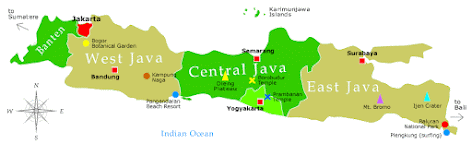
In accordance with Perhutani's long-term plan, and in line with the company's business development plan, Perhutani has allocated a forest area of ​​116,372 ha or around 4.7% of Perhutani's total area in Java (2,445,000 ha) as a potential area for biomass plant development spread across 13 KPH (Forest Management Units) in Central Java, East Java, West Java and Banten provinces.

Throughout the Perhutani area, there are potential areas that have unproductive forest stands (open land or reduce forest potential, or tend to be unproductive in the long term) covering an area of ​​308,000 hectares, spread across 57 KPHs. This area is divided into 15% in Central Java, 34% in East Java and, 51% in West Java and Banten. Based on the unproductive area, approximately in 27 KPHs it is calculated to be around 229,286 ha or 74% of the total potential area for Biomass Energy Plantations.

Hundreds of thousands of sawdust are currently used for PLN's cofiring program in Java, disrupting the supply of raw materials for wood pellet factories. This is why the production of wood pellets from sawdust taken from the sawmill industry or wood industry waste in Java for large-capacity wood pellet production will be at great risk of disrupting the supply of raw materials. So that the wood pellet factory in Java can run well if the availability of raw materials can be maintained and this can only be realized in two ways, namely first using its own raw materials, this can be done by sawmills and wood processing industries that utilize their own waste for wood pellet production, and second with raw material sources from energy plantations. The area of ​​land that can be used for energy plantations as described above is very potential for a source of raw material supply for large-capacity wood pellet production on Java Island and the availability of supporting facilities on Java Island which are more complete and better is an additional driving force.

Sunday, July 7, 2024

Large Capacity Wood Pellet Production Cannot Be Done on Java Island?

Raw materials are a vital aspect of a production activity. No raw materials means no production. Likewise in the wood pellet industry. The availability of raw materials is absolutely necessary for the continuity of the wood pellet business. To maintain the supply of raw materials, wood pellet factories must have reliable sources of raw materials. Currently, most or even all wood pellet factories on the island of Java rely on sources of raw materials for wood pellet production from wood waste, especially sawdust from sawmills and wood processing industries. 

Currently, coal-fired power plants in Java are running a coal cofiring program with biomass to reduce carbon dioxide emissions or decarbonization. The use of coal in these power plants will be reduced while the use of renewable energy, especially biomass, is increased. The biomass currently used for cofiring is sawdust with a volume of up to hundreds of thousands of tons per year. A very large amount. Wood pellet factories that use sawdust as raw material must compete with the cofiring program in these power plants. This competition increases the price of sawdust because the supply remains the same but demand increases. Disruptions in the supply of raw materials in these wood pellet factories result in disruptions in production and automatically their business aspects.

With these conditions, large-capacity wood pellet production in Java Island becomes less attractive. In fact, the portion of biomass use, especially sawdust, will continue to increase along with the decarbonization program to achieve net zero emissions by 2060. This is increasingly burdensome for wood pellet factories that rely on raw materials from buying sawdust. Wood pellet factories in Java can run well if the availability of raw materials can be maintained and this can only be realized in two ways, namely first using their own raw materials, this can be done by sawmills and wood processing industries that utilize their own waste for wood pellet production, and secondly with raw material sources from energy plantations. Energy plantations that are specifically dedicated to wood pellet production will be able to maintain the stability of the supply of raw materials for wood pellet factories. Wood pellet factories can partner with Perhutani for the second point above.
Wednesday, March 27, 2024

Projections for Indonesia's Future Waste Management: Production of RDF and Biochar Enriched Compost

Photo taken from here

The MSW problem is a concern in a number of areas currently. This is because MSW, apart from being a serious environmental problem, also has an impact on social problems. The public is starting to become more aware of this MSW problem, especially for urban communities who no longer have land to pile up or burn their MSW and what's more, final disposal sites are no longer able to accommodate the MSW produced by these communities. Flooding, groundwater pollution, air pollution are some of these environmental problems which, if not addressed, will cause a number of serious environmental problems. Public awareness regarding waste should be getting better day by day, and various efforts should be made to overcome it.

One of the composting unit in Indonesia

Currently the central government and regional governments are working hard to overcome the waste problem namely this MSW. Despite hard efforts, generally only a small portion of the MSW can be handled and most of it is still accumulating and accumulating so that it continues to pile up. An example is the current MSW problem in Jakarta, the capital of Indonesia namely with an average daily waste volume of 7,500 tons/day, only around 1,000 tons per day can be processed. With the RDF production unit at Bantar Gebang TPST, with raw materials of 2,000 tons of waste per day originating from 1,000 tons of new MSW and 1,000 tons of old waste (landfill mining), approximately 700 tons/day of RDF is produced. So with only 1,000 tons/day of new waste that can be processed, that means only 13% of the total daily waste volume. Meanwhile, conditions in a number of regions in Indonesia are also almost the same.


Future MSW processing must be able to process the 100% of MSW or have zero waste. Apart from that, the MSW processing product must also have useful and economic value. One of them is large capacity RDF and compost production. Almost all organic waste can be composted, while non-organic waste, especially plastic, can be made into RDF. Other waste such as iron, glass, ceramics and metals are separated first so that it does not interfere with the RDF and compost production process. RDF is commonly used as an alternative fuel, especially in cement plants. However, with high chlorine content, the use of RDF in cement plants needs to be limited.

Sometimes the distance between RDF production and the cement plant makes transportation costs expensive and RDF products become uncompetitive. This means that RDF needs to be compressed into RDF pellets. By increasing the density of RDF into pellets, apart from saving transportation costs, it will also make handling, storage and use easier. Meanwhile, biochar can be added to compost to improve its quality. Biochar is added during the composting process and later there will be more nutrients contained in the compost. Biochar with its micro pores will be used as a place to store these nutrients. Apart from that, biochar is used as a carbon sink / carbon sequestration and can survive in the soil for hundreds or even thousands of years. This also has the potential to provide additional income from carbon credits. Biochar production by pyrolysis will also produce heat energy which can be used for drying waste in RDF production and pyrolysis of organic materials.

Reject (Non-Standard) Coconut Fruit for Bioavtur / SAF Production

The international civil aviation organization (ICAO) has included non-standard coconuts on the ICAO positive list – ICAO document – ​​CORSIA...