Tuesday, July 24, 2018

Production of Pellets and Briquettes from Waste Of Albasia Wood Working Factories

Albasia is a tree that many people planted in various areas within the forest area. It is currently estimated that the albasia plantation area is more than 1 hectare in Indonesia. Wood is the main product of the albasia plantation. The wood is processed into various products of logs, wood boards, plywood, barecore, to pallet. Albasia wood is softwood and produced from the harvest timber of the plantation is at the age of trees approximately 5 years. The centers of albasia plantations in Indonesia are centered on the island of Java and Kalimantan.

Waste from the albasia wood processing are sawdust, pieces of wood, bark and wood shavings. There are still many untapped waste and pollute the environment. The production of wood pellets and wood briquette with these raw materials will overcome environmental problems, move the economic sector from waste treatment or especially bioeconomy which is predicted to be a trend in the not too distant future. The simplest wood processing industry of albasia is sawmill which is the most number of processing compared with the industries downstream. Each sawmill on average produces waste of sawdust 3 m3 / day (600 kg / day) so that for 10 saw mills will produces 6 tons / day of sawdust with an average moisture content of 30%.

The production of briquettes and pellets from wood waste is much in common, because basically the same technology that is biomass compaction (biomass densification). Differences from the production of briquettes and pellets only at the end process namely compactor or the press machine. In the industrial production of pellets will produce the same form that is in the form of cylinder, only the diameter is different and there is no difference pelletisation technology. Ring die pellet press is a pelletiser commonly used for biomass pelletisation in industry especially made from woody biomass raw material. While on briquettes, in addition to different sizes, the shape of the briquettes also vary. Briquettes generally also have a higher density than pellets, even more than a twice. Pellet has a density of about 650 kg / m3 while briquettes can reach 1400 kg / m3.

The easiest way to distinguish briquettes with pellet that is from the physical size. Briquettes have larger size than pellets. Generally, briquetting is also easier than pelleting process. Unlike the pellets that only use the roller press, briquette production using several kinds of technology namely, screw press, hydraulic and piston press. A brief review of the technology can be read here. Screw press technology has many advantages over hydraulic and piston press, such as screw press technology briquettes also have holes in the centre so as to facilitate combustion, and also easy for carbonisation. Screw press technology also produces briquettes continuously, unlike the hydraulic in batch operating.
Another factor that also greatly affect the processing of albasia wood waste processing is, of course, investment or price equipment or production units. Pellet production units are generally more expensive than briquettes, even the briquette production unit is only about half the pellet production unit. This makes briquette entry barrier for production easier or smaller than pellet production. Even briquette screw press technology has been well mastered in Indonesia including up to carbonization process and has been operating for more than 25 years. Fabrication and spare parts of screw press briquette have also been completely mastered, so the processing of albasia wood waste is easier to implement immediately.

Wednesday, June 6, 2018

Hydrothermal Carbonisation (HTC) Technology, Suitable For EFB Ugrading

Various efforts are made to improve the quality of biomass fuel so that it can be used especially on existing power plants. Power plants are the largest users of biomass fuels today as well as one of the main targets for reducing emissions by renewable fuels or carbon neutral fuel. Characteristics of raw materials and power generation technology becomes an important consideration in determining the technology of the fuel production process. The palm oil industry with the number of CPO producers (Palm Oil Mills) amounting to thousands (Indonesia and Malaysia) and the area of ​​oil palm plantations of 12 million hectares in Indonesia as well as 5 million hectares in Malaysia make it a target source of biomass raw materials. In the palm oil industry the amount of biomass produced is much more than oil or CPO as its main product, ie 10% oil and 90% biomass as illustrated below.
After the previous palm kernel shell (PKS) to fuel mainstay and sought for power plants because the properties are very appropriate, especially those using fluidized bed combustion (FBC), well next empty palm bunches or EFB which is very abundant and has not been used the next target for biomass fuel sources. If the PKS can already be used (just a little cleaning) by the power plants, then for EFB need to processing prior to be used because of the moisture content, size, shape and sometimes the chemical properties. EFB has high chlorine and potassium content so not all power plants are compatible with the fuel. If EFB is made into EFB pellet then FBC generator as used PKS can use it but for pulverized type is not suitable, because of the high chlorine and potassium content.
Such conditions create innovations so that EFB can be a suitable fuel for pulverized power plants that are widely used today. The innovation is a technology that can reduce the content of chlorine and potassium in particular, and increase its energy content. The technology is hydrothermal carbonization (HTC) or wet carbonisation so that the chemical ash in the form of chlorine and potassium can be dissolved by dissolving in water such as leaching and also its energy content can be increased by carbonization. In addition, the EFB condition of the palm oil mills with moisture content above 60% or wet biomass also simplify the application of hydrothermal carbonization technology.
The amount of EFB is huge, it is estimated that Indonesia alone reaches more than 35 million tons and in Malaysia is also very much that is more than 15 million tons, or from two of the largest producer of CPO at present the potential of EFB that can be processed reaches more than 50 million tons / year. In addition to addressing environmental issues, EFB processing will also drive a sizable economic sector. With hydrothermal carbonisation (HTC) technology, EFB properties can be upgraded to fit the current powerplant commonly used. Fears of power generation due to high chlorine content, and potassium can be overcome with such technology. To save transportation costs while facilitating handling, storage and usage, EFB products that have been processed with hydrothermal carbonisation or HTC EFB (EFB hydrochar) are further densified into pellets and briquettes. It seems that this technology has provided an answer as well as opening up new opportunities for EFB processing into favorite biomass fuels such as wood pellets and PKS.

Solar PV or Biomass to Energy?


Indonesia is a tropical country with high rainfall, so even though the sun is shining throughout the year, but a lot of cloudy and rainy. This is an important consideration for the priorities and options of renewable energy that will be developed. Based on these conditions, the choice of biomass to energy or bioenergy development is more suitable for Indonesia condition, rather than solar PV. The availability of sunlight and high rainfall makes a variety of plants can grow well and optimally. Meanwhile, if with solar PV then when there is cloudy and rain then the intensity also dropped drastically. An analysis says if there is a cloud over the intensity of solar PV drops to 20% so to maintain the stability of its electricity supply required 5 units of solar PV. Of course it becomes very expensive especially investment for solar PV and more especially in batterai also still expensive for condition today. Solar PV is suitable for conditions with blazing sunlight with relatively stable intensity and minimum rainfall, making it suitable for desiccated desert areas such as the Arab regions or the Africa regions.


The practically development of energy plantation with the woody biomass harvested for wood pellet production is one of the concrete efforts of biomass to energy. With energy plantations, sunlight is captured by plants for photosynthesis to produce biomass especially wood for energy. Tens million of hectares of land are available in Indonesia that can be used for energy plantations. Apart from being a source of energy, energy plantations are also improving the ecosystem. Integration with sheep farming will also optimize the energy planation because the leaves are rich in protein from leguminoceae type of energy plantation trees will be converted into meat with the farm. Sheep manure can also be as fertilizer in the energy plantation. Moreover, the benefits of energy plantations are also not less than palm oil plantations, for more details can be read here or it could also palm oil planation owners begin to diversify their plantations with energy plantations, for more detail can be read here.

Monday, June 4, 2018

5 The Largest Wood Pellets Producers Today

References are needed to make something no less quality or even better, as well as for a wood pellet production facility. Indonesia with extensive land available,fertile and tropical climate needs to get complete and qualified reference especially on wood pellet production so that they can optimize its potency. Diversification of energy is also desperately needed by Indonesia so that it has strong resilience and energy sovereignty, especially with its current condition which has become a net importer of petroleum, even projected in the range of approximately 10 years future Indonesia's oil will be exhausted. The following description of the 5 largest wood pellet plant today can be used as a reference.

1.     Enviva

Enviva was established in 2004, currently Enviva operates 7 wood pellet plants with total production of more than 3 million tons / year. Some of its wood pellet production is exported to the UK and Europe. A number of ports are used For shipment or export of wood pellet, ie port of Chesapeake, Virginia; port of Wilmington, North Carolina, and ports from third party in Mobile, Alabama and Panama City, Florida. Enviva has recently announced for an off-take contract with Marubeni to supply 100,000 tons / year of wood pellets to new power plants starting in 2022 for 10 years.

Enviva's raw materials are mainly sourced from 1,183 industrial forests in 77 districts and in five southeastern states. Forests in the Southeast continue to grow and expand, with the total forest land in the Enviva area as a major supply increased by 320,842 hectares from 2011 to 2015, according to the US Forest Service. Inventory in the area has grown by 10 percent over the same time period and continues to increase as forests grow at a faster rate than they are harvested.
2.  Graanul Invest

Graanul Invest is the largest wood pellet producer in Europe and established since 2003. The production capacity of this producer is around 2.3 million ton / year by operating 11 wood pellet plants. In the early stages the company operates 2 wood pellet plants, one in Imavere, Estonia and one in Alytus, Luthuania. Subsequent developments with the acquisition of new plants and plant construction, to date operate 11 wood pellet plants. Port for export of Riga port in Latvia and port of Tallinn, Parnu and Kunda in Estonia.
3.     Drax Biomass

Drax in addition to being the largest wood pellets user today with more than 10 million tonnes / year, is also the largest producer of wood pellets in the world. Drax biomass as wood pellet producer started to operate since 2017 with total production about 1.5 million ton / year. Drax biomass has its headquarters in Atlanta and currently operates 3 wood pellet plants in the states of Louisiana and Mississippi. Their wood pellet products are used to supply power plants in UK with shipment through Baton Rouge Transit on the Mississippi River at the port of Greater Baton Rouge, Louisiana.

4.     Pinnacle

Pinnacle was established in 1989 and currently operates 6 wood pellet plants in British Columbia, Canada with raw materials mainly forest waste. Its production capacity is 1.4 million tons per year and its wood pellet products are exported to Europe, UK and Asia. Pinnacle wood pellet plants are on the main railway line, so transportation to the port is by train. The port used is the Westview terminal in Prince Rupert, which is the company's own port and Fibreco terminal in the port of Vancouver. To increase its production Pinnacle is currently building a wood pellet plants in Entwistle, Alberta and Smithers, British Columbia.
5.     An Viet Phat

An Viet Phat is a wood pellet manufacturer from Vietnam operating since 2014 with a current capacity of over 800,000 tons / year. An Viet Phat is also Asia's largest producer of wood pellets and the world's largest manufacturer of wood briquette. Market or export destination for wood pellet products ie Korea and Japan, with larger portion to Korea. Export is done from Ho Chi Minh port.

Russia as a big country but its wood pellet production is still below the top 5 producers. Russia's largest wood pellet manufacturer Vyborg has a capacity of 300.00 tons / year, ranking second in Arkaim on its west coast. Later in the country there are many small-capacity pellet producers in the northwest and especially to meet the heating market in Europe.

Most of the other areas are also not large for the production of wood pellets. Australia is currently only 2 wood pellet plants that export their products - Plantation Energy and Altus. Wood pellet production from Plantation Energy is around 250,000 tons / year while Altus is only 75,000 tons / year. Export target from Australian wood pellet especially Japan. The Middle East area is also the same as Africa is very few producers of wood pellets and from that little it's products are also only used in the country. Latin America is a small producer of wood pellets and one of the largest, Tanac in Brazil with a capacity of 400,000 tons / year. All wood pellet products from Tanac are exported to the Drax biomass power plant in the UK.
Based on the above references, Indonesian wood pellet producers should be able to compete with them. This is because the potential of raw materials is very large in Indonesia. The production of wood pellets from energy plantations and integrated with sheep or sheep and cattle farming and honey bee farms, will optimize the land and give maximum results as well. In addition, when viewed from the largest wood pellet plants in the world today also started its business relatively in the recently. Only Pinnacle started before 1990, while the average started over 2000, even Drax Biomass began operations in 2017 and An Viet Phat since 2014. The above facts are increasingly proving about the development of Al Qur'an-based energy and the hadith of the prophet also implies that the earth will return prosperously and green before the doomsday.

"There shall not be the Day of Resurrection, until the treasures have been piled up and overflowing, until a man goes everywhere carrying his treasures of zakat, but he has not found one who is willing to receive his zakat, and that the land of Arabs flourishes prosperous again with grasslands and rivers "(HR.Muslim).

Can Indonesia be a wood pellet giant? It can be. InshaAllah. 

Wednesday, May 23, 2018

See Modern Charcoal Production Today

More specifically than the use of charcoal in general, the agricultural world, especially organic farming has become one of the current users of charcoal. Charcoal in the agricultural world or commonly known as biochar is widely used because it can withstand nutrients or fertilizers from leaching so that it is widely used for the manufacture of slow release fertilizer, then the pores in the char also become the home of microbes that break down various organic materials become fertilizer to the plant, the pores also improve the physical structure of the soil. In addition, biochar can also keep the soil moisture because water is also easily absorbed in the structure of the pores. Biochar also increases soil pH, is also able to absorb carbon dioxide (CO2) from the atmosphere (carbon negative scenario), and can last up to tens or even hundreds of years in the soil. These are the things that encourage the use of biochar in the agricultural world, which in short can increase agricultural productivity or help improve the world food products.

The role of biochar in some ways can indeed be substituted with other materials, for example for the ability to retain water, cocopeat is better than biochar, for the surface area with the number of pores the activated charcoal is much larger than the biochar, and to raise the pH for the soils acid then dolomite lime better. In an application in the field of planting media engineering to obtain the best agricultural media is very likely use a number of materials mentioned above. Optimal results can be obtained based on soil characteristics and plant species. Economic factors are also an important consideration factor after the above technical aspects.
Modern biochar production currently uses thermochemical processes continuously. There are two thermochemical technologies for biochar production namely pyrolysis and gasification. Pyrolysis technology is more widely used because it produces more biochar and better quality. Why with pyrolysis can get 2 things? This is because basically (slow) pyrolysis is a technology used for the production of charcoal or maximizes its solid product, so the process control is also designed for that purpose. While the gasification is designed to maximize its gas product, so the char is only positioned as a by-product. The operating temperature of gasification is also higher (800 C) than pyrolysis (450 C) so that the char is also mixed with ash.
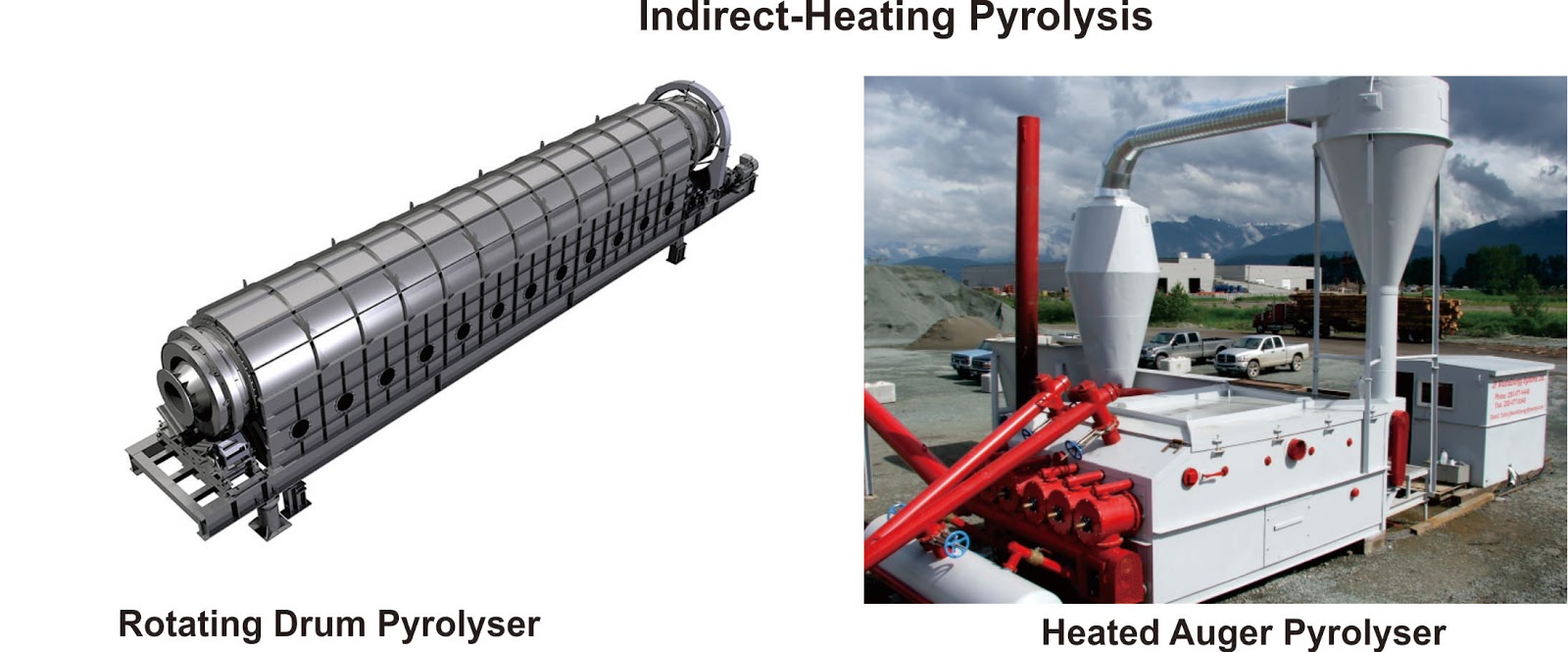
More specifically the indirect heating pyrolysis technology is more widely used for biochar production today. With this technology the pyrolysis process control is easier and the charcoal quality is also better. Application of indirect heating pyrolysis technology for continuous process generally use rotating drum and heated auger type. Biochar production capacity is generally in the range of 2-4 tons / hour. The byproducts of the pyrolysis process are also of high economic value such as bio-oil for fuel, pyroligneous acid (liquid smoke) for fertilizer and biopesticide, as well as syngas for fuel and more specifically for electricity production.

Tuesday, May 22, 2018

Bamboo As Biomaterial

The image of some people about bamboo is still negative, which is imagined as a bad bamboo hut and identical with the poor in the countryside. Whereas bamboo is a plant that has many uses and its use is also not inferior to wood. Construction of Barajas airport ceilings in Madrid, Spain for example using bamboo and interior of Toyota Lexus cars, and bamboo sport bikes. The use of bamboo for activated charcoal making is also widely done. Activated carbon is charcoal which is activated that has a large surface area, so it is commonly used for adsorbing filters of various chemical compounds. Over time the utilization of bamboo is also increasingly widespread, and will be very long when described one by one about the products that can be produced from bamboo. The problem that bamboo plantations in Indonesia in particular is also decreasing so it needs to be encouraged including its utilization, especially in the era of bioeconomy that is in sight.
Unlike the energy plantation that uses leguminoceae and can be harvested every year from its coppice (SRC: short rotation coppice), bamboo plantations can be harvested when at least 3 years old and can be harvested for decades. Energy plantation are capable of generating high productivity from their timber making it economical for wood pellet production, while bamboo is uneconomical for pellet production because it is much advantageous for many other needs. Waste or residue of bamboo processing that can be used to make pellets. Bamboo is more suitable for biomaterial sources that are also very needed in the era of bioeconomy today.
When bamboo is preserved with a certain treatment the durability is long so it can be aged up to tens of years, one of them because it is resistant to termites. Exotic and natural nuanced buildings are also made of bamboo. When the need for housing is higher especially in big cities, then bamboo can also be the solution. With the bamboo composite technology becomes strong, hard and durable even up to tens of years making it suitable for the manufacture of these houses. Do not imagine bamboo house with such composite technology as rustic bamboo huts in the countryside because almost all types of houses and models can also be made with the bamboo composite. In addition, the manufacture of houses with bamboo composite is fast and also environmentally friendly. 

Activated Carbon For Any Industries!

Activated carbon or activated charcoal is a material that is widely used in various industries, as auxiliary processing. Food, beverage, energy, mining and pharmaceutical industries use this activated carbon. The need for activated carbon also continues to increase so that production also needs to be expanded. Indonesia has great potential as a world class activated carbon producer considering the abundance of potential raw materials available.

Currently, large activated carbon producers are located outside Indonesia such as Europe and America. Yet neither Europe nor America have abundant source of raw materials or most imports including from Indonesia. The most favorite activated carbon feedstock today is coconut shell and once again Indonesia is the country with the largest coconut plantation in the world, which is about 3.7 million hectares. Palm kernel shells can also be the raw material of further choices. With a palm oil plantation area of approximately 12 million hectares, palm kernel shells produced more than 10 million tons / year.
The raw material of activated carbon is charcoal. The charcoal is then activated to become activated carbon. The process of making charcoal is by carbonization or pyrolysis. Coconut shell as an example of raw material of charcoal, then after carbonization the coconut shell convert into coconut shell charcoal, which then this charcoal become the raw material of activated charcoal. So basically the process of activated charcoal production is through 2 stages of the process namely pyrolysis (carbonization) and activation. The process of producing the charcoal or the carbonization process (pyrolysis) is the same as the biomass carbonization process in general, for more detail can be read here. Currently in large capacity the production of charcoal is carried out continuously with indirect-heating. Rotating kilns and heated auger pyrolyser are commonly used equipment for continuous production of charcoal. Continuous integration of charcoal production and activation process can be read here.
While the activation phase can be done in two ways namely the activation of physics and chemistry. The choice of activation depends on the target surface area, pore distribution and economy. Steam activation is the most widely used physics activation, whereas chemical activation is very diverse. The more surface area of activated carbon the more expensive the price is also proportional to the cost of production. Activation equipment commonly used there are 2 kinds namely, rotating kilns and fluidized bed. Of these 2 types of rotating kiln equipment is more widely used than the fluidized bed. The price of rotating kiln equipment is cheaper because the construction and operation are easier than the fluidized bed system. Fluidized bed systems are typically used for higher quality activated carbon production due to better distribution and pore engineering due to fluidization.
Standard and quality of activated carbon is determined primarily by surface area, pore distribution, size and hardness. The iodine number parameter is commonly used for the quality of activated carbon. The higher the iodine number the better the activated carbon quality. The iodine number is a number indicating how much adsorbent or activated carbon can adsorb iod. The greater the iodine value, the greater the adsorption power of the adsorbent or the activated charcoal. Conversely, the higher water content and ash content contained in the activated carbon will cause many pores to be covered by the impurities so that the surface area will be smaller. Where the surface area is closely related to the activated carbon adsorption capacity.All biomass basically can be used as an activated carbon raw material because it has a carbon content. Specific application of the activated charbon that determines the choice of raw material and its activation options.

Reject (Non-Standard) Coconut Fruit for Bioavtur / SAF Production

The international civil aviation organization (ICAO) has included non-standard coconuts on the ICAO positive list – ICAO document – ​​CORSIA...