
Showing posts with label coal powerplant. Show all posts

Sunday, July 7, 2024

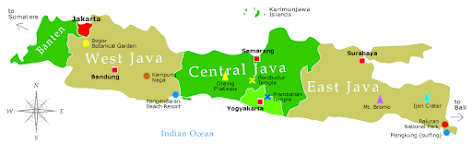
Large Capacity Wood Pellet Production Cannot Be Done on Java Island?

Raw materials are a vital aspect of a production activity. No raw materials means no production. Likewise in the wood pellet industry. The availability of raw materials is absolutely necessary for the continuity of the wood pellet business. To maintain the supply of raw materials, wood pellet factories must have reliable sources of raw materials. Currently, most or even all wood pellet factories on the island of Java rely on sources of raw materials for wood pellet production from wood waste, especially sawdust from sawmills and wood processing industries. 

Currently, coal-fired power plants in Java are running a coal cofiring program with biomass to reduce carbon dioxide emissions or decarbonization. The use of coal in these power plants will be reduced while the use of renewable energy, especially biomass, is increased. The biomass currently used for cofiring is sawdust with a volume of up to hundreds of thousands of tons per year. A very large amount. Wood pellet factories that use sawdust as raw material must compete with the cofiring program in these power plants. This competition increases the price of sawdust because the supply remains the same but demand increases. Disruptions in the supply of raw materials in these wood pellet factories result in disruptions in production and automatically their business aspects.

With these conditions, large-capacity wood pellet production in Java Island becomes less attractive. In fact, the portion of biomass use, especially sawdust, will continue to increase along with the decarbonization program to achieve net zero emissions by 2060. This is increasingly burdensome for wood pellet factories that rely on raw materials from buying sawdust. Wood pellet factories in Java can run well if the availability of raw materials can be maintained and this can only be realized in two ways, namely first using their own raw materials, this can be done by sawmills and wood processing industries that utilize their own waste for wood pellet production, and secondly with raw material sources from energy plantations. Energy plantations that are specifically dedicated to wood pellet production will be able to maintain the stability of the supply of raw materials for wood pellet factories. Wood pellet factories can partner with Perhutani for the second point above.

Sunday, July 11, 2021

Energy Plantation in Coal Mine Reclamation, Wood Pellet Factory and Coal Powerplant Cofiring in Indonesia

The extent of ex-coal mining area which reaches around 8 million hectares is an environmental problem itself that needs to be addressed. Energy plantations are an effective solution for the reclamation of the former coal mine land for more details, you can read here. Reclamation of ex-coal mining land is a form of responsibility of the coal mining company. Reclamation should be carried out as well as possible, not only symbolic and ceremonial, so that the effects of environmental damage can be minimized. Efforts to reclaim ex-coal mining land is not an easy thing and requires a lot of time and money, so it is not surprising that many avoid this responsibility. The best solution is to tackle the problem while generating both economic and environmental benefits. The production of wood pellets with wood raw materials from the energy plantation is a surefire solution to overcome this environmental damage as well as economic benefits.

Recently, the government launched a cofiring program for a number of coal powerplants in Indonesia. In 2020 the cofiring program has been initiated with a target of 37 coal powerplants and by the end of 2020 it has been reported that 20 coal powerplants have been implemented. While in total there are 114 units of coal powerplans owned by PLN (Indonesia state owned electricity company) that have the potential for cofiring spread over 52 locations with a total capacity of 18,154 megawatts (MW) with a target completion of 2024. Consisting of 13 coal powerplant locations in Sumatra, 16 coal powerplants locations in Java, Kalimantan (10 locations), Bali and Nusa Tenggara (4 coal powerplants unit), Sulawesi (6 locations) and Maluku and Papua (3 coal powerplant locations). Meanwhile, the cofiring ratio ranges from 1-5% of biomass with an estimated biomass requirement of 9-12 million tons per year. Cofiring is the easiest and cheapest effort for coal powerplant to gradually use renewable energy, especially biomass with main purpose of CO2 reduction. Currently, there is also a national standard for wood pellets (SNI wood pellets) for the purposes of cofiring and for more details, please read here. The use of biomass fuels, especially wood pellets, is a carbon neutral scenario that needs to be continuously improved. The biomass fuel will save the environment and not increase the earth's temperature, for more details read here.

Policies to reduce the consumption of fossil fuels, especially coal, also continue to be carried out globally. For Asia, for example, Japan and Korea with their leading Feed in Tariff and Renewable Portfolio Standard (RPS) in the use of renewable energy, especially wood pellets. While in Europe with the Renewable Energy Directive II (RED II) renewable energy is targeted to reach 32% by 2030, biomass fuel is predicted to account for around 75% of the portion of renewable energy and the target is that coal is not used in total by 2050. Germany announced not to use coal in 2038, the UK even targets to no longer use coal for electricity production starting in October 2024. North America, namely the United States and Canada as members of the G7 are also committed to reducing coal consumption, even Canada in 2018 announced regulations to no longer use coal for electricity generation by 2030. On the other hand, the construction of coal power plants financed by China in various countries has failed. In addition, the G7 countries (Canada, France, Germany, Italy, Japan, Britain, and the United States) have been aggressively blocking the use of coal. Countries that still support coal use, such as China and Indonesia, are increasingly isolated and could face more pressure to stop the activity.

Leaves as a by-product of the energy plantations have the potential to be used as animal feed. The leaves of this type of legume have a fairly high protein content. The quantity of leaves produced is also large, proportional to the area of ​​the energy plantation. Ideally, the development of energy plantation will support the livestock industry, so that not only energy needs are met but also food needs. As a comparison, the European animal feed producer association, FEFAC, prioritizes protein sources for animal feed from rapeseed energy plantations from a number of efforts to obtain protein sources for animal feed, for more details please read here. The main products of rapeseed energy plantations are oil which is used for biodiesel production, and meal as a by-product of the oil production which is used as a source of animal feed protein. The need for protein sources for animal feed has an important role as nutrition for livestock, especially ruminants. Europe is still very shortage of these protein sources so that imports cannot be avoided. It is estimated that around 48 million tons of feed protein sources are needed by Europe, so there is a chance that leaves from energy plantations can be exported to Europe for this. When the domestic feed industry has not been able to absorb it, export is the best choice.

Saturday, April 3, 2021

Indonesia National Standard (SNI) of Biomass Pellet and Energy Plantation


Indonesia National Standard (SNI) for Indonesian biomass pellet products has been out and officially used since the end of 2020 or last year. The main objective of implementing SNI for biomass pellets is to respond to the cofiring program at PLN's (state owned electricity company) coal power plants. With this cofiring program, renewable fuels, especially biomass pellets, are used as the main fuel mixture, namely coal. The ratio of the use of renewable fuels in the form of biomass is still small, namely around 1-5% or the equivalent of 9-12 million tons / year of biomass fuel. The total coal power plants as a cofiring target is 114 units spread across 52 locations with a total capacity of 18,154 MW with the target to be completed in 2024. Almost all of the biomass pellets in Indonesia today are wood pellets, all of which also use wastes. sawmills or wood processing industries. In other terms, if you refer to wood pellets, then it must be biomass pellets, whereas if you refer to the term biomass pellets, this is not necessarily wood pellets, but it could be pellets from agricultural wastes (agro-waste pellets). Agricultural wastes which are abundant in Indonesia are also potential as raw material for biomass pellets such as rice husks, empty fruit bunches of palm oil, coconut husk and so on. Below is the table for the SNI biomass pellets:


Energy plantations can be a source of woody biomass specifically designed for energy production or specifically for raw materials for the production of biomass pellets or wood pellets. With energy plantations, large production capacities and guaranteed good supply can be achieved. The production of wood pellets from energy plantations takes longer because it needs to prepare and make the energy plantations and wait several years for the wood to be ready to harvest and be processed further into wood pellets. Calliandra and gliricidia are two species of fast rotation and coppice which have been chosen because of their superiority. Another thing that is very important to note is the high heating value and high productivity of wood per hectare. But there is a slight drawback of this type of wood is the content of potassium in ash which is quite high. This makes its use more limited, especially power plants with pulverized combustion (PC) technology.

 
Based on an experiment conducted with calliandra wood from the slopes of Merapi mountain, Central Java; Bangkalan, Madura and Aceh, Sumatera have an average potassium content of above 1000 ppm (0.1%). Indeed, the characteristics of fast-rotating crops tend to produce wood with higher levels of potassium. Meanwhile, from fruit plants, banana trees also have a high potassium content. This potassium has a low melting point and causes fouling in the heat exchanger pipes, thereby reducing the efficiency of the power plant. While chlorine compounds are other compounds that also need attention because they are corrosive at high temperatures, for more details, please read here. And in general, there are significant differences in ash chemistry between biomass and coal. But with a cofiring ratio of 1-5%, power plants generally do not modify their equipment or more specifically on PCs that are most sensitive to ash chemistry problems, because the cofiring percentage is still low.

 
With an average level above 1,000 ppm (0.1%) and still far from 50,000 ppm (5%), there is no problem for wood from energy plantations to be produced into wood pellets and supply to the coal power plants in Indonesia according to SNI the. But if it is exported to foreign countries, especially Japan and Korea, the circulating fluidized bed (CFB) and stoker type power plants are the best market share and the PC type is more limited. With the vast land available and Indonesia's tropical climate, it must further promote energy plantations both to meet domestic needs and to export markets. The energy plantation program also indirectly encourages the ruminant livestock sector, because the leaves can be used as animal feed. 

Production of Bark Briquettes from Wood Pellet Factory Waste

To reduce the ash content of wood pellets and thereby improve their quality, a process known as "debarking" (removing the tree bar...