Showing posts with label sawdust. Show all posts

Thursday, December 5, 2024

Wood Chip Production Waste for Wood Pellet or Wood Briquette Production

The production of wood chips as biomass fuel in cofiring of PLN's (Indonesia's state-owned electricity company) coal powerplants has been increasingly popular lately. Wood chip production is the easiest biomass fuel production compared to various biomass fuel products currently produced by the industry. The availability of raw materials is the main factor in the sustainability of production. The calorific value of wood chips depends on the species or type of wood used and its dryness level (water content). Hardwoods and low water content are ideal products for wood chips. And because it has a low bulk density of around 250 - 350 kg / m3, the transportation factor is another aspect that is very important for the delivery of wood chip products.

The particle size of wood chips has also been determined so that handling and storage are easier. To obtain the desired particle size of wood chips, screening is carried out after the wood trunk or pieces are chopped with a wood chipper machine. With these prerequisites, there are products that are rejected from the production process, namely wood chip products that are too large (oversize) and products that are too small (undersize). Products that are too large (oversize) can be returned to the chipper machine to be chopped again, but wood chip products with particle sizes that are too small (undersize) must be used for other things so that in addition to zero waste wood chip production, it can also provide additional income for the wood chip producer.

Small particle sizes such as sawdust from wood chip waste production can be used for the production of wood pellets or wood briquettes (pini kay briquettes). And even wood briquettes are more tolerant of slightly larger particle sizes because wood briquette products have a higher density than wood pellets, in addition wood briquettes can also be further processed into charcoal briquettes (sawdust charcoal briquettes). Wood briquettes themselves are commonly used in countries with four seasons, especially in winter for home heating. While charcoal briquettes (sawdust charcoal briquettes) are commonly used for BBQ, especially for Middle Eastern countries and Turkiye.

In the production of wood chips, it is estimated that biomass waste that is approximately the size of sawdust is around 20-25%, meaning that if wood chip production reaches 5,000 tons/month, the waste is around 1,000 - 1,250 tons/month. This is sufficient for the production of wood briquettes and sawdust charcoal briquettes. Meanwhile, if you want to produce wood pellets, especially for the export market, usually a production capacity of around 5,000 - 10,000 tons/month is needed. Of course, this cannot be done. In addition, the investment in equipment for the production of wood briquettes, sawdust charcoal briquettes and even wood pellets for this purpose is also much larger than the production of wood chips. This makes it more reasonable if the production of wood briquettes or sawdust charcoal briquettes is carried out by other parties. The other party will process the wood chip factory waste into wood briquettes, charcoal briquettes (sawdust charcoal briquettes) and because the complexity of production and equipment costs are also higher, it is natural that the profits obtained from processing this waste are also higher.


The world price of wood pellets, like palm kernel shells (PKS), has fluctuated a lot, and lately the price has tended to be low. Palm kernel shells (PKS) themselves are biomass fuels that are competitors of wood pellets in the global market but are cheaper because they come from one of the solid wastes of palm oil mills that are processed simply. With these conditions, coupled with the fact that it is very difficult to obtain adequate volumes of waste from wood chip factories, the production of wood briquettes (pini kay briquettes) or charcoal briquettes (sawdust chracoal briquettes) becomes a rational choice. In addition, the stable price of the two products makes it even more attractive to consider them.

Saturday, October 12, 2024

Industrial Wood Briquette Becomes an Alternative Between Wood Chips and Wood Pellets

Biomass fuel is a renewable fuel or renewable energy that is currently positioned as one of the alternative fuel. However, along with awareness of various climate problems, the use of alternative energy from biomass has increased over time. The decarbonization trend as a response to climate problems has penetrated all lines of life including the industrial sector. As a profit-oriented industry, of course, efforts to maximize are a major concern, including in the use of alternative fuels. There are various types of fuels that can be produced from biomass and especially for solid fuels, including wood chips, wood pellets and wood briquettes. The characteristics of these fuels are slightly different from one another, including their production costs. It is necessary to look more carefully and deeply so that you can get the best biomass fuel according to the goals of the industry.

Industrial briquette can be produced in large quantities at a lower cost than briquette produced with hydraulics or extruders. And when compared to wood pellets, industrial wood briquette is also cheaper to produce. But of course the production cost is more expensive than wood chips. Wood chips can be said to be the easiest and cheapest biomass fuel to produce.

This places industrial wood briquette in a position between wood chips and wood pellets or hydraulic and extruder type briquettes. As a biomass densification product, industrial wood briquette is also more economical for long-distance transport. In addition, a number of industrial boilers have also been specially designed to be able to use industrial wood briquette fuel, even with automatic feeding. Other factors such as uniformity of shape, size can vary and low water content are other advantages of industrial wood briquette.

Boiler users in industry and even coal power plants can consider using industrial wood briquette. Especially for companies engaged in industrial utilities such as steam providers for processing industries so that the operation and maintenance of the boiler including the use of biomass fuel is the responsibility of the company. With a long-term steam supply contract, for example around 5-10 years, the provision of biomass fuel in the form of industrial wood briquette within that period is also very important. In addition to the availability of sufficient, legal and sustainable raw materials, the reliability aspect of industrial wood briquette production machines cannot be ignored.


Tuesday, August 27, 2024

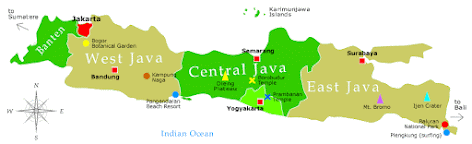
Large Capacity and Sustainable Wood Pellet Production in Java Island

Biomass for energy production can be cultivated on critical land, or so-called 'unproductive' land. The Ministry of Environment and Forestry estimates that critical land in Indonesia in 2016 was 24.3 million hectares (Times Indonesia, 2017). This is a very large area, and overall Indonesia's territory is large enough to provide biomass for renewable energy production.  

Globally, the need for wood pellets is predicted to continue to increase. This is because in the current power generation industry, more than a third of global electricity production still uses coal. This portion must drop to 4% by 2030 and 0% by 2040 if the world wants to limit global warming to 1.5 degrees Celsius (2.7 degrees Fahrenheit) and prevent the severe impact of the climate crisis. The world has 6 years from now to reduce the use of coal in power plants to less than 4% by 2030, this is also what makes a number of coal companies develop renewable energy, especially wood pellets from energy plantations.

However, in Java Island, the availability of land for energy crop development is limited because it conflicts with the need for agricultural land. The greatest opportunity for energy plantation forest development is on land owned by Perhutani which is categorized as 'unproductive land'. In some cases, through social considerations, land can be directed to programs that are in line with the objectives of social forestry in accordance with the Decree of the Minister of Environment and Forestry number P.39 / 2017 and P.38 / 2016. However, as an effort to develop the business, Perhutani can utilize its land to specifically produce biomass for energy.

In accordance with Perhutani's long-term plan, and in line with the company's business development plan, Perhutani has allocated a forest area of ​​116,372 ha or around 4.7% of Perhutani's total area in Java (2,445,000 ha) as a potential area for biomass plant development spread across 13 KPH (Forest Management Units) in Central Java, East Java, West Java and Banten provinces.

Throughout the Perhutani area, there are potential areas that have unproductive forest stands (open land or reduce forest potential, or tend to be unproductive in the long term) covering an area of ​​308,000 hectares, spread across 57 KPHs. This area is divided into 15% in Central Java, 34% in East Java and, 51% in West Java and Banten. Based on the unproductive area, approximately in 27 KPHs it is calculated to be around 229,286 ha or 74% of the total potential area for Biomass Energy Plantations.

Hundreds of thousands of sawdust are currently used for PLN's cofiring program in Java, disrupting the supply of raw materials for wood pellet factories. This is why the production of wood pellets from sawdust taken from the sawmill industry or wood industry waste in Java for large-capacity wood pellet production will be at great risk of disrupting the supply of raw materials. So that the wood pellet factory in Java can run well if the availability of raw materials can be maintained and this can only be realized in two ways, namely first using its own raw materials, this can be done by sawmills and wood processing industries that utilize their own waste for wood pellet production, and second with raw material sources from energy plantations. The area of ​​land that can be used for energy plantations as described above is very potential for a source of raw material supply for large-capacity wood pellet production on Java Island and the availability of supporting facilities on Java Island which are more complete and better is an additional driving force.

Monday, July 15, 2024

Selling Wood Processing Machines and include Wood Waste Processing Machines

Various wood processed products are increasingly diverse and developing today. The utilization of wood is optimized for its function, especially those originating from production forests. To improve the quality and usefulness of the wood, it needs to be processed specifically, which is carried out in wood processing factories. This also includes the selection of wood plant species that are suitable for the purpose of their use or the product to be made. A number of wood processing products are plywood, blockboard, LVL, barecore, FJLB (Finger Joint Laminated Board), MDF (Medium Density Fiberboard), and pulp & paper.

Wood processing in the industry always requires a number of equipment ranging from the simplest, namely sawmills to complex processes such as pulp and paper mills. In addition to the physical or mechanical processing or production process, there is also a chemical process depending on the product to be produced. Sellers or providers of processing equipment or production machines are generally a complete set (complete line) so that they can be used directly and produce when the raw materials are ready. The more efficient and quality the equipment will be comparable to its price which is a fixed investment in the wood processing industry. The cost and benefit ratio factor is very important in selecting the machine or equipment, especially those that are export-oriented with large production volumes.

The concept of zero waste in the wood processing industries has not been fully implemented. There are still many wood processing industries whose waste pollutes the environment and can have social impacts. This includes sellers or providers of these machines, most of whom are still focused on providing machines or production equipment for the main product but not on the aspect of handling and processing waste. In fact, with the potential for waste produced being quite large, processing this waste is important. Pellet and briquette production is one solution to overcome this. Wood waste in the form of wood chips, offcuts, sawdust, slab and bark can be processed into briquettes and pellets. Sellers or providers of machines or production equipment that are innovative and environmentally sustainable will implement this concept. 

Briquette and pellet production will not only solve the waste problem but will also provide economic benefits. With raw materials for briquettes and pellets coming from waste itself, the cost of raw materials can be said to be zero so that in the end it will provide great benefits. Waste production of up to 1000 tons/month is very suitable for the production of briquettes, while if the waste is very large, for example 5000 tons/month or more, pellet production is more recommended. Briquettes can also be charcoaled to become charcoal briquette products which are in high demand from Turkey, Saudi Arabia and the Middle East. Meanwhile, wood pellets are widely used for power plants abroad, the need for which is expected to continue to increase along with the decarbonization trend. If the seller of wood production or processing machines also offers waste processing equipment such as pellet machines and briquette engines, it will make it easier for wood product producers to manage their environmentally friendly industry, namely zero waste and maximize profits because all parts of the wood can be utilized optimally.

Sunday, July 7, 2024

Large Capacity Wood Pellet Production Cannot Be Done on Java Island?

Raw materials are a vital aspect of a production activity. No raw materials means no production. Likewise in the wood pellet industry. The availability of raw materials is absolutely necessary for the continuity of the wood pellet business. To maintain the supply of raw materials, wood pellet factories must have reliable sources of raw materials. Currently, most or even all wood pellet factories on the island of Java rely on sources of raw materials for wood pellet production from wood waste, especially sawdust from sawmills and wood processing industries. 

Currently, coal-fired power plants in Java are running a coal cofiring program with biomass to reduce carbon dioxide emissions or decarbonization. The use of coal in these power plants will be reduced while the use of renewable energy, especially biomass, is increased. The biomass currently used for cofiring is sawdust with a volume of up to hundreds of thousands of tons per year. A very large amount. Wood pellet factories that use sawdust as raw material must compete with the cofiring program in these power plants. This competition increases the price of sawdust because the supply remains the same but demand increases. Disruptions in the supply of raw materials in these wood pellet factories result in disruptions in production and automatically their business aspects.

With these conditions, large-capacity wood pellet production in Java Island becomes less attractive. In fact, the portion of biomass use, especially sawdust, will continue to increase along with the decarbonization program to achieve net zero emissions by 2060. This is increasingly burdensome for wood pellet factories that rely on raw materials from buying sawdust. Wood pellet factories in Java can run well if the availability of raw materials can be maintained and this can only be realized in two ways, namely first using their own raw materials, this can be done by sawmills and wood processing industries that utilize their own waste for wood pellet production, and secondly with raw material sources from energy plantations. Energy plantations that are specifically dedicated to wood pellet production will be able to maintain the stability of the supply of raw materials for wood pellet factories. Wood pellet factories can partner with Perhutani for the second point above.

Friday, October 27, 2023

Optimizing Wood Pellet Production from Wood Waste

The volume of wood waste from the woodworking industry in Indonesia is estimated to reach 25 million tons every year. Every wood processing will produce waste such as sawdust, wood shavings, wood chips and so on, the volume of which is around 40% of the raw materials used. However, there is still a lot of waste that has not been processed so it pollutes the environment. Meanwhile, the development of the Indonesian timber industry continues to increase due to high export demand, even though actual realization of the timber industry is still low.

It is estimated that the Indonesian wood industry can actually be optimized until its production capacity reaches 91 million cubic meters per year, but in reality in 2022 the forest products industry will only be able to produce 42.19 million cubic meters per year or around 48.7% of its optimum capacity. There are 3 factors that cause the low realization of the wood industry, namely, efficiency of the wood industry, problems related to raw materials and market availability.

The low efficiency of the woodworking industry is due to the use of old machines or traditional methods for production. Meanwhile, problems related to raw materials are caused by the reduction in forest areas due to the large amount of development that causes forest land to change its function. Efforts to maintain a stable and sustainable supply of wood raw materials need to be made, including land rehabilitation programs and coaching for community forest farmers. National mapping of wood potential also needs to be carried out so that industry can obtain information regarding the supply of raw materials needed. Market availability is also an important factor in the development of the timber industry, so the ability to access information and identify market aspects, both domestic and international, is needed.

As the wood industry increases, wood waste also increases. An environmentally conscious industry certainly pays great attention to waste issues so that ideally it can achieve zero waste. These wastes are raw materials for wood pellets. The need for wood pellets continues to increase in line with the global decarbonization trend. Just as the woodworking industry requires consistency to maintain its products, so does wood pellet production. The consistency of the wood pellet raw material mixture is the key to the quality of wood pellets, including making production optimal.

In large woodworking factories, wood pellet production can be carried out simply by using its own waste, so that apart from solving the waste problem according to the zero waste concept, it can also be used as a new business development. Meanwhile, in the small - medium woodworking industry, because there is insufficient wood waste, some wood waste as raw material for wood pellets needs to be sourced from other places. A wood pellet factory can also be made independently, namely with raw materials that come 100% from other people's woodworking factory waste, meaning that the wood pellet factory is not owned by a wood processing industry. So basically a wood pellet factory is a factory or installation for processing wood waste that produces products with high selling value and is in line with the global decarbonization trend.

Monday, April 24, 2023

Developing Wood Pellet Production Centers in Indonesia

Vast land with a tropical climate with year-round sunshine and high rainfall is a gift from Allah SWT that makes Indonesia a world center of biomass. Biomass-based products such as energy and animal feed are very relevant in the bioeconomy era which is predicted to become a world trend in the near future. Potential optimization must be carried out especially since it is very much in line and relevant to world trends (decarbonization & sustainability) in general and Indonesia's specific national conditions in particular. On the other hand, we can see a number of countries whose majority of their economies depend on fossil energy, especially oil and gas, such as Saudi Arabia and Qatar or the Gulf countries in general, have to change their course to fight to reduce dependence on these natural resources. Efforts for realization/implementation and acceleration should be carried out immediately, even though it is actually a little late compared to other countries in Southeast Asia, especially Vietnam, for more details please read here, but given the potential and future direction of the world economy, of course, besides being urgent, it is also important to do this.  

As a reference for the development of the wood pellet industry in Indonesia, we can take the example of a country in North America, namely Canada, especially in the province of British Columbia. The province has the highest concentration or the most wood pellet factories, which are estimated to reach around 70% of the country's production. From the research conducted, it was found that 85% of the wood pellet raw material used was sawmill waste and the remaining 15% was forest waste. And the forest waste can be further broken down into 11% low quality logs and 4% bush plants. So all the raw materials used in the province use wood wastes produced from sawmills and remnants from the forest. The production of wood pellets basically has to use raw materials from wood wastes or wood which are worth the wood waste.

By utilizing these wastes, in addition to overcoming environmental pollution, even  sawmill operations become zero waste, it also provides additional income or economic benefits which are quite large in value. Forest wastes in Indonesia such as from acacia plantations have the potential to be used for the production of wood pellets. For example, with an acacia plantation, if every hectare produces 20 tons of acacia wood waste, then with an area of 20,000 hectares, 400,000 tons of acacia wood waste will already be produced. The area of 20,000 hectares of acacia plantations is not too big, this is because there are a number of HTI (industrial plantation forest) concession holders covering hundreds of thousands of hectares, so the volume of wood waste produced is also very large. Acacia forests or plantations in Indonesia are estimated to reach 2 million hectares and almost all of these acacia forests are used to supply pulp and paper mills. Every pulp and paper mill always has acacia forests with an area of thousands of hectares to fill the pulp and paper mill. Acacia wood with a minimum diameter of 8 cm is used as the raw material, while those with a diameter smaller than that are only used as waste. After the tree is felled, a new planting is carried out (replanting).

Wood products come from different parts of the tree, each tree has a unique potential, depending on a number of factors including the diameter and straightness of the trunk. In acacia trees trunk diameter is the main parameter.
Likewise in the sawmill industry, apart from waste in the form of sawdust, wood waste such as wood chips can also be used as raw material for the production of wood pellets. Each stage of the sawmill industrial process will produce wood waste, with varying shapes, sizes, quantities and uses. It is estimated that around 40% of wood waste produced from sawmills is around 40%. Factors such as worker skills, operator experience, equipment conditions and the shape of the wood affect the wood waste produced. Based on the above waste percentages, a sawmill that processes 1000 m3/month of logs will produce a total of around 400 m3/month of wood waste. More detail as in the table below:


Energy plantations are another option and are even an ideal option for wood pellet production. This is because the volume is large and its availability can be guaranteed, rather than collecting the wood wastes. With this energy plantation, raw materials in the form of wood will be obtained which costs as much as wood waste. Thousands to tens of thousands of hectares of energy plantations can be made for this purpose. In addition to wood, which is the main product of the energy plantation, by-products with significant value are leaves for animal feed and honey from beekeeping. Optimizing the utilization of all these trees will provide maximum added value from the use of the land. The regions of Kalimantan, Sumatra, Sulawesi, Maluku and Papua can become centers of wood pellet production such as the province of British Columbia in Canada.

Production of Bark Briquettes from Wood Pellet Factory Waste

To reduce the ash content of wood pellets and thereby improve their quality, a process known as "debarking" (removing the tree bar...