Sunday, January 1, 2023

Green Economy in the Cement Industry

The trend of decarbonization, including the low carbon economy, has penetrated various sectors, including the cement industry. Cement is the most common human-made product in the world, consuming about 0.5 tons per person per year. The cement industry is also a significant contributor to greenhouse gases, reaching 21% (IPCC 2014), with these conditions making it one of the biggest contributors to climate change. And because the cement industry has a history as a major contributor to these greenhouse gas emissions, there are opportunities today to reduce emissions significantly through increasing efficiency and innovation in the industry.

Increasing energy efficiency in cement production will reduce the resulting carbon emissions. Even in the cement industry, the use of energy is also slowly starting to be used as renewable energy or alternative energy, including the use of RDF from municipal waste or household waste, which more or less reduces environmental pollution. While in the production aspect the use of additional materials originating from other industrial waste (circular economy) such as slag and fly ash or SCM (supplementary cementious materials) has also been widely used. The addition of these materials depends on the type of cement to be made and aims to reduce the use of clinker because clinker production requires high costs and produces CO2 gas as a result of calcination. For example, the manufacture of slag cement produces 38% less CO2 emissions than the process for the production of portland cement because less limestone is burned for the production of slag cement than is required for Portland cement. In addition, a number of countries also support the production and use of slag cement in order to support environmentally friendly products. The things above also indicate concern for the environment and sustainability is increasing.

In the cement industry, about 50% of emissions come from the calcination process itself, 40% from fuel for heating the kiln, and the remaining 10% from grinding and transport. Inside the calciner, a calcination process occurs, namely the decomposition of CaCO3 into CaO and CO2 and a little MgCO3 into MgO and CO2. Because the calcination reaction is endothermic, high heat is required, so it is equipped with a burner for burning coal utilizing tertiary air from the cooler and hot gas from the kiln. The release of CO2 due to the reaction in the calciner is a crucial environmental issue in the cement industry, the volume of CO2 gas from calcination is much greater than CO2 from burning fuel (coal) or 50% to 40%.

Various types of cement with different qualities often require specific SCM qualities as well. Under these conditions the review is not only general specifications but down to the chemistry of the material. For example slag from a steel plant or Granulated Blast Furnace Slag (GBFS) with a certain chemical content or fly ash but with a low alkaline content or slag from a nickel smelter not suitable for certain types of cement and so on. To obtain specific SCM such as slag and fly ash is closely related to the particular source of slag and fly ash, although in some cases it is possible to add certain materials to obtain the desired chemical composition.

And in the cement industry, emissions are not easily reduced. Emissions from processes cannot be reduced by optimizing or using only renewable energy or alternative energy. In the cement industry, when following the scenarios developed by the International Energy Agency (IEA) or the Intergovernmental Panel on Climate Change (IPCC), it is clear that to reach the limit of 2 C or even 1.5 C, cabon capture and storage / carbon capture and utilization (CCS / CCU) is needed. However, more is needed if the industry is to meet the ambitious goals set by the Paris agreement. The cement industry is particularly challenged by this target because carbon is generated by the energy used in the process and the calcination process itself. Even if energy-based emissions could be eliminated by switching to carbon-neutral fuels, those calcination process emissions would still be present and would require a carbon capture unit (CCS/CCU).

Europe has become a research center for carbon capture and storage (CCS) and carbon capture and utilization (CCU). From a number of carbon capture technologies, amine-based absorption (organic compounds and functional groups whose contents consist of lone-paired nitrogen atoms) is the most advanced carbon capture technology and has been implemented on a commercial scale. Carbon capture technology seems to play an important role in fighting climate change, especially in the cement industry.

Friday, December 23, 2022

Wood Pellet Stove for the Community

Wood-fired stoves are still commonly found in various regions in Indonesia. In addition to being inefficient, the stove also produces smoke pollution which pollutes the environment and is detrimental to health. Smoke pollution from wood-fired stoves is reported as the cause of death for millions of people in the world each year. In addition, many of the firewood used comes from forest wood which causes deforestation. While the further impact of deforestation is the occurrence of natural disasters such as floods and landslides.

Cooking is one of the important human activities to get food, so it is also important to be able to do well. Included as part of that effort is maintaining fuel sustainability, affordable fuel prices, health and environmental aspects. Currently, most of the fuel for cooking in Indonesia is LPG, but in reality, nearly 80% of the LPG used comes from imports or a value of around 60 trillion rupiah. Pertamina, as the sole producer of LPG in Indonesia, currently supplies tend to decrease. However, the demand for LPG continues to increase. LPG demand in 2011 was recorded at 4.35 million tonnes. This need continues to increase every year until it has doubled to 8.55 million tons in 2021. This condition is certainly not good, because it creates dependence on imports, even though in Indonesia there are a number of resources that can be used to overcome this.

Various things based on Indonesia's potential to overcome this include adding new oil refineries so that LPG production can be boosted, coal gasification to produce DME (Dimethyl Ether) whose characteristics are similar to LPG, or using natural gas with gas pipelines. From an energy independence standpoint, this can be done, especially since the raw materials are sufficiently available, but from a bioeconomic and decarbonization point of view (replacing fossil fuels with renewable energy), which is also increasing, this is not appropriate. Renewable energy should be as much as possible as a solution. Wood pellets are fuel or renewable energy from biomass which is ideal for substituting LPG. As a tropical country, Indonesia is rich in biomass because the sun shines all year round, whereas in sub-tropical countries when it's winter the plants stop growing. It can even be said that the biggest producers of biomass are tropical areas or areas where the equator passes, so as a gift from Allah SWT we must be grateful for it.

An efficient and low emission wood pellet stove is the best solution. Why not just a biomass stove? Why does biomass waste, especially wood waste, need to be processed into wood pellets first? By making wood pellets, in addition to uniform shape and size, dry, high density, it is also easy to store and use. Even in the rainy season it can be difficult to find dry firewood in a number of areas, on the other hand wood pellets can be very practical to use. So with standard products according to the specifications mentioned above, wood pellets will be a superior and renewable solid fuel, so that wood pellet stoves will work optimally. Meanwhile, if the fuel is from any biomass with various specifications, then the performance of the stove will not be optimal.

Raw materials for the production of wood pellets can use wood wastes from sawmills, wood processing industries and forest wastes. Many of these wastes have not been utilized and even polluted the environment to become useful and have economic value. The production capacity of the wood pellet factory also needs to be determined so that it meets the needs of its use. To meet the needs of the community at the village or sub-district level, a wood pellet factory can be built with a capacity of 500-1000 tons/month.

Regarding reducing CO2 in the atmosphere in line with decarbonization and bio-economy, a number of companies are currently also carrying out carbon projects, namely by making conservation forests as a medium for absorbing CO2 from the atmosphere (carbon sinks) by receiving compensation in the form of carbon credits. The conservation forest is maintained in such a way that the carbon project is a success. The occurrence of deforestation in conservation forest areas is something that must be avoided. To avoid this, the wood pellet stove program can be a solution. Communities around the conservation forest who use wood pellets for their cooking stoves make firewood no longer used and deforestation does not occur.

Saturday, December 17, 2022

Biochar for Palm Oil Nurseries

There are about 250 producers of palm oil seedlings in Indonesia, and with an area of the palm oil plantation reaching around 15 million hectares, these seedling producers are actually not many either. More specifically, Sumatra island has the largest area of palm oil plantations in Indonesia, making it the main economic activity in the area, because 70 percent of palm oil land in Indonesia is in Sumatra. With a cropping pattern, for example, 125 trees per hectare, 125,000 trees are needed for every 1,000 hectares or 1 million hectares for 125 million trees, while 15 million hectares means more than 1.8 trillion palm oil trees with current crude palm oil (CPO) production reaching more than 40 million tons per year. A very large number, of course. But not only the quantity factor, the seed quality factor is prioritized so that it has optimal productivity. Of course, the need for seeds does not necessarily mean millions or trillions of trees at the same time, depending on needs such as new plantings from new plantations (extensification) - which is currently being carried out in Indonesia or rejuvenation of palm oil plantations (replanting) which is carried out periodically.

One of the good palm oil seeds is determined by the quality of the growing media. The growing medium for palm oil seedlings generally consists of topsoil mixed with sand or organic matter to obtain a fertile medium. Compost or manure is often used to improve soil fertility by supplying nutrients to plants. With a tropical climate with high rainfall, nutrients can be easily washed away, besides that, low soil pH is also a separate obstacle for the growth of these seeds. By using biochar, nutrients or plant nutrients become more available, humidity and microbial activity will increase. This makes the quality of the planting medium high quality, so that the resulting palm oil seed products in the form of roots, plant height, number of leaves and plant weight are the parameters observed with the use of biochar which are also getting better.

Compared to using cocopeat, biochar has a number of advantages. Both cocopeat and biochar have uses in agriculture, but there are a number of differences between the two. Cocopeat has uses mainly as a planting medium because of its water holding capacity, while biochar besides having the ability to hold water like cocopeat also raises soil pH, holds or makes nutrients more available (nutrient retention), and also becomes a soil microbial colony so that Organic materials become quickly decomposed and absorbed by plants. Cocopeat will also decompose in a short time like compost, while biochar can survive and not decompose for hundreds of years. Under these conditions, biochar is also used to store CO2 (carbon sequestration) and obtain carbon credits with the carbon sink mechanism.

The palm oil nursery is the starting point that most determines the further growth of the palm oil in the field. The success of growing palm oil plants in the field is largely determined by the quality of the seeds planted. Seedlings that grow well in nurseries have high adaptability in the field. In practice, it has been proven by a number of studies that the use of biochar has a positive effect on palm seed products. The use of biochar in the range of 40% has become the best composition for the planting medium for the palm oil seeds. This should encourage producers of palm oil seeds to use biochar. If there is a need for biochar in large quantities for this purpose, please contact us. We can also provide technical specification data (COA) and also the biochar samples.

Wednesday, December 14, 2022

Palm Oil Mill Redesign for IVO Production: Using Pyrolysis, Gasification or Biogas?

The production of biodiesel / green diesel using raw material of RBD PO is too good (overspec) and too expensive, so it needs to be replaced with a cheaper raw material, namely IVO (industrial vegetable oil). For this purpose, it is necessary to redesign the palm oil mill so that a number of FFB extraction production into CPO carried out at the palm oil mill need to modify the process flow. The sterilization process can be eliminated so that there is no need for water for steam production as well as boilers and steam turbines for electricity production. Water treatment units may also be no longer needed or may still be needed but for different processes.

Another important thing is the supply of energy, especially electricity, for this new type of palm oil mill. This is because most of the equipments used in the palm oil mill are mechanical equipments that work by consuming electricity. As the mill that has a lot of biomass waste, it's certainly not a difficult thing to do, even so far, palm oil mills produce their own electricity by burning palm mesocarp fiber and palm kernel shell in the boiler. But in a new type of palm oil mill with a different configuration, the boiler may not be needed or it is still needed but there are differences from before. Basically, of course, how to achieve the highest level of efficiency with the new process.

Another factor is how the new production process also provides greater benefits for the palm oil industry, for example biochar products are also produced. The biochar product will later be used in palm oil plantations to improve soil fertility and also as a carbon sink and absorb N2O gas, which is a greenhouse gas. Carbon credits from the application of biochar as a carbon sink will also provide additional income for the palm oil industry, which is also not a small amount. Currently, many palm oil plantations are located on acid soils or with low pH, which results in low productivity of palm oil yield, so it needs to be increased. Also, in the operation of palm oil plantations, the cost of fertilizer is the highest cost component, and for this reason, biochar is the solution to this problem. With the high productivity of FFB with this treatment, the clearing of palm oil land is no longer needed, so that the focus on palm oil plantations which causes deforestation is also reduced, more info read here.

For electricity production, apart from burning palm nesocarp fiber and palm kernel shell in the boiler, then the resulting steam drives a steam turbine, another way is pyrolysis and gasification of biomass. With pyrolysis (slow pyrolysis) more biochar production or as the main product. Whereas with gasification the product of biochar is less with more main gas product. Biogas from liquid waste (POME) is another energy source that can be used. Basically it depends on the goals and needs, how much electricity is needed, how much biochar is needed and so on. But with the area of palm oil plantations reaching tens of thousands of hectares, the need for biochar will be very large, so pyrolysis will be more suitable to be applied. And if the demand for electricity is large enough, then electricity from biogas can also be used as an addition to electricity from pyrolysis. 

Even with this pyrolysis, other useful products for palm oil plantations will also be produced, such as liquid smoke. This liquid smoke can be used as a biopesticide whose application can use agricultural drones at speeds of 16 hectares/hour or more. Biooil products from pyrolysis can also be used for direct fuel using a burner or further refined to become vehicle fuel. Burning gas or liquid fuels will give cleaner emissions to palm oil mills compared to burning solid fuel that has been done so far.

Digestate from biogas can be used together with biochar so that it can provide maximum results in palm oil plantations. With a porous biochar structure, digestate plus biochar will become a slow release organic fertilizer so that fertilizer use will be more efficient. Apart from that, with the large amount of potential for biomass waste in the palm oil industry, it also allows for a number of business developments, especially if there is an adequate supply of energy. An example is the production of activated carbon from palm kernel shells (PKS) or the processing of kernels into kernel oil (crude palm kernel oil). By optimizing all the potential, especially biomass waste so that it can provide economic and environmental benefits, the palm oil industry will be even more attractive.

Monday, December 5, 2022

Wood Pellet Production to Penetrate the European Market

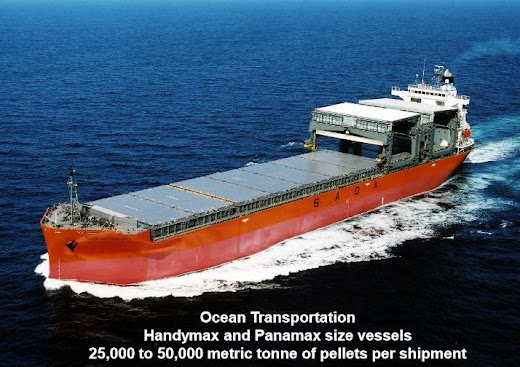
The condition of the Russian-Ukrainian war that occurred had an impact on the wood pellet industry, namely the shortage of supply in England and other European countries. They have made efforts to increase supply to secure the availability of these wood pellets. The shortage of wood pellets both for industrial and household use (room heating / pellet heating). Wood pellet production from Russia cannot be accepted by the European market even though the amount is large (Russia exported more than 870,000 tons to Denmark alone last year) and this condition is expected to occur for at least the next 12 months. The supply shortage of wood pellets is estimated at 3.4 million tons, which is production from Russia, Ukraine and Belarus. The Russia-Ukraine conflict has led to high wood pellet prices for various reasons, mainly due to the scarcity of wood pellets and other fuels coming to Europe and high electricity prices.

The need for wood pellets also continues to increase along with the decarbonization program (substitution of fossil fuels for renewable energy). According to Hawkins Wright's data, from 2020-'21, demand for wood pellets for the global industry grew by 18.4%, with production only growing 8.4%. Especially now with the disappearance of Russia, the price of wood pellets is higher, which reaches $ 300 per ton, but even at high prices, the supply of wood pellets is still constrained. The high price of fossil fuels has also created an increase in demand for wood pellets, especially households in Europe who have switched to wood pellets for space heating and it is estimated that the increase in demand will reach 2.5 million tons in 2022, according to the Austrian proPellets report. In Austria—and most of their representatives across Europe—wood pellet prices broke records by increasing more than 53% over the previous year with no signs of slowing down anytime soon. Even the June 2022 survey completed by Austrian proPellets resulted in an average price of wood pellets rising 66% compared to the previous year. However, despite the increase, wood pellets still offer a price advantage of 82.7% compared to heating oil and 18.3% compared to natural gas. Meanwhile, packaged wood pellets (bagged pellets) increased 52.8% compared to last year.

ProPellets Austria also reported that to respond to the demand for wood pellets, especially to ensure long-term needs, the Austrian wood pellet industry built 11 new wood pellet factories by accelerating the utilization of wood residue. The international energy market is in a state of upheaval, not least because of Russia's invasion of Ukraine, and this also affects the wood pellet market globally, especially in Europe. Whereas the UK has also faced a shortage of 200,000 tonnes of wood pellets in the domestic/household heating market and that new supply chain pathways are being explored, importing larger volumes is one solution. With a very tight market, supply chain bottlenecks, inflation and the ripple effects of ongoing wars, strategy, creativity and supply chain flexibility will be required from wood pellet stakeholders. As for whether global wood pellet supply is expected to be closer to meeting demand, that likely won't be in the near future, according to Matthews, biomass consultant from Hawkins Wright. . Economic strength will have an effect over time — high prices are the driving force of investment in a new wood pellet plant. The wood pellet industry is currently investing hundreds of millions of Euros so that supply is guaranteed in the long term, but they also need support from political decision makers.


Indonesia, with its vast territory and tropical climate, has the potential to develop large capacity wood pellet production, including the use of energy plantations. Indonesia's wood pellet production, which is currently still small or estimated at only 200 thousand tons per year, needs to be boosted so that it responds to European needs. Even though so far Asia, Japan and Korea are the target markets for wood pellets, recent developments in European conditions have also become a new impetus. The high price of wood pellets in Europe due to the Russia-Ukraine war made suppliers in North America (United States and Canada) also start supplying Europe. In fact, this opportunity was also seized by a number of suppliers from Asia. Vietnam is the second largest exporting country in the world for wood pellets. The volume and value of wood pellet exports has continued to increase since October 2021 and export prices have soared to an average of nearly US$150 per tonne, up more than 27% compared to the average price recorded last year. The sharp rise in export volumes and prices can be attributed to the sudden increase in demand from the European Union. With this extraordinary production capacity, Vietnam's wood pellet industry is starting to face a number of challenges, namely limited raw materials and more stringent requirements demanded by importers such as sustainability certification. This condition should be seen as an opportunity for the wood pellet industry in Indonesia.

Monday, November 14, 2022

Drying Palm Kernel Shells (PKS) by Utilizing Waste Heat from Palm Oil Mills and POME Biogas Units

The need for palm kernel shells or PKS is getting bigger because its use is increasing and diversifying. PKS can be used as boiler fuel in industry and in power plants. In addition, it can also be used as a raw material for activated carbon whose needs are also increasing, for more details, read here. The global trend to decarbonize or replace fossil fuels with renewable energy including biomass fuels, especially PKS is the main driving force for the increasing demand for PKS. Even oil-rich countries with economies driven from oil (petrodollars) are also gradually implementing the decarbonization program.

To be used as fuel or further processed into a number of derivative products such as torrified PKS, PKSC or palm kernel shell charcoal and activated carbon, the PKS must be dried first. The process of drying or reducing the moisture content to a certain level requires energy. PKS, which are palm oil mill waste, are generally just piled up in the backyard of the palm oil mill, so they are usually dirty and wet, resulting in a low selling price. If the palm oil mill can dry and clean its PKS, the selling price will also increase, so that there is added value as well as additional income for the palm oil mill. A number of energy sources from waste heat from palm oil mills can be used for the drying process.

Heat is an energy source that can be used for various purposes, either heat generated directly from the combustion process or from waste heat which is the residual heat from the combustion or other sources such as electricity and so on. In palm oil mill operations there is a certain amount of waste heat that can be extracted or harvested or recovered as a heat source for drying such as heat from combustion in the boiler, heat from steam turbine and heat from the FFB sterilization process. If the palm oil mill also processes its liquid waste for electricity production, the waste heat from burning biogas in the generator can also be used as a heat source for drying the PKS. A number of heat sources which are waste heat when integrated, the amount is large so that it can be sufficient for drying the PKS.

In addition to producing CPO (Crude Palm Oil) as the main product, palm oil mills generally also produce palm kernel. Currently, there are still a few palm oil mills (CPO mills) that also have PKO (Palm Kernel Oil) mills , meaning that there are palm oil mills that process fiber for CPO production and palm kernel for PKO production. The palm kernel is produced from the separation of palm kernel with its shell (PKS). Separation is done by breaking the palm kernel shell in a nut cracker drum, then it can be separated between the palm kernel shell and the kernel or core based on differences in specific gravity. If the palm oil mill wants to get added value from its palm kernel shells (PKS), then as soon as it leaves the palm oil mill it goes straight into the dryer (with waste heat as the heat source) after which it is cleaned with a sieve (screening) so that it becomes the final product in the form of dry and clean PKS, so that higher sale value. The size of the shell and fibers that pass the sieve (undersize), can also be used as boiler fuel. Palm oil mill boilers currently operate using fiber fuel (mesocarp fiber) and part of the palm kernel shell (PKS). The rejected material in the form of undersize can be used as boiler fuel so that less PKS are used.

Friday, November 4, 2022

Post Mining Land Reclamation With Bamboo

Bamboo is a tree that is easy to grow, tall quickly and has many benefits. One of them is the use of bamboo trees for post-mining land reclamation. Damaged and barren post-mining land is indeed not easy to plant directly. Certain treatments or efforts are needed so that the land can be planted with certain plants. When the land has become fertile soil, of course almost all plants can be planted on the land. And to achieve these conditions it takes time and a process that is not short.

Soil improvement efforts in the sense of improving soil fertility are the first thing to do so that plants can grow well on the land. Plants that can be planted at this stage are also only certain types of plants such as pioneer plants in the form of fast growing plants such as legumes. And bamboo as a group of grass plants is also easy to plant and grow on marginal lands such as post-mining land. Availability of water, adequate nutrients, pH or adequate soil acidity are some of the things needed to achieve optimal growth.

As an illustration, sand is a bad planting medium because there are almost no nutrients in it and this is almost the same as the condition of post-mining land in general. Substances or organic materials need to be added so that they become fertilizers or nutrients for the land. Animal dung is the best organic material for this, so integration with livestock is the best concept for post-mining land reclamation. Biochar with its various advantages also needs to be added to the land. Biochar can be produced from biomass wastes from plantations, agriculture and forestry for this purpose. The use of biochar on a wide scale can also provide income in the form of carbon credits because biochar is applied to the soil as a carbon sink with carbon sequestration.

Bamboo trees as a type of grass plant have fibrous roots. Large bamboo clumps have a large network of fibrous roots as well. The success of bamboo roots is one of the keys to bamboo growth. The use of biochar in bamboo nurseries will also improve the roots of the bamboo seedlings produced. While in bamboo plantations, the use of biochar also has many benefits, especially on post-mining land the results will look more real, such as maintaining moisture, more available nutrients, not acidic soil pH and so on. Biochar is useful for improving soil fertility, so it can be used in nurseries and plantations.

Currently a number of mining companies have carried out land reclamation with these trees, but most of them are still testing and do not yet have a comprehensive concept. Post-mining land reclamation with bamboo in Indonesia is estimated to start in 2010 or has been going on for about 12 years until now. A number of bamboo species have also been identified as suitable for the post-mining area. Scale up or capacity enlargement is an important and current challenge, especially when it is supported by information on 12 years of reclamation with these bamboo trees. With this capacity expansion, besides bamboo production, commercial production can also be achieved, the application of biochar will also find its optimum benefits, namely improving soil fertility and carbon sinks (carbon sequenstration).

The use of bamboo in particular is an aspect that has not received serious attention in these reclamation projects. Whereas only with the use of bamboo which is a plantation product can the reclamation effort be known to provide economic benefits or not. The lack of serious attention to the use of bamboo is thought to be because the bamboo reclamation is still in the experimental stage with a small area. But if it has been pursued professionally, the economic aspect will become an important concern.

The use of bamboo, for example, is to make people's houses around the mine. With bamboo treated first and also using the art of building architecture, the bamboo house produced will be of high quality, in the sense of being sturdy and beautiful and far from being cheap. This will reduce the use of certain wood for houses, some of which have limited types, such as ironwood in Kalimantan. Indeed, there are many ways to use the bamboo, but it is necessary to choose the best one based on the related conditions and situations. Ruminant farming, especially for the production of organic matter or land fertilizers, will also require cages or in rotational grazing, poles for paddock will also be required. The cages and poles can also be made with these bamboo products.

And when bamboo production is used for biomass production and then used for biochar production, it is also technically possible. But economically, it is necessary to study whether it also provides benefits, both from the effect of improving soil fertility and carbon credit. In this case, the most important thing is the production of the biomass itself so that the bamboo species that produce the most biomass are selected. The more soils that can be repaired with biochar treatment, the more land that can be recovered so that it becomes productive land. When the soil is fertile again, various food crops are also very possible to be planted on the land. The increasing population also demands more food needs, so food production needs to be increased, including the use of these recoverable lands.

Production of Bark Briquettes from Wood Pellet Factory Waste

To reduce the ash content of wood pellets and thereby improve their quality, a process known as "debarking" (removing the tree bar...